History
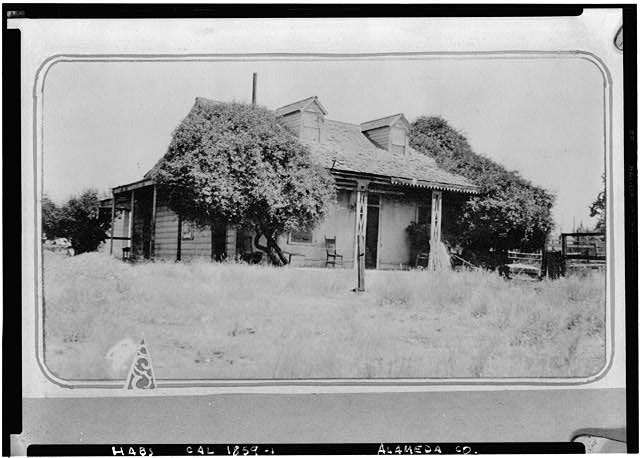
The John W. Kottinger Adobe Barn stands at 200 Ray Street in Pleasanton, in the Livermore Valley of Alameda County. The property is associated with John W. Kottinger, an Austrian-born attorney and rancher who arrived in California during the Gold Rush, married into a Californio family, and became one of the early Anglo-American landowners in the Amador-Livermore area in the 1850s. The town that grew around his holdings was later named for his wife's family connection, and the surviving adobe outbuilding on Ray Street is one of the oldest documented structures in the city.
Architecturally the building is a vernacular adobe barn rather than a residence, a building type once common across the Mexican-era California countryside but rarely preserved. The walls were laid up from sun-dried adobe brick produced on or near the site, set on a low stone or rubble foundation, and protected by deep eaves on a timber-framed gable roof. The defining features of the building reflect agricultural rather than domestic use, with wide door openings sized for livestock and equipment and a relatively unornamented exterior. The Historic American Buildings Survey documented the structure as HABS CAL,1-PLEAS,1 in the twentieth century, contributing a measured archival record of its plan and elevations.
The barn served the working ranch and is among the small surviving group of nineteenth-century adobe agricultural structures in the East Bay, where most rancho-period buildings were lost during the agricultural and urban expansion that followed statehood. It was listed on the National Register of Historic Places in 1985 under reference 85002305.
The property is in private use today and is not operated as a museum, though it remains visible from the public street and contributes to Pleasanton's recognized historic core. Within the broader California adobe tradition, the Kottinger Barn belongs to the East Bay rancho lineage that grew up between the Coast Ranges and the Central Valley, where adobe was the standard building material for both houses and outbuildings until the railroads brought milled lumber into the region in the 1860s and 1870s.
Common questions
What is the John W. Kottinger Adobe Barn?
The John W. Kottinger Adobe Barn is a historic adobe property in Pleasanton, California, listed on the National Register of Historic Places under reference number 85002305. It is documented by the Historic American Buildings Survey as part of the early adobe building heritage of Alameda County.
When was the Kottinger Adobe Barn built?
The John W. Kottinger Adobe Barn's exact date of construction is unknown from available records. The barn is recognized as a contributing historic resource by the National Register of Historic Places and was documented by the Historic American Buildings Survey.
Where is the Kottinger Adobe Barn located?
The John W. Kottinger Adobe Barn is located at 200 Ray Street in Pleasanton, Alameda County, California. The site is documented in the Historic American Buildings Survey records held by the Library of Congress.
Is the Kottinger Adobe Barn open to the public?
No, the John W. Kottinger Adobe Barn is a private residence and is not open for tours. The property is documented as a historic resource through the National Register of Historic Places and the Historic American Buildings Survey but does not operate as a museum.
Why is the Kottinger Adobe Barn historically significant?
The John W. Kottinger Adobe Barn is significant as a National Register of Historic Places property (reference 85002305) in Pleasanton, California. It is documented in the Historic American Buildings Survey, a federal program that records buildings of architectural and historical importance.