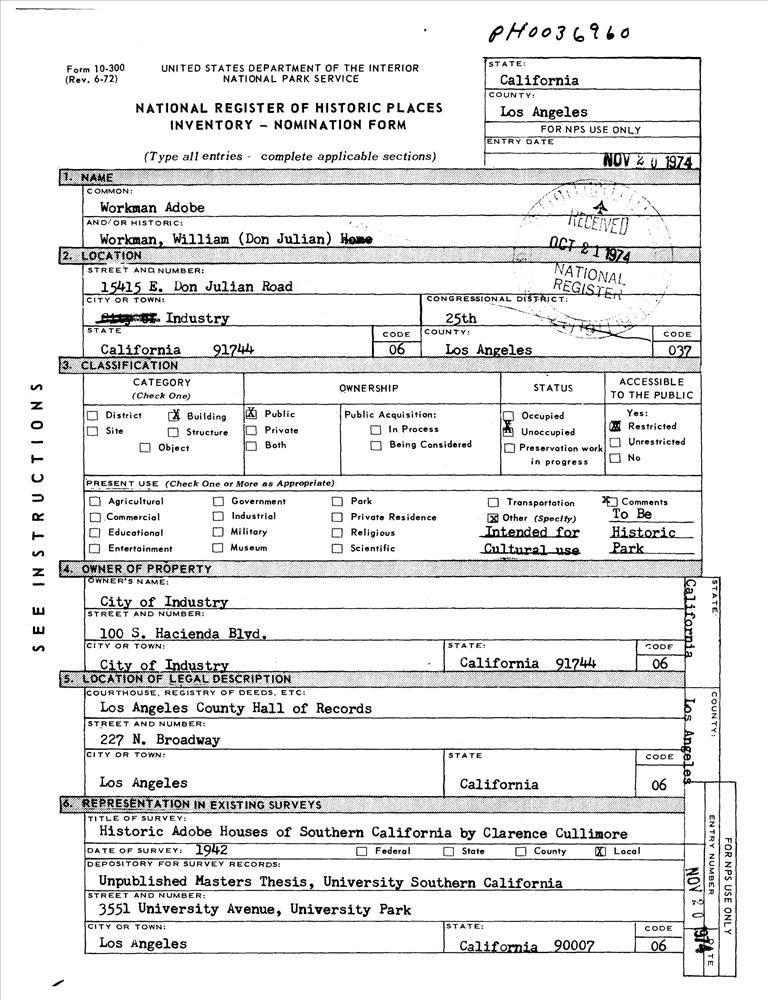
Atlas region I
The record at a glance
This chapter documents 111 catalogued adobe properties across 66 California settlements. The summary at right breaks the catalog down by architectural style, current status, and recorded date range.
Monterey Colonial townhouses and the rancho adobes of the Spanish and Mexican periods — the longest list of catalogued adobes in the country, stretched along the old Camino Real from San Diego to the Russian River.
Where the entries are
A short history of adobe in California
California holds the longest list of catalogued adobes in the United States, and the broadest geographic range — from the presidios of San Diego in the south to the Russian River in the north, and inland through the rancho country of the Coast Ranges. The adobe wall was the basic structural fact of California building for nearly a century, from the founding of San Diego de Alcalá in 1769 to statehood in 1850, and most of what survives belongs to that period.
The mission and presidio period — 1769 to 1821
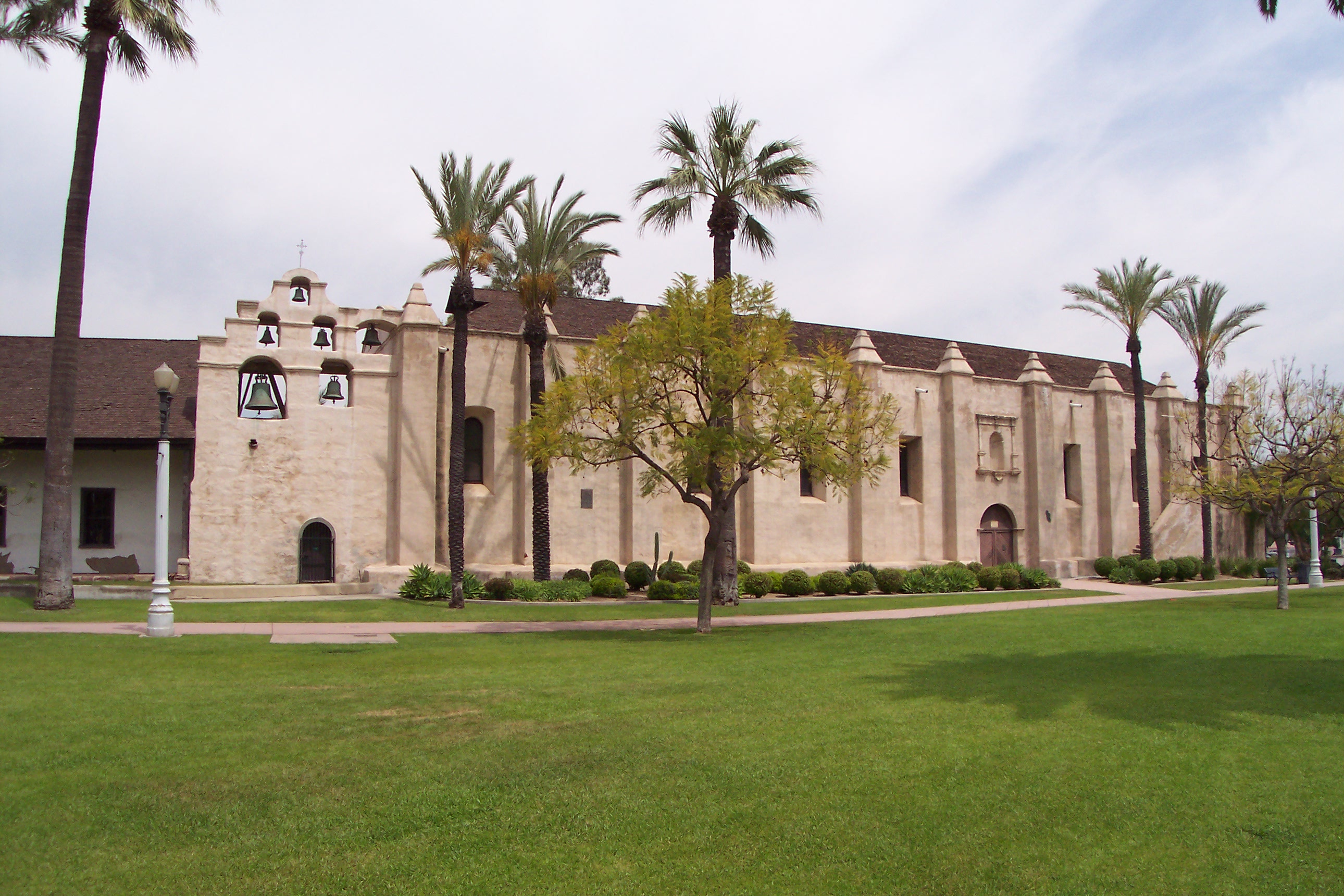
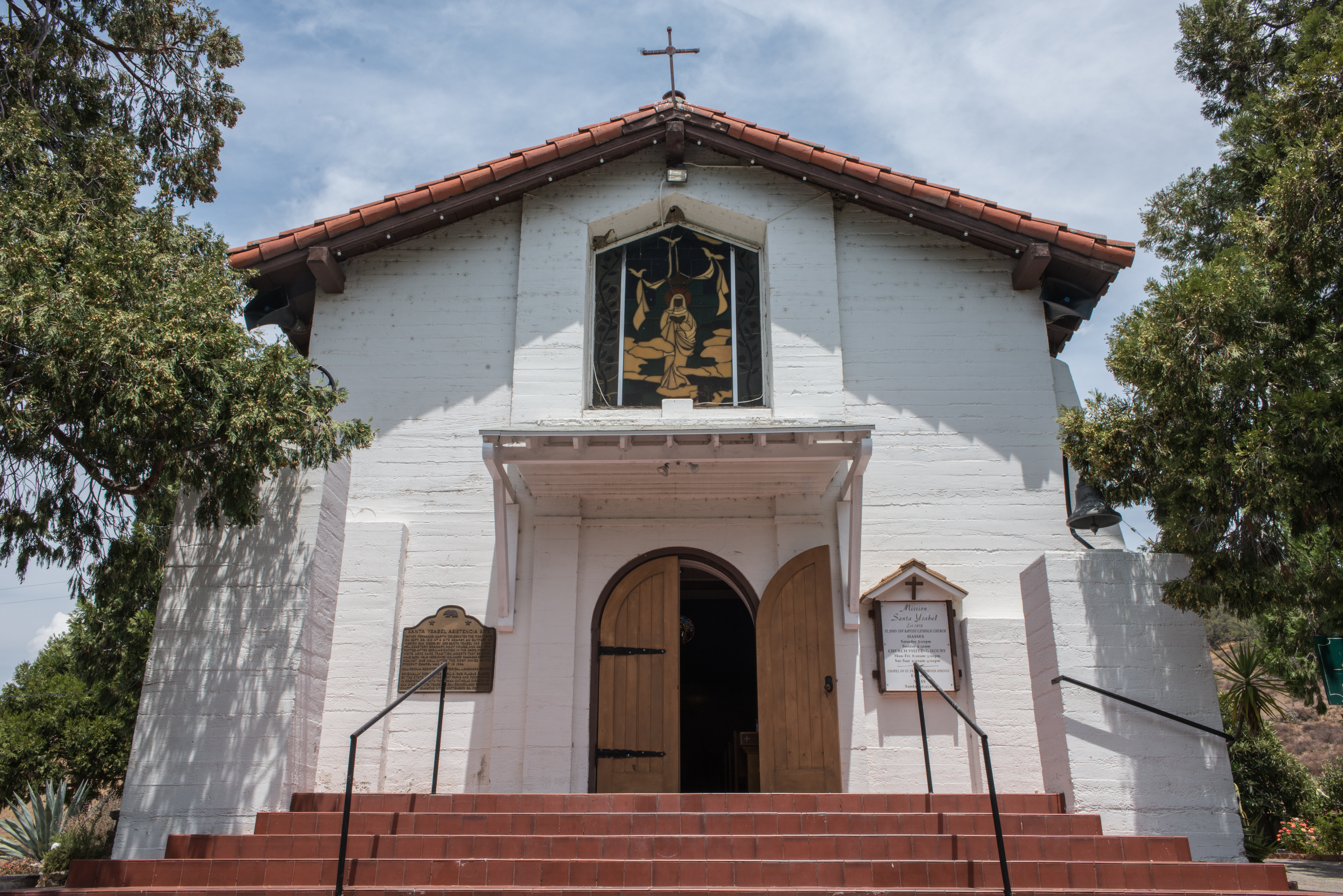
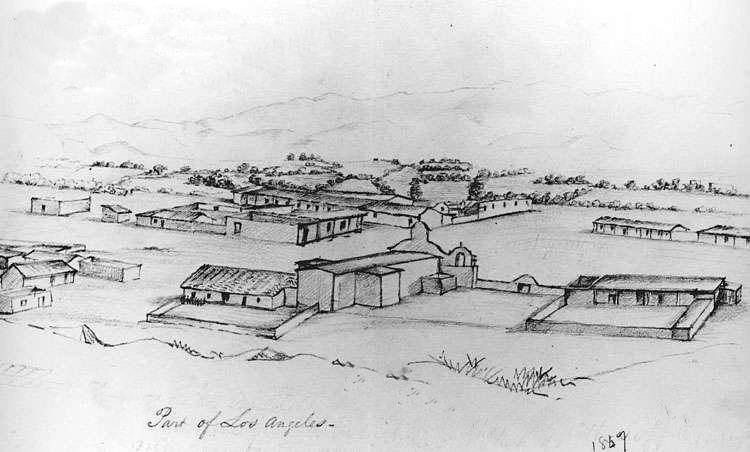
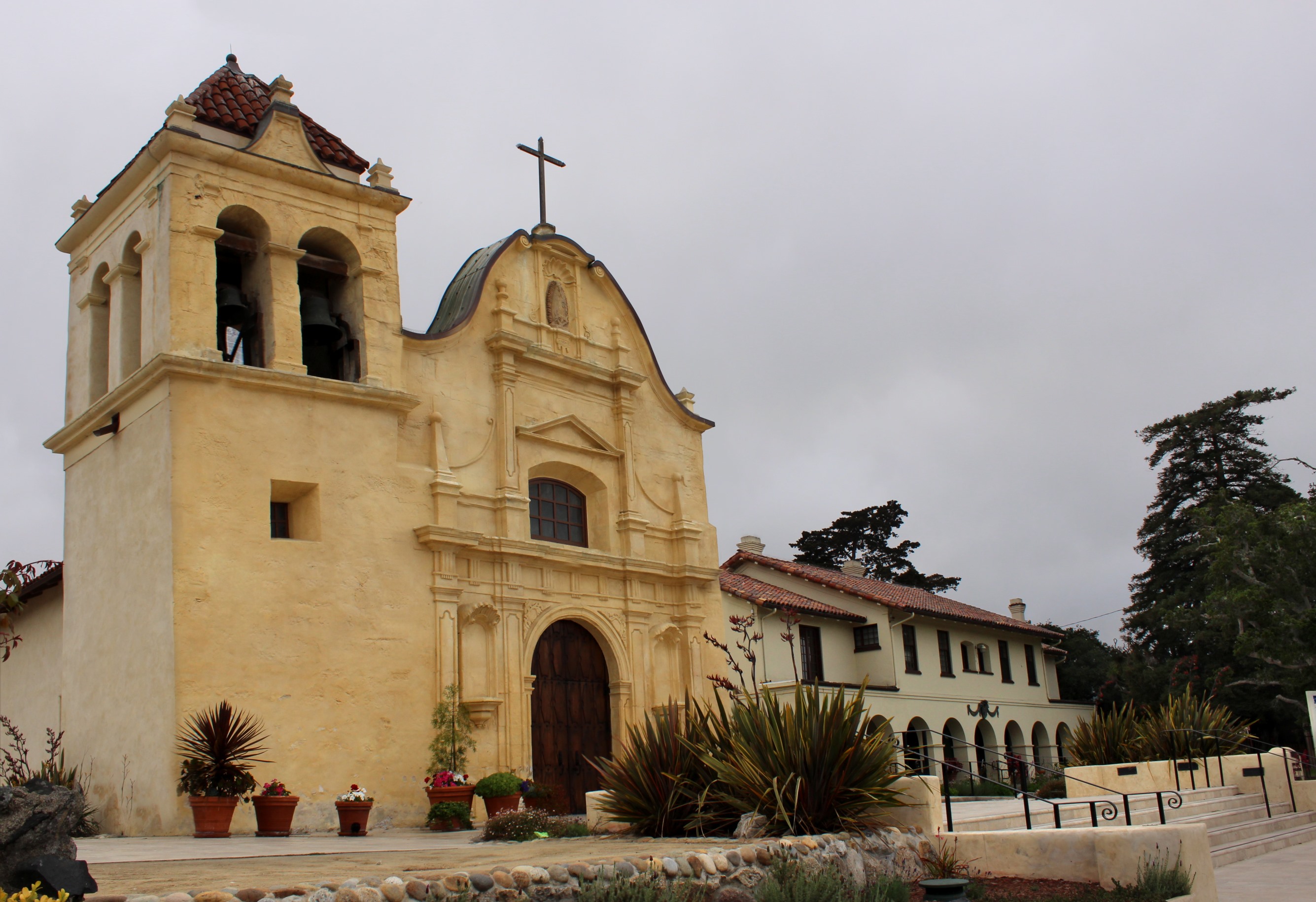
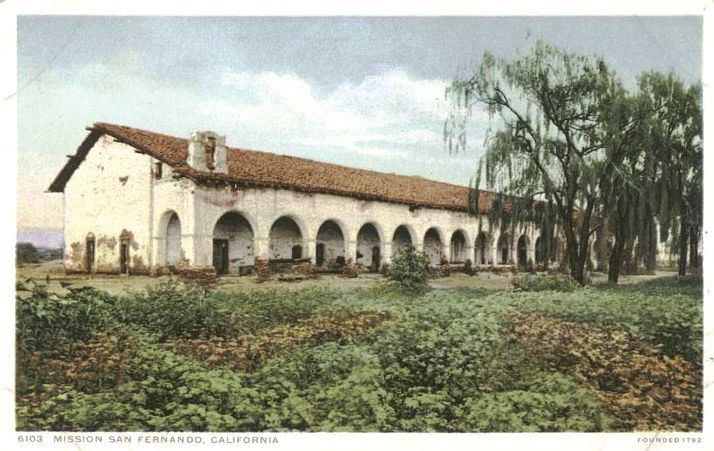
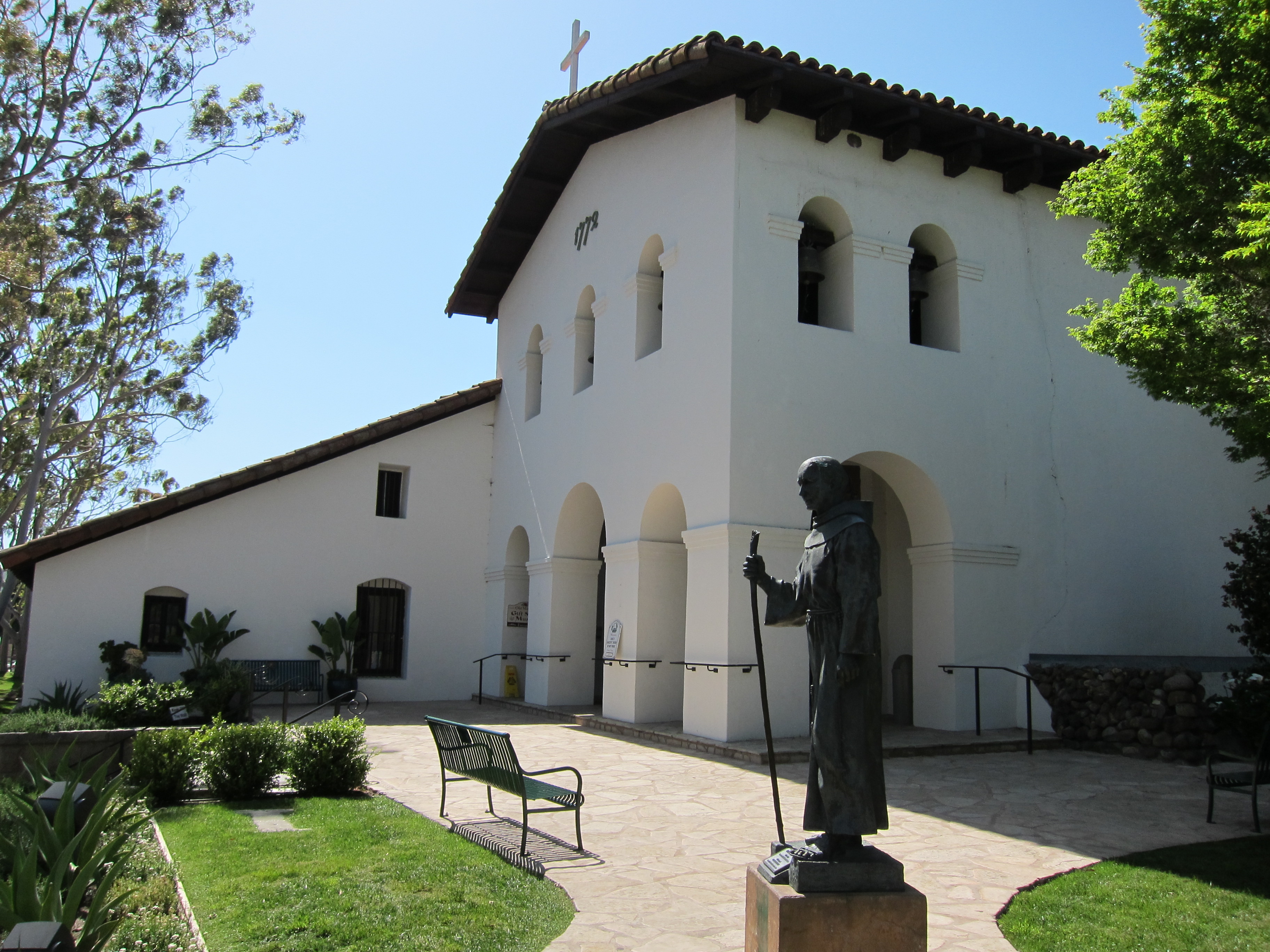
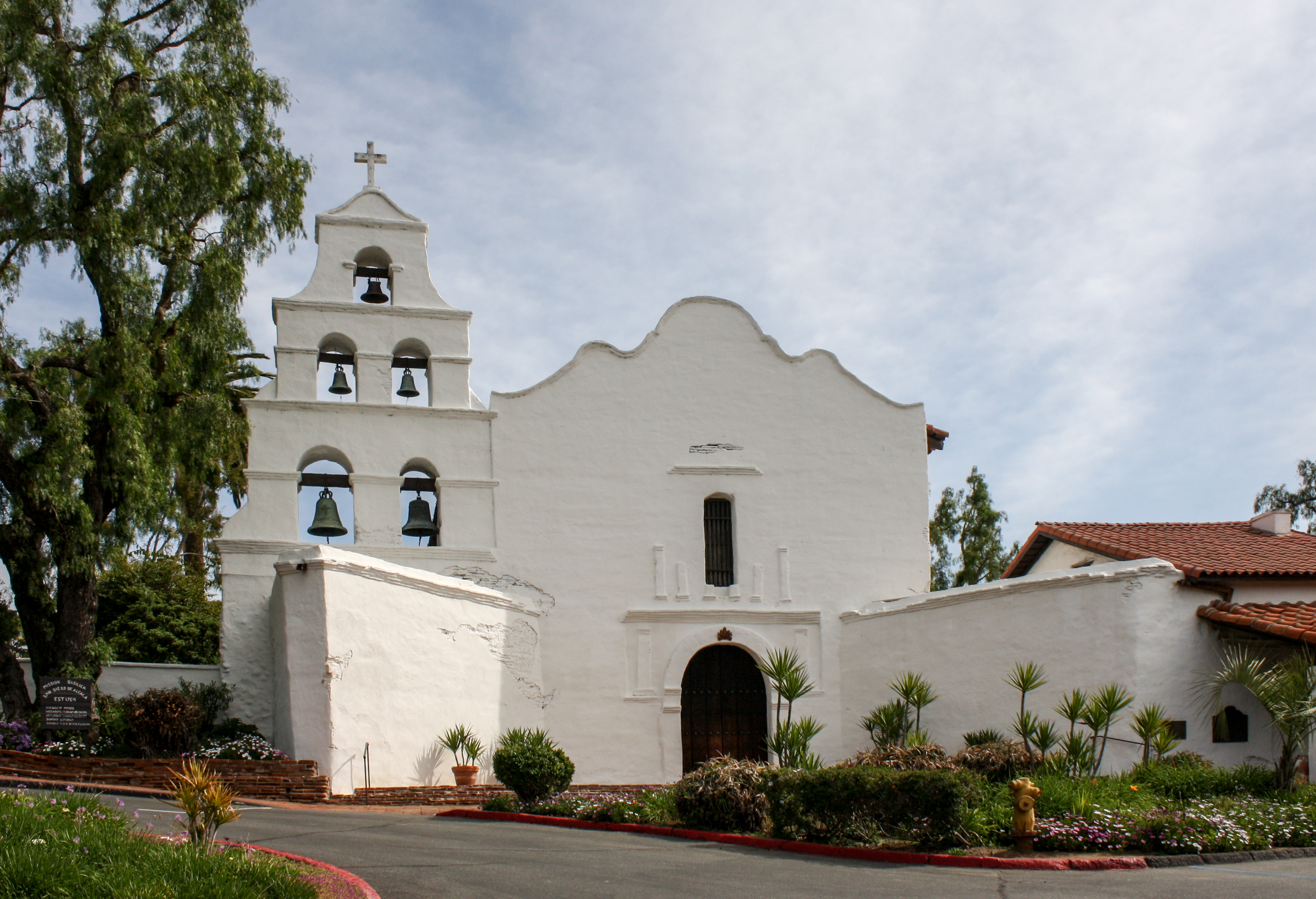
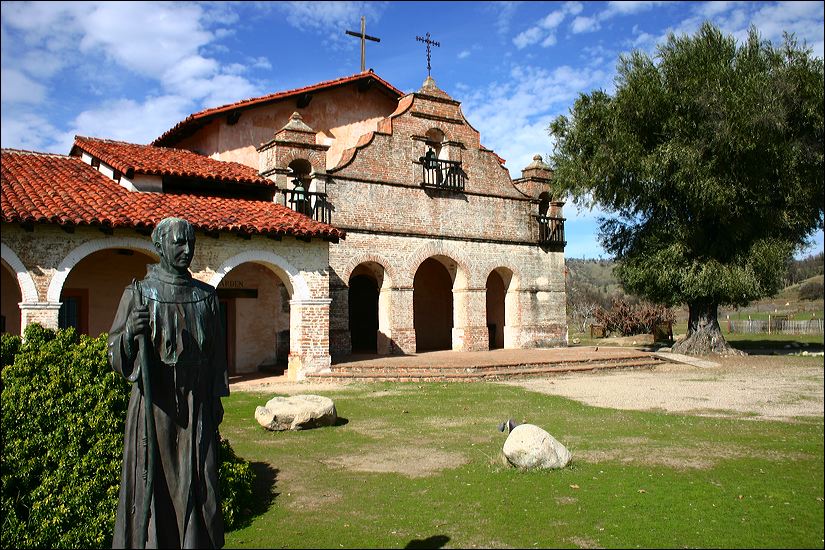
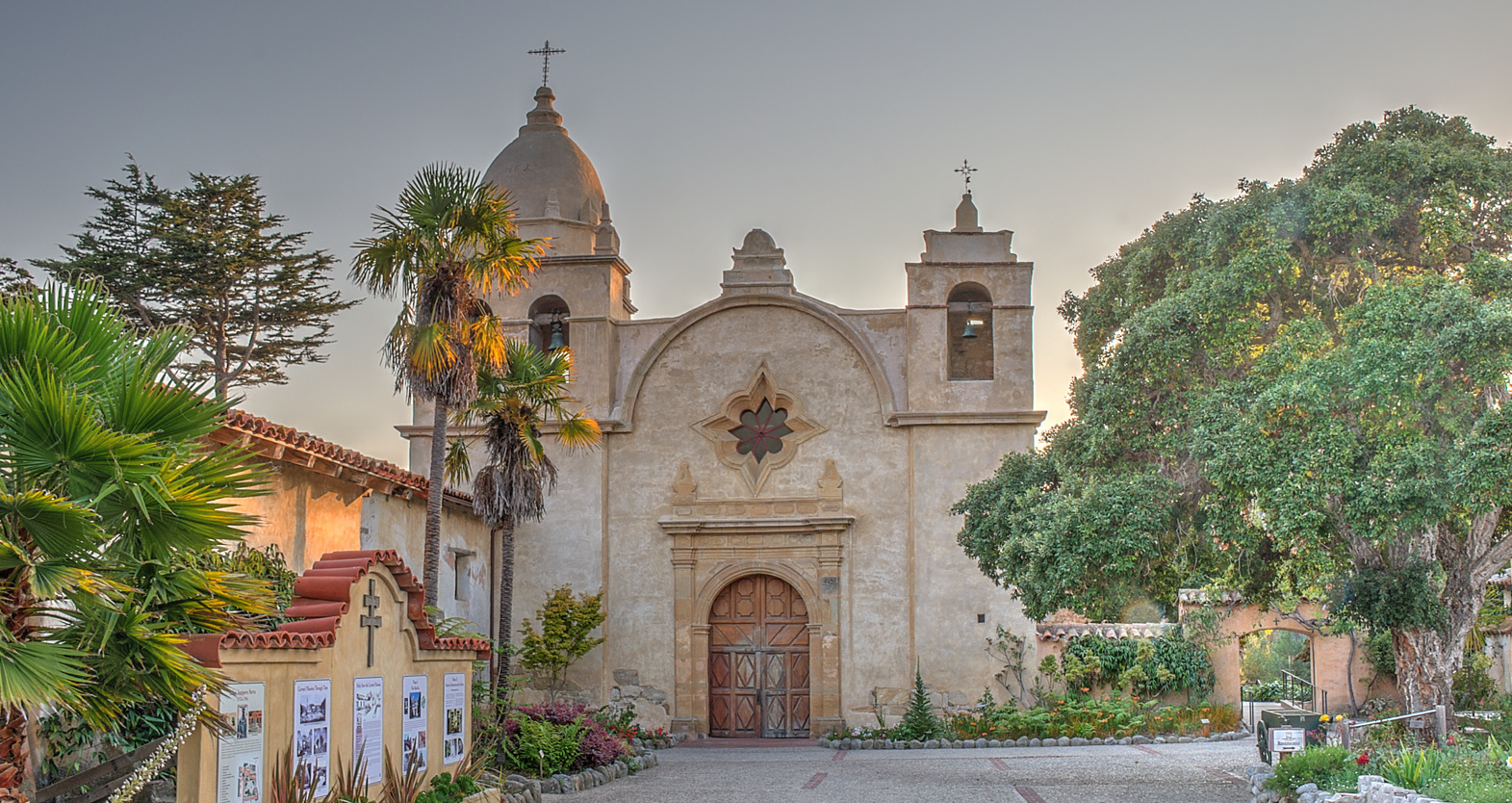
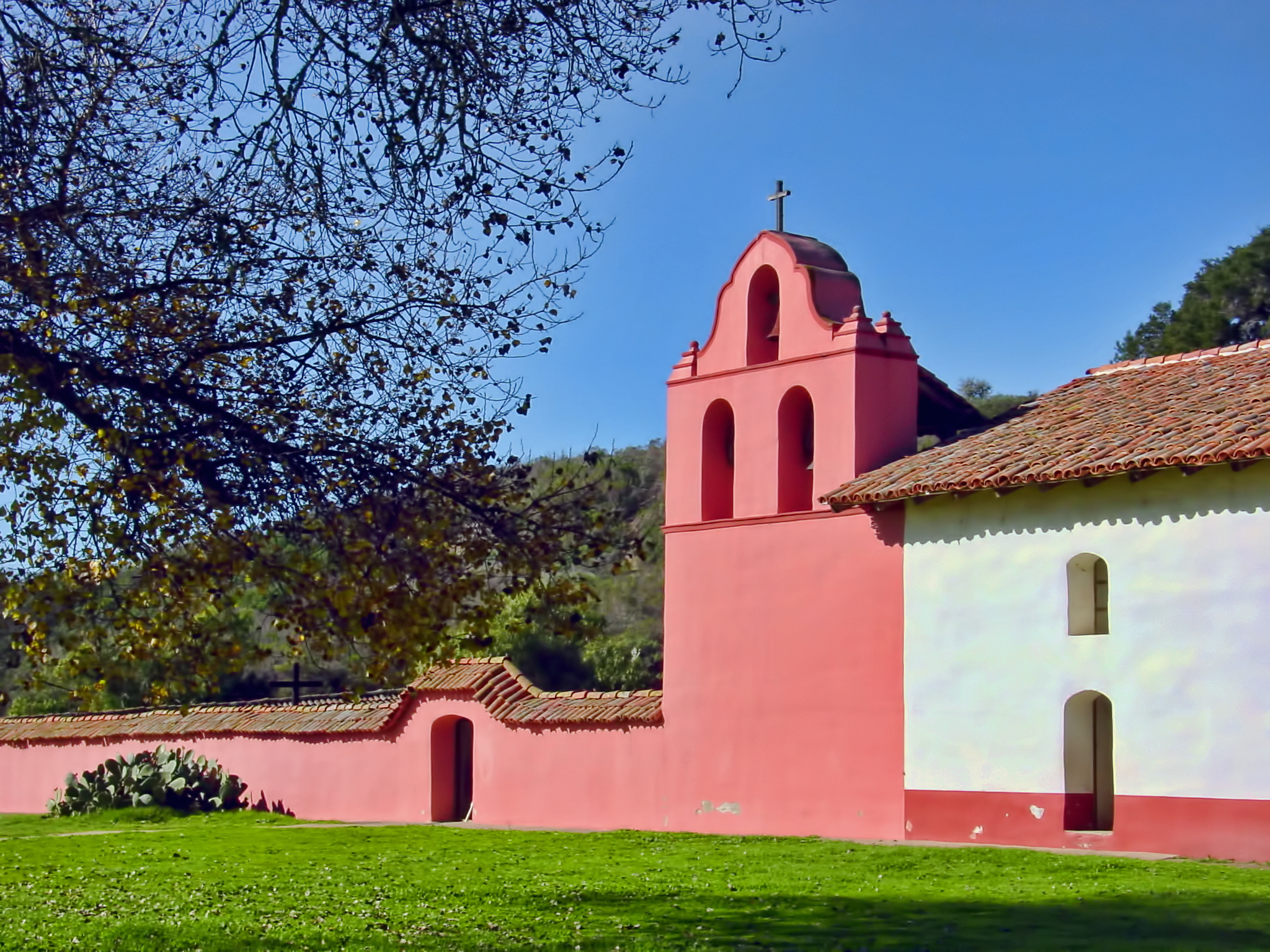
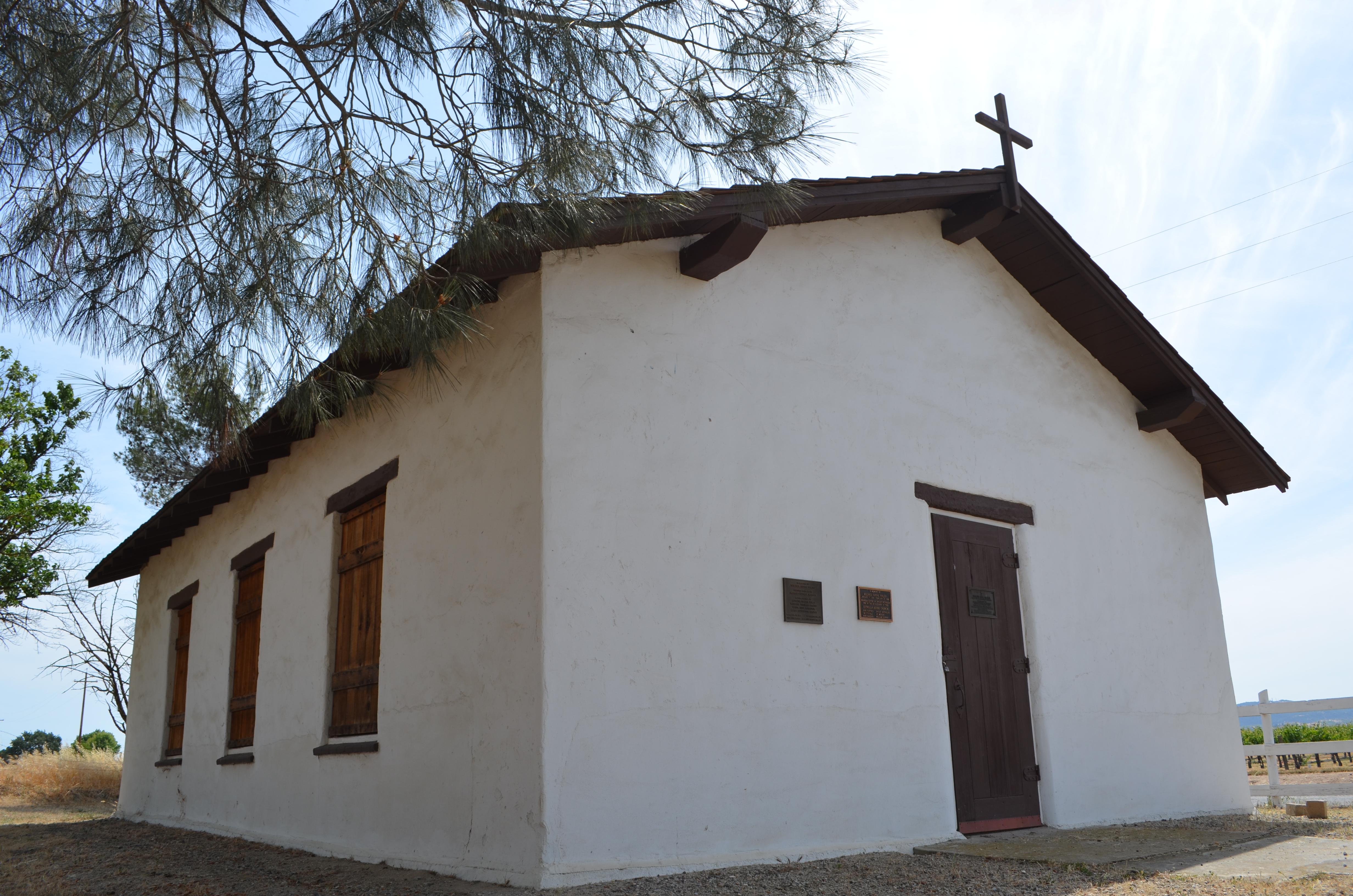
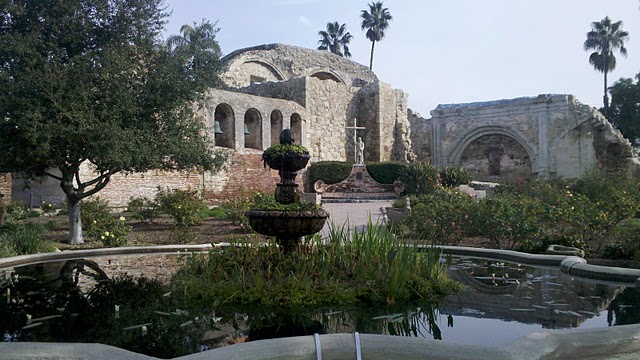
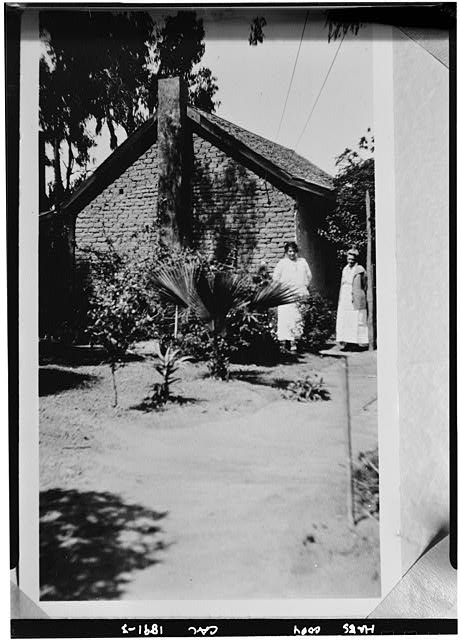
The Spanish entrada into Alta California, beginning with the Portolá expedition of 1769 and the foundation of Mission San Diego the same year, established a chain of twenty-one Franciscan missions, four military presidios, and three pueblos along El Camino Real. Each was built of adobe — coursed adobe in the early decades, then cast brick laid up in thick load-bearing walls — and roofed in fired clay tile or, in the simplest examples, with packed earth carried on timber rafters. The mission churches and the conventos that surrounded them were the largest buildings the colony built; the presidio quarters at Santa Barbara and Monterey, the smaller chapels at the estancias such as San Bernardino de Sena in present-day Redlands, and the working ranchos that supplied the missions with hide and tallow are the supporting cast.
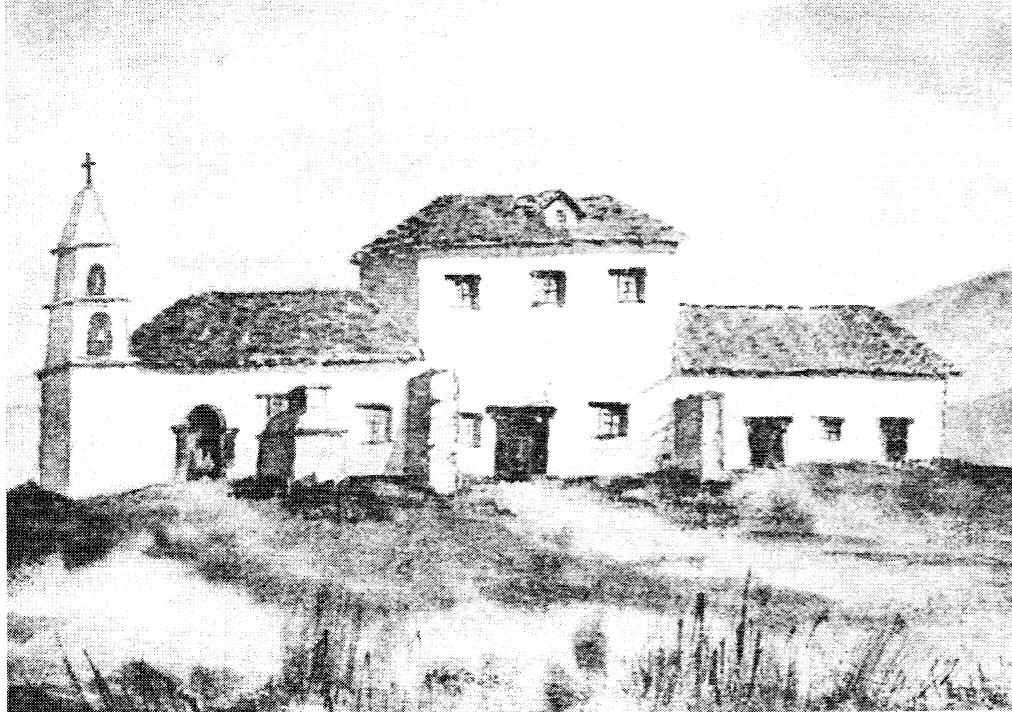
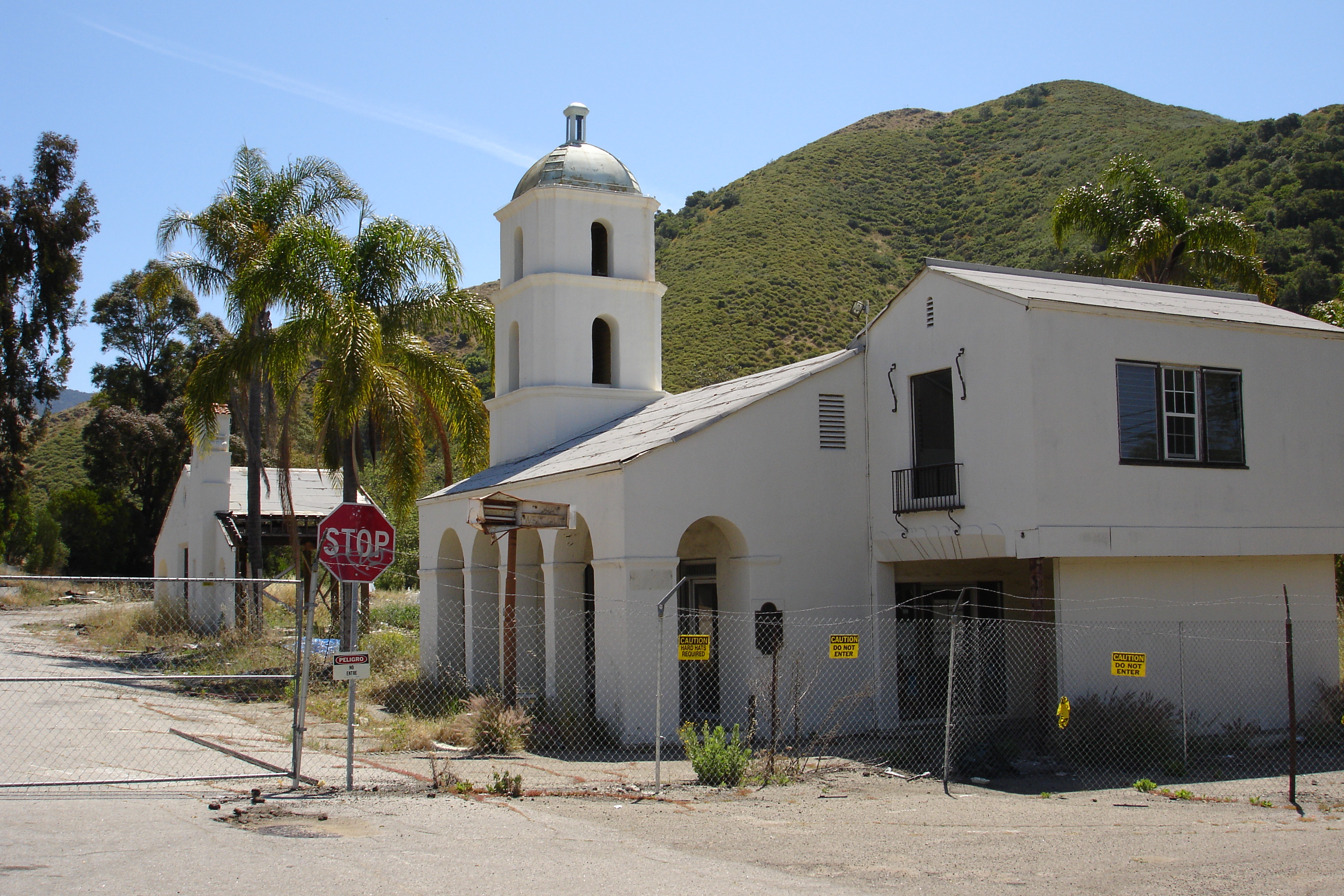
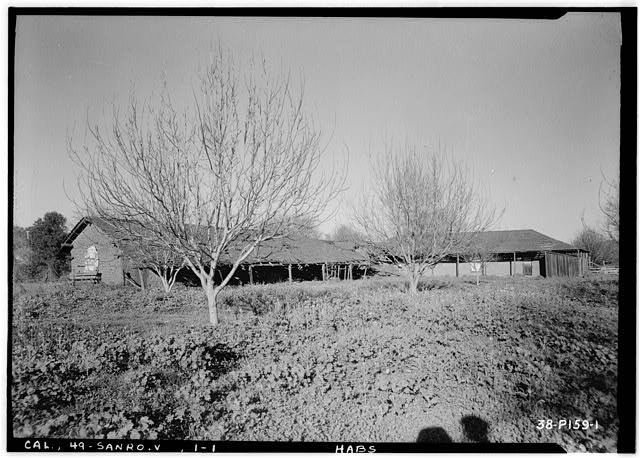
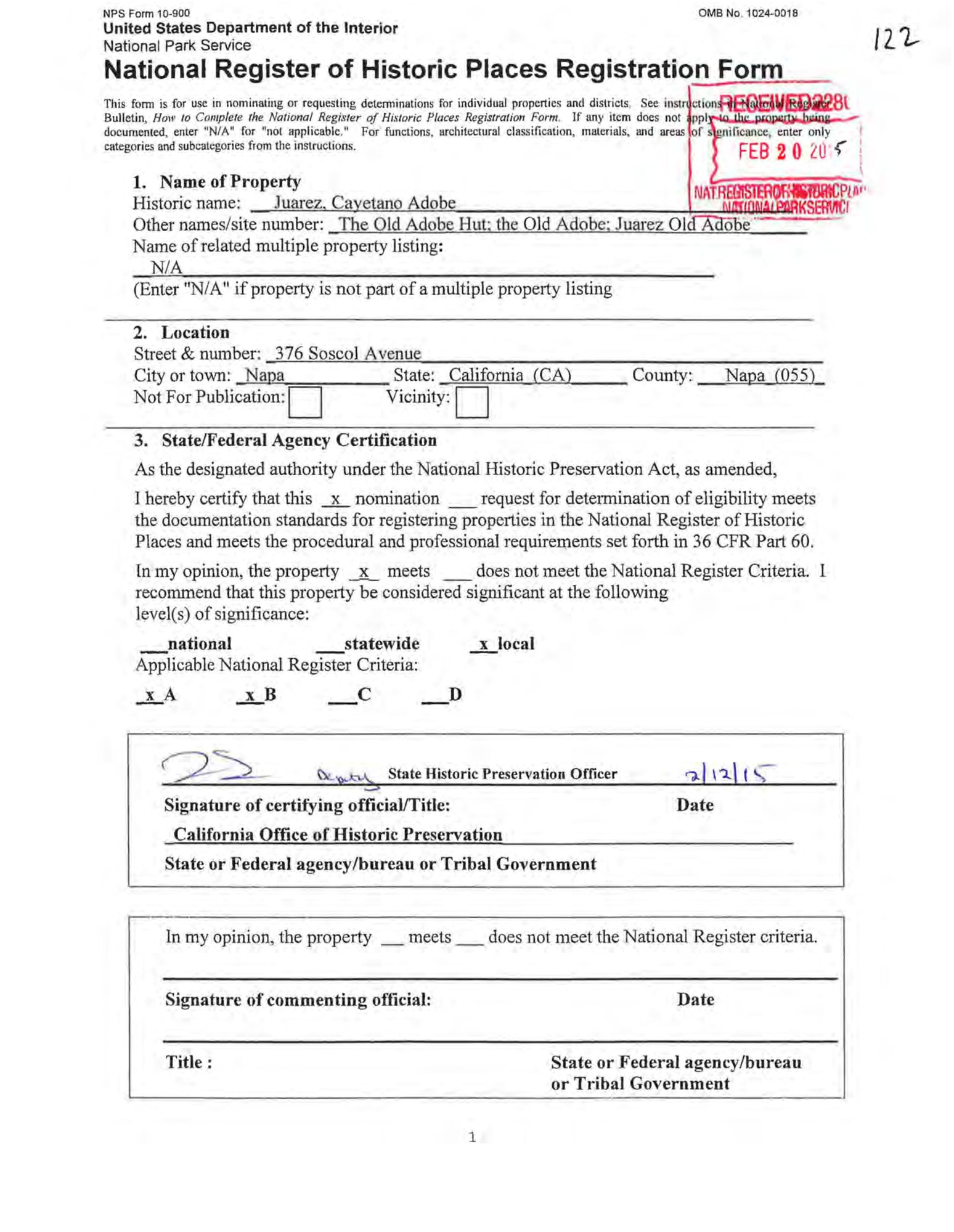
A handful of these mission-era adobes survive in something like their original fabric — the Estancia at Redlands, the Olivas Adobe at Ventura, parts of the Neary-Rodriguez Adobe in Santa Cruz that were built in association with the mission there — and form the earliest stratum of the catalog.
The Mexican period and the rancho boom — 1821 to 1848
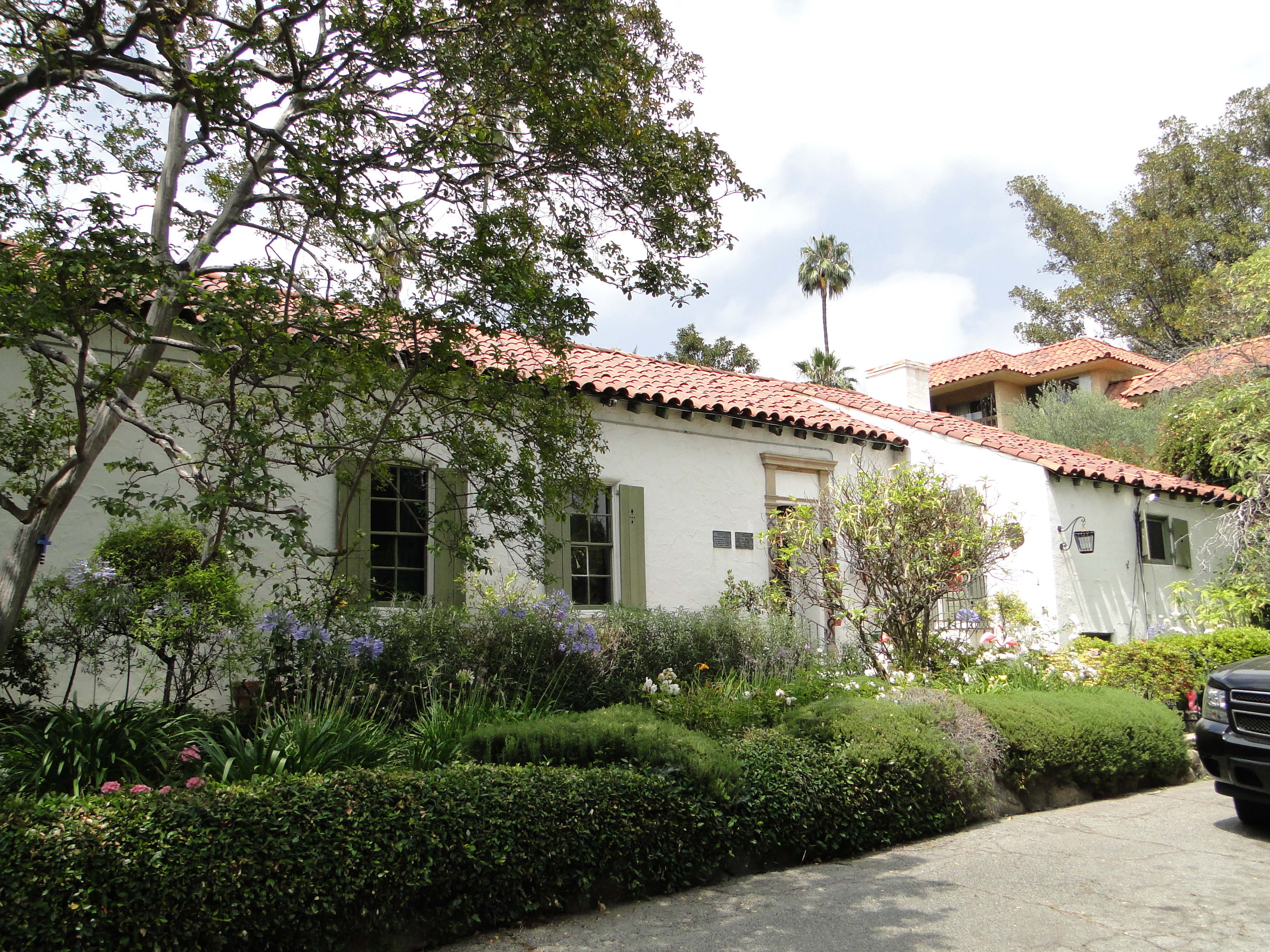
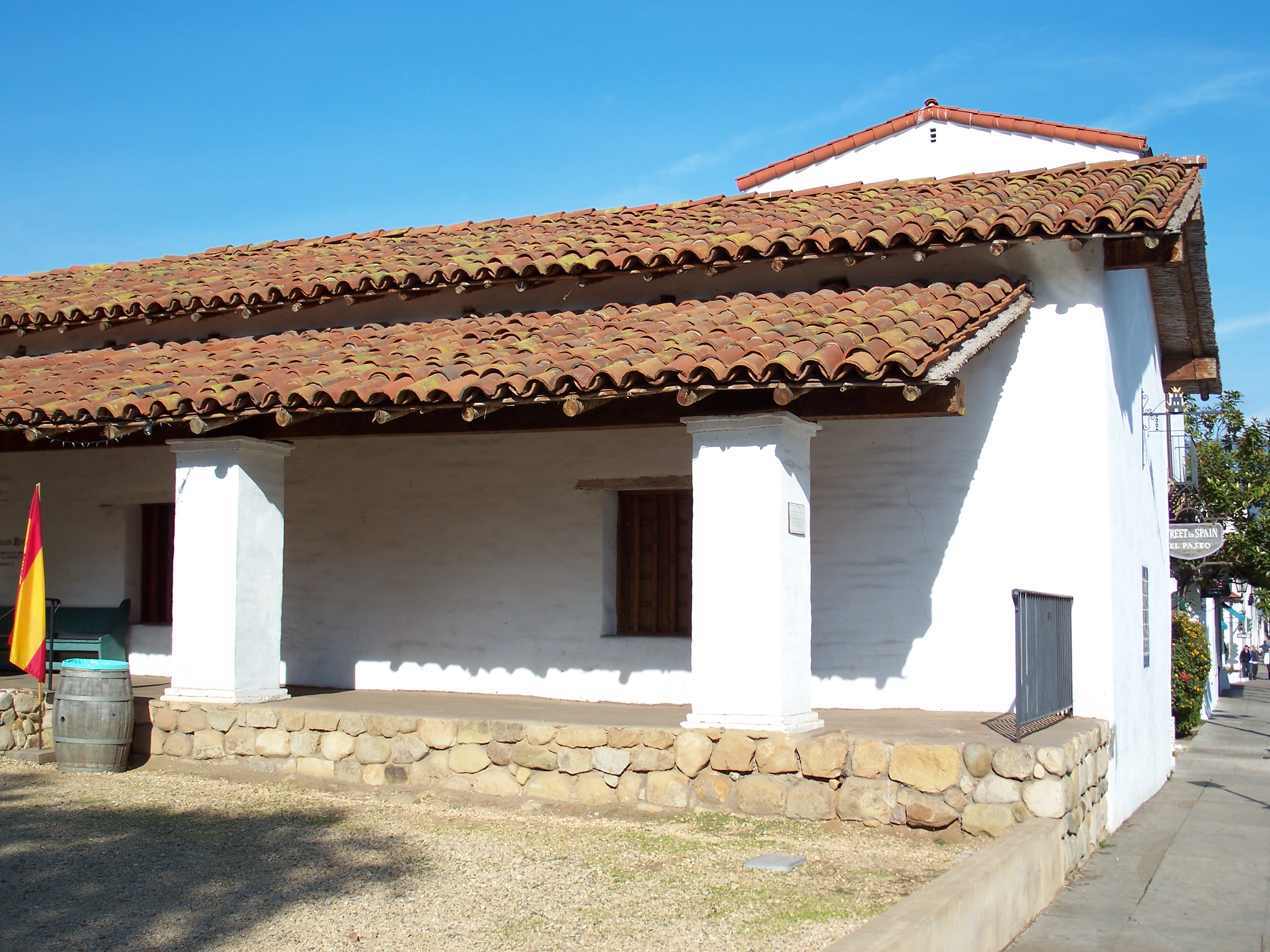
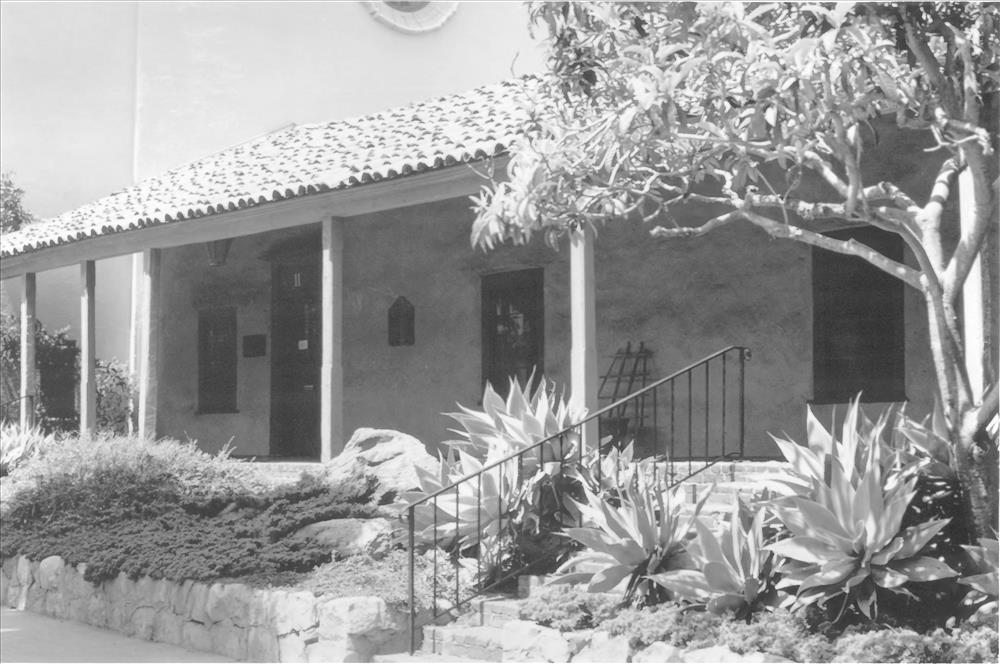
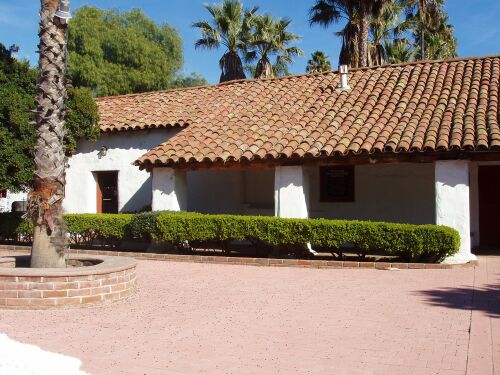
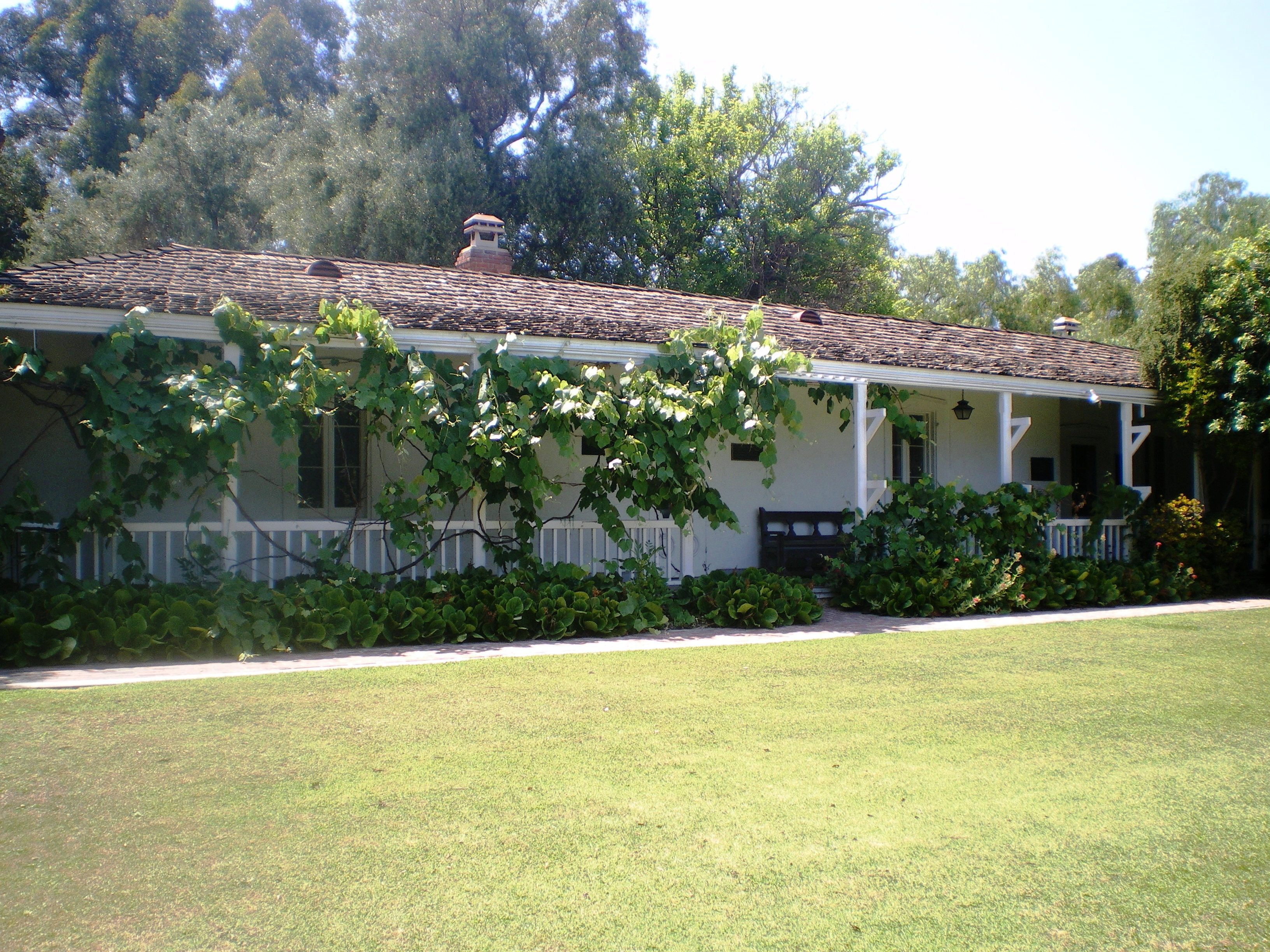
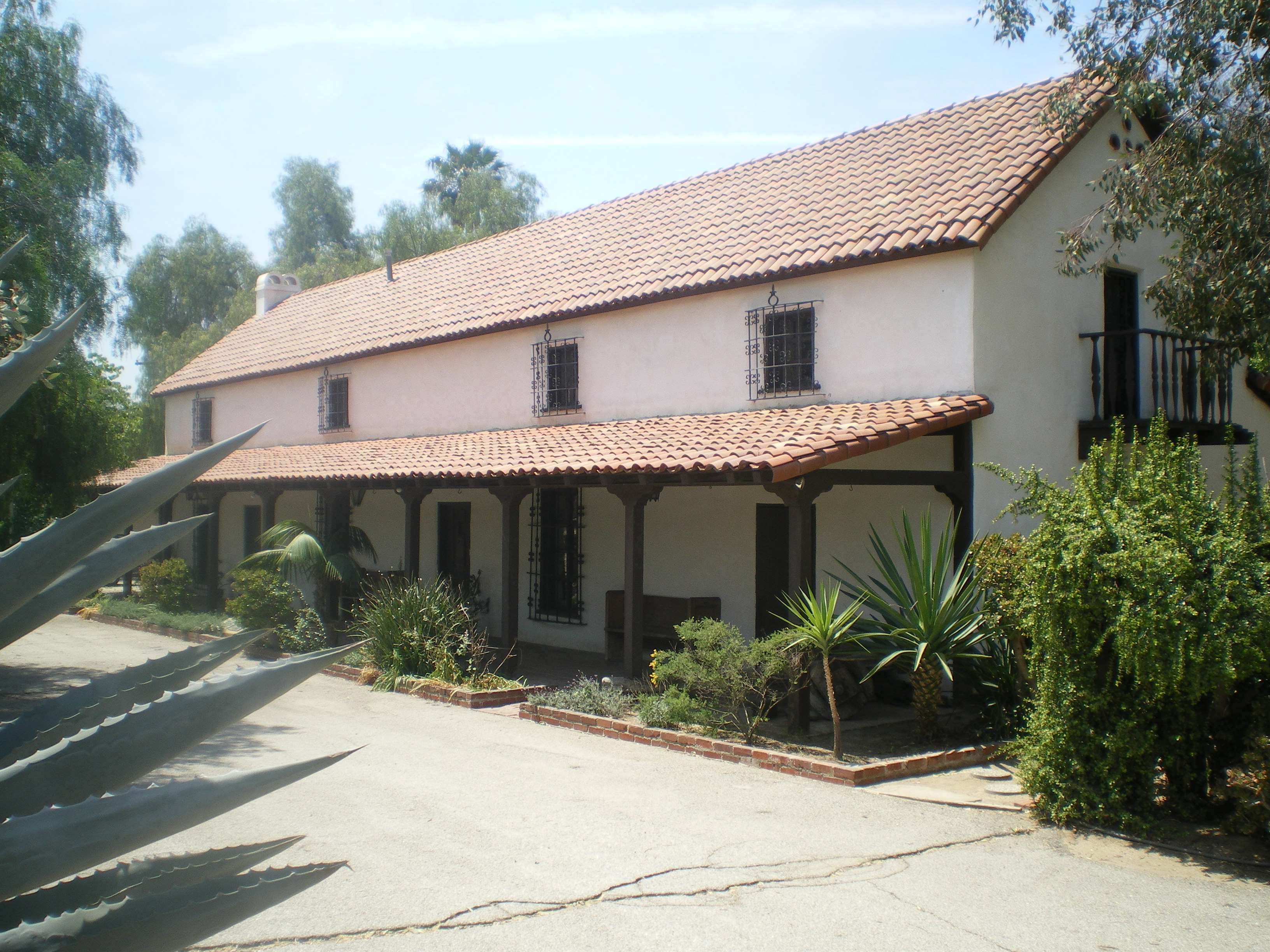
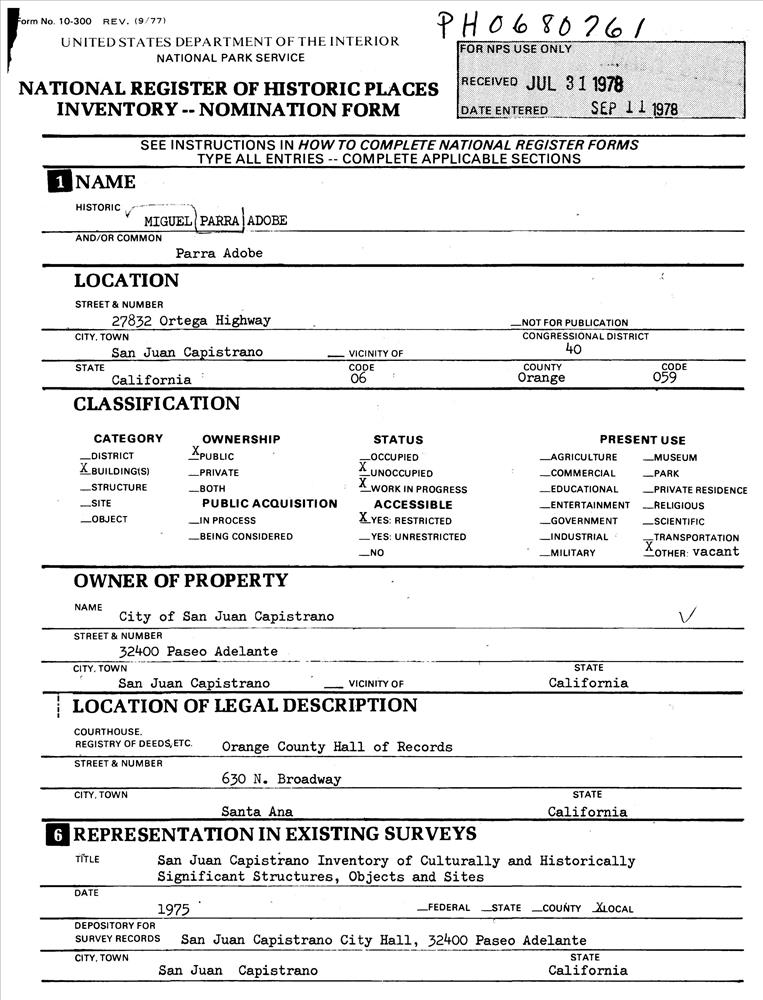
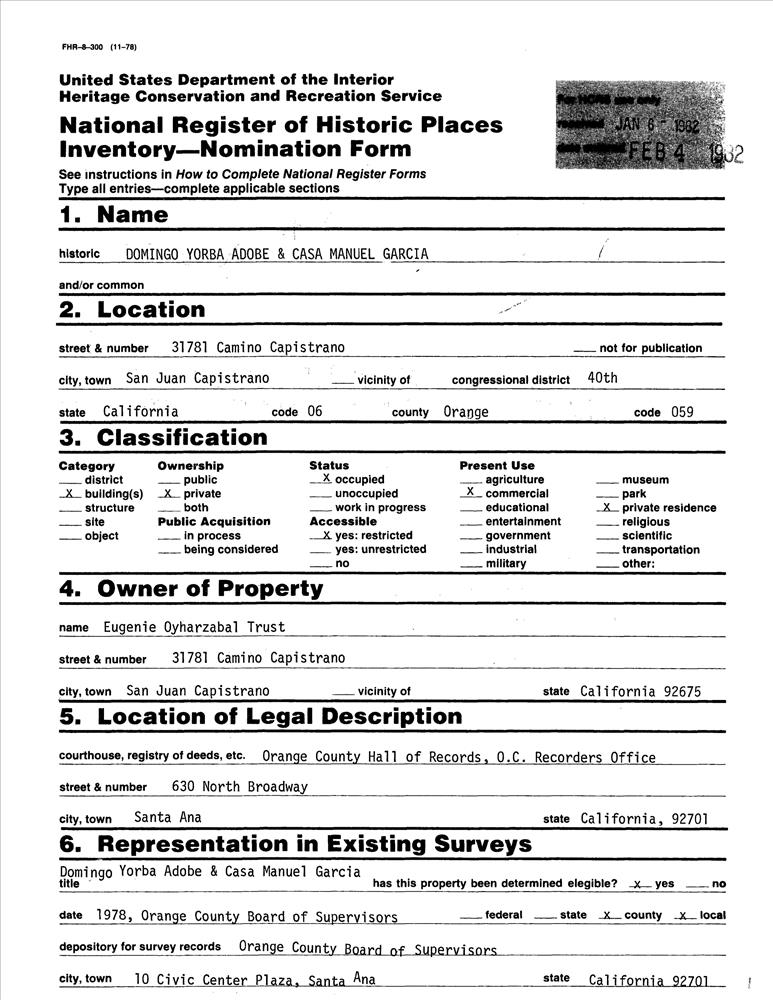
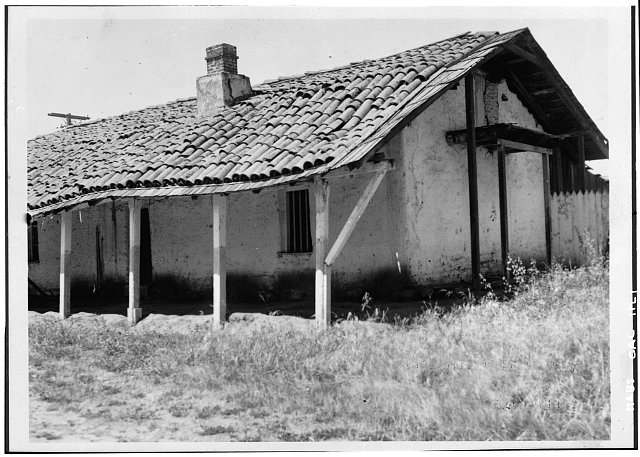
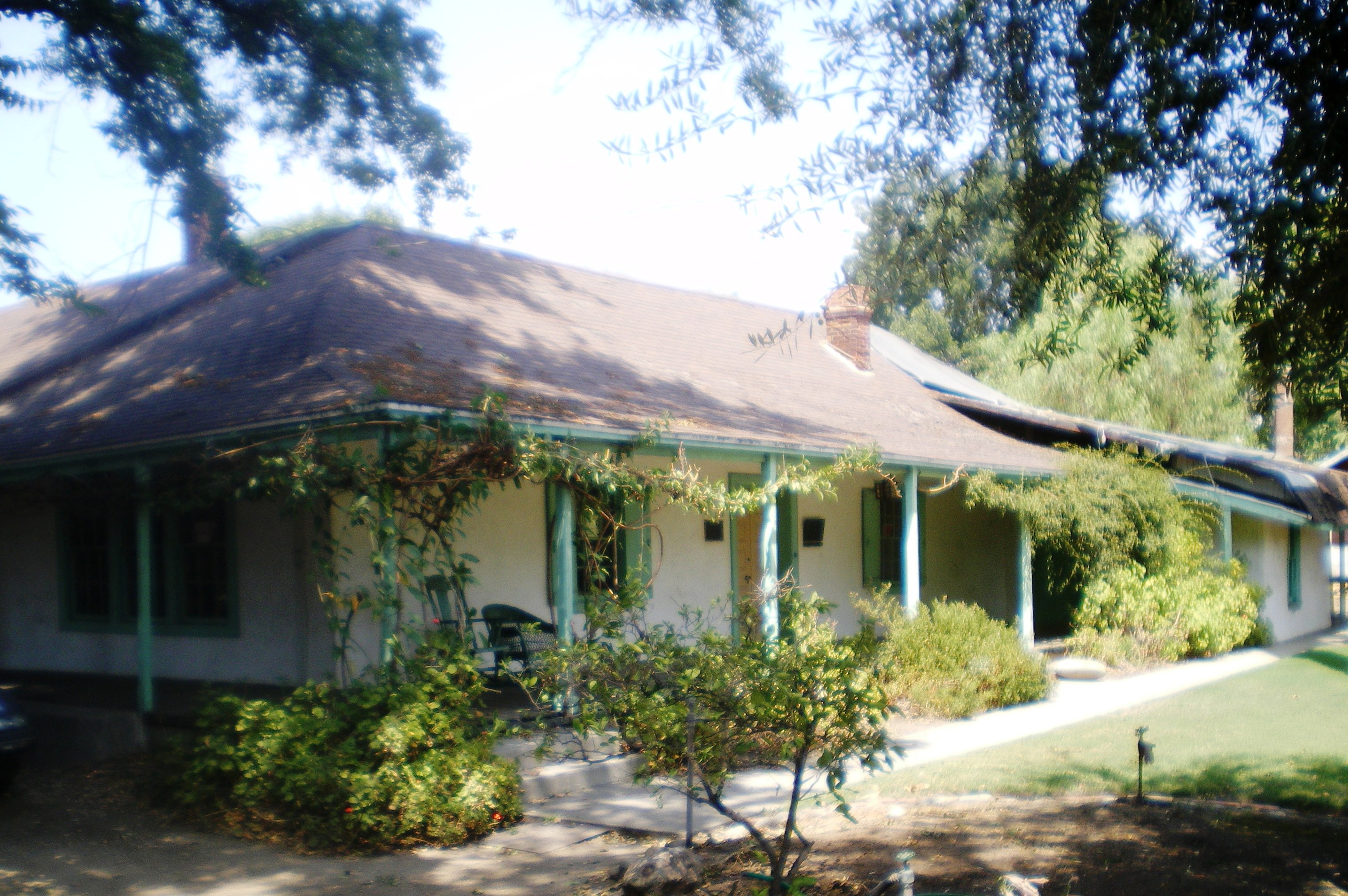
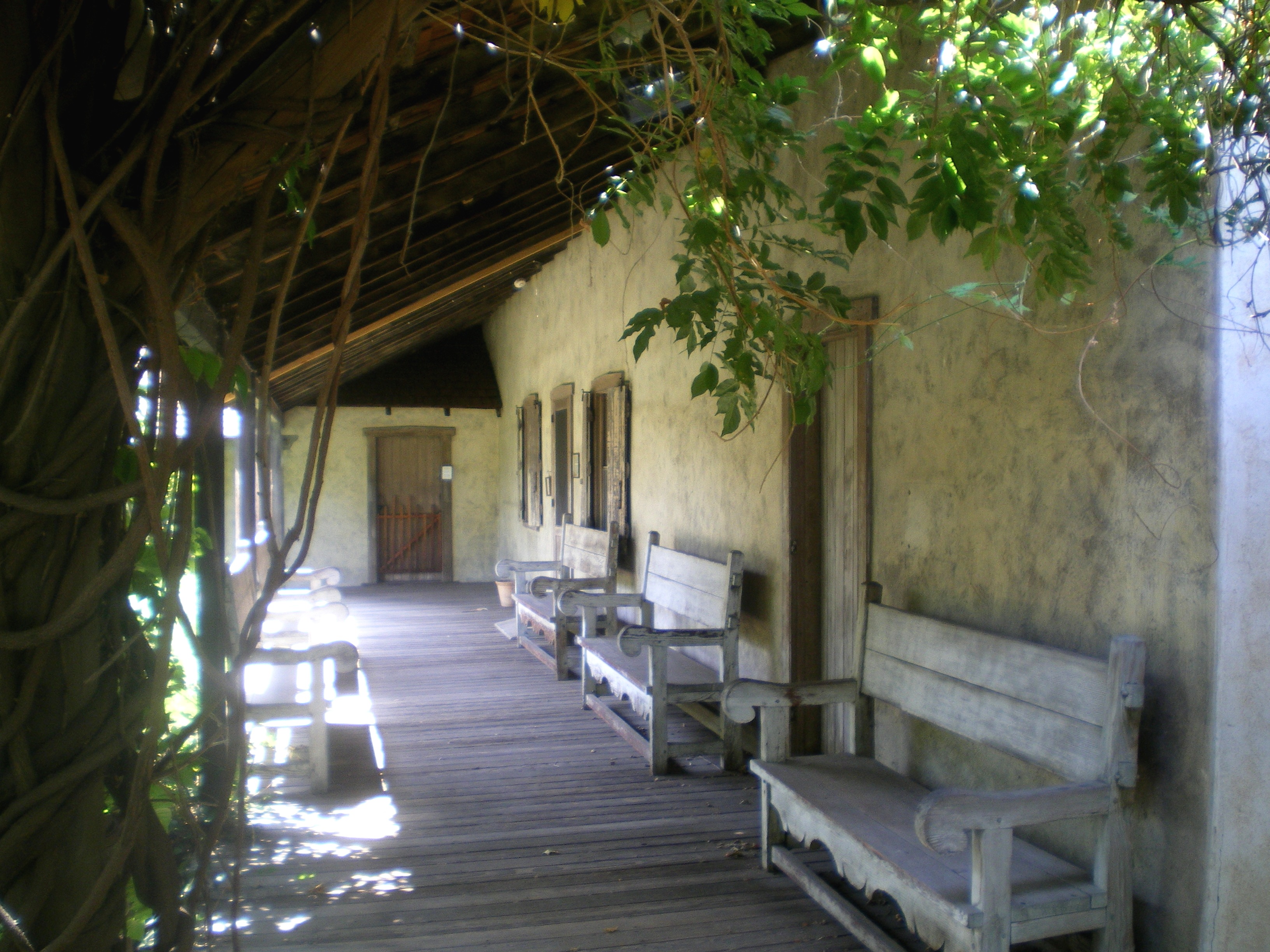
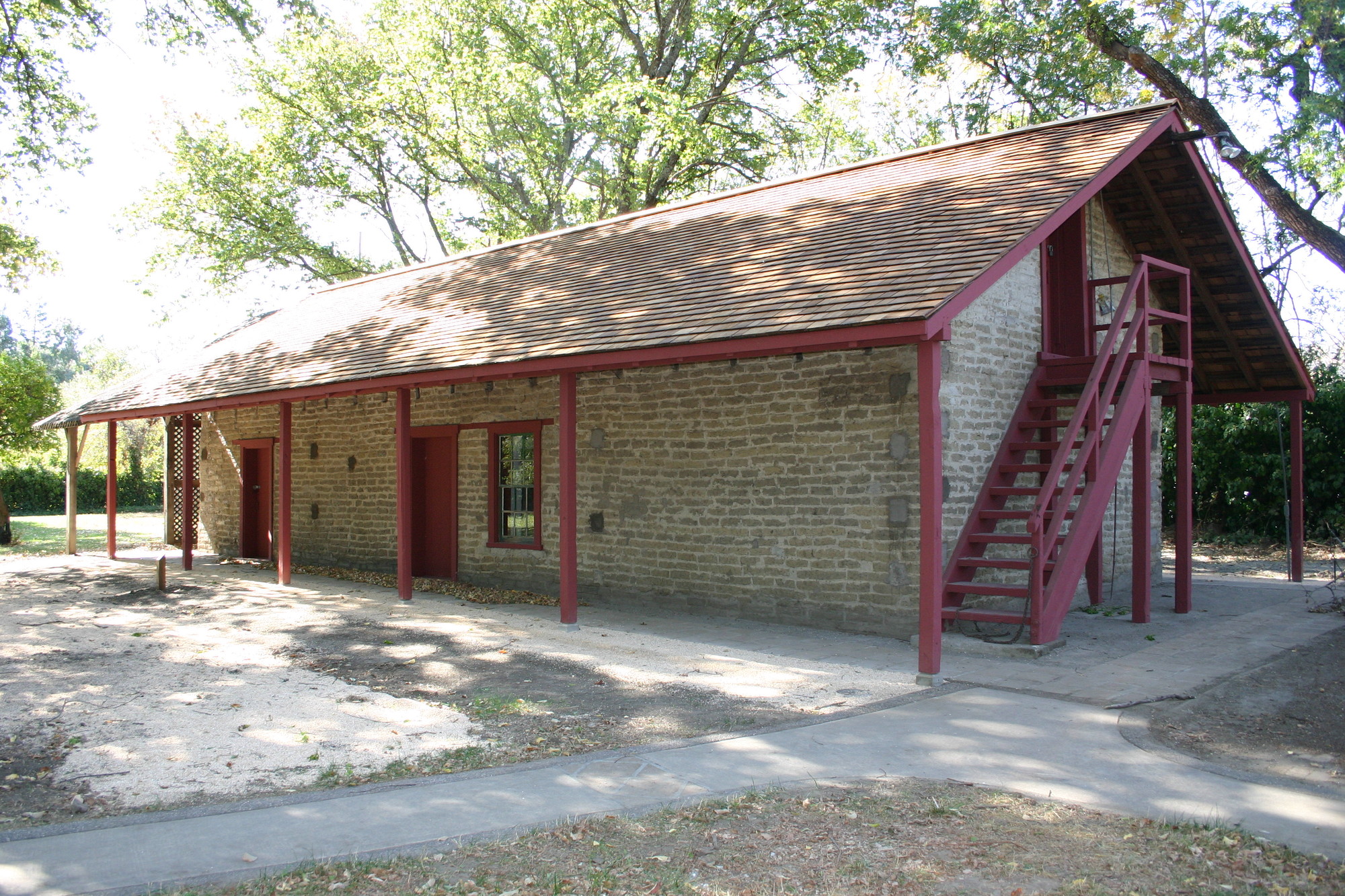
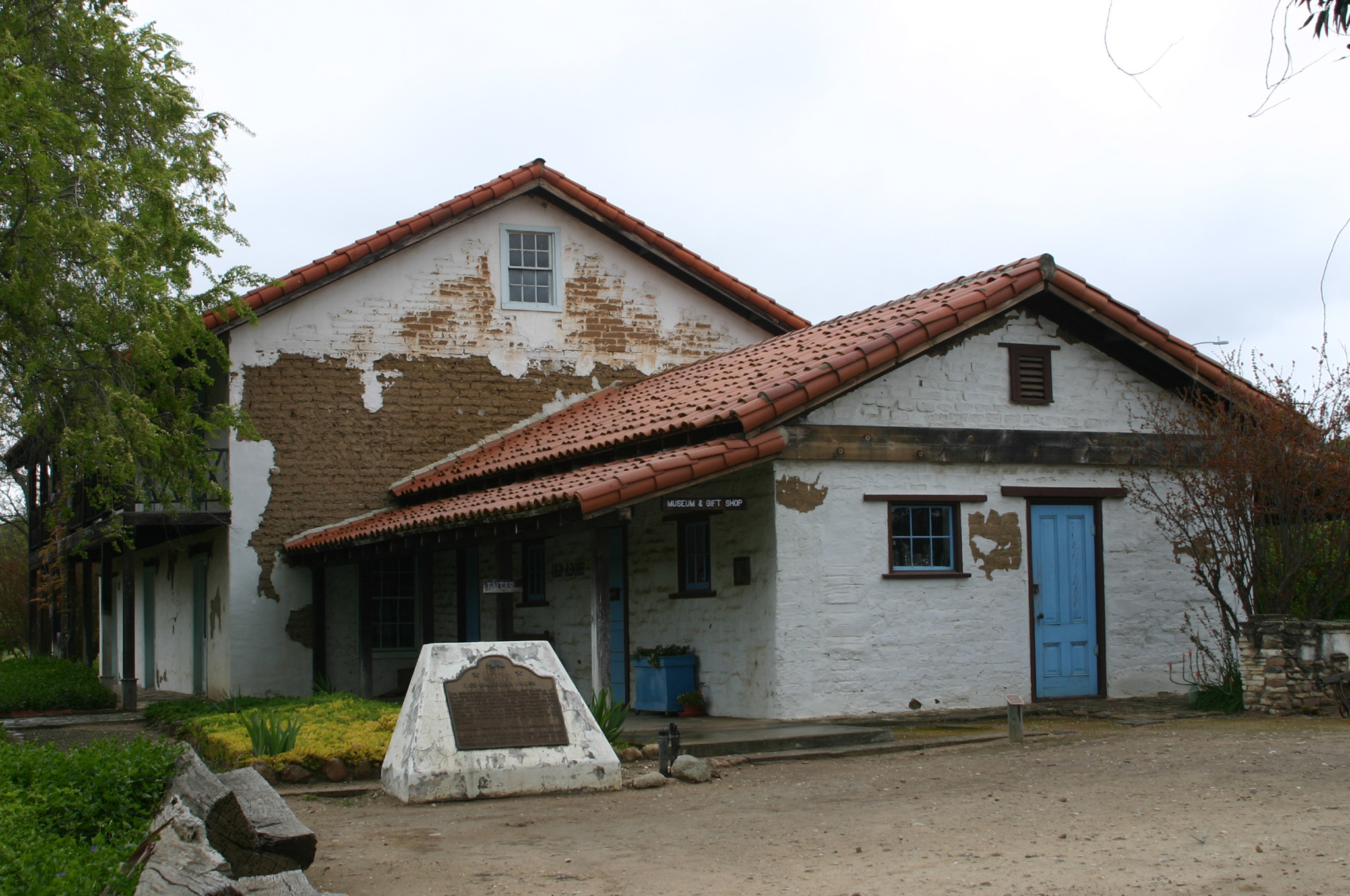
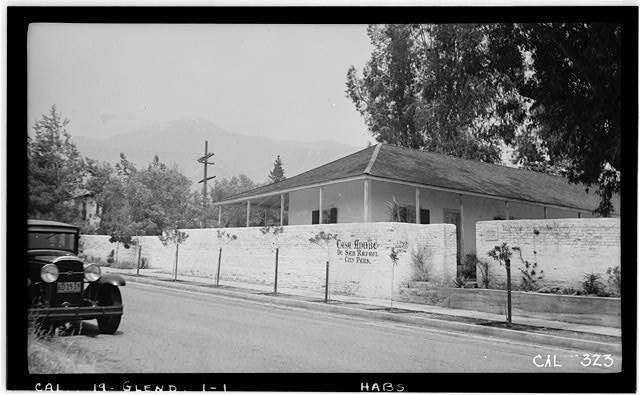
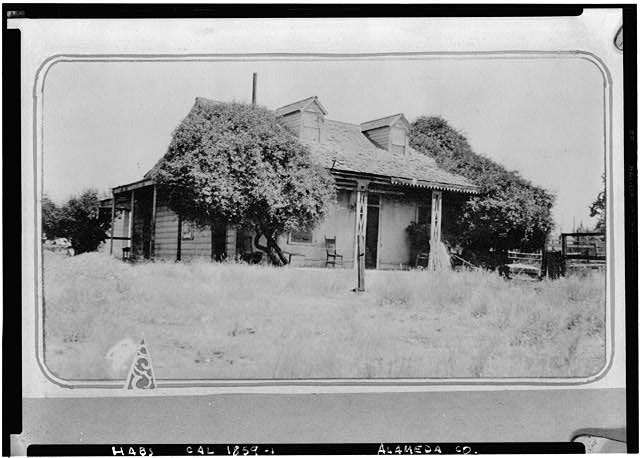
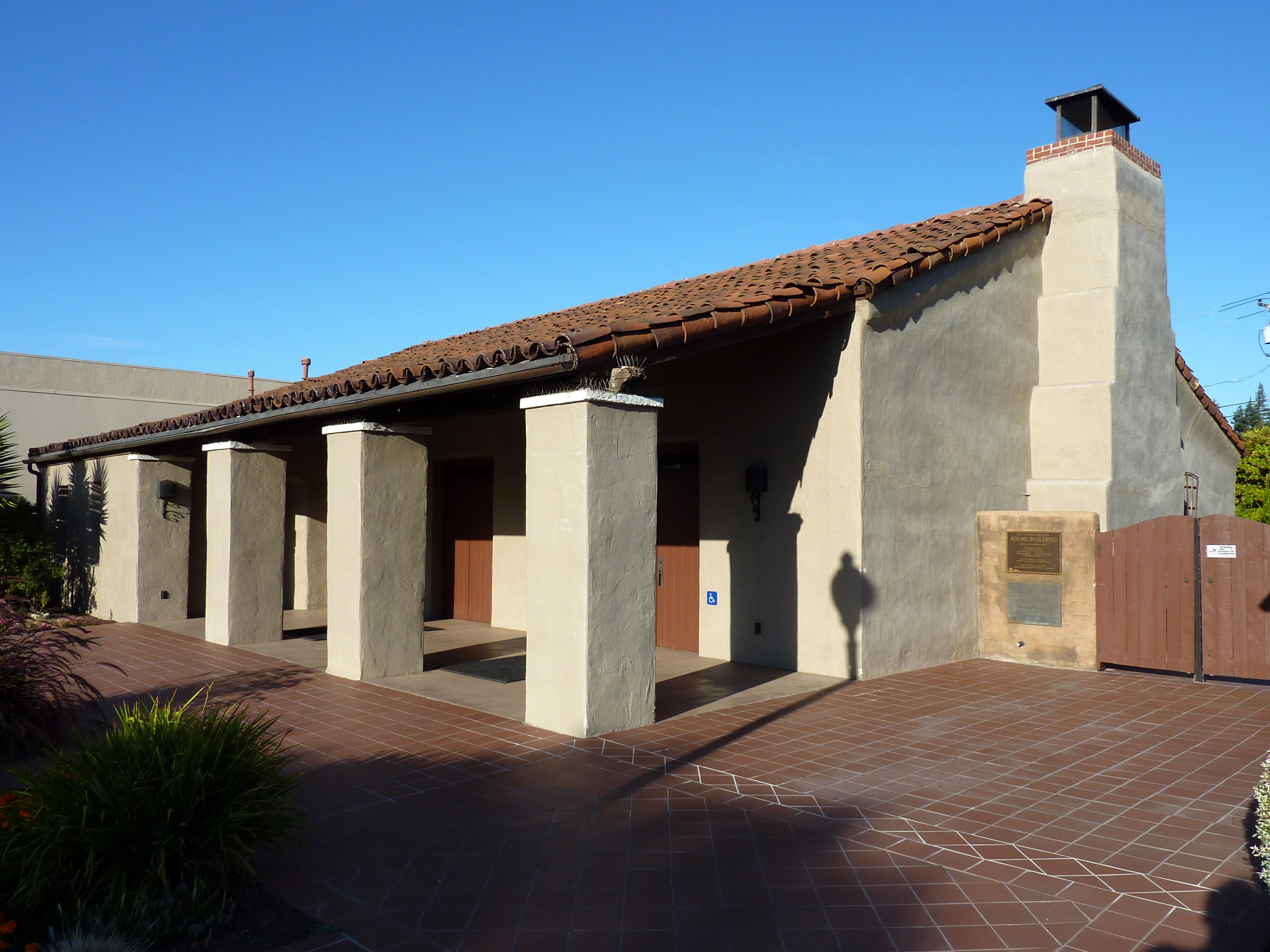
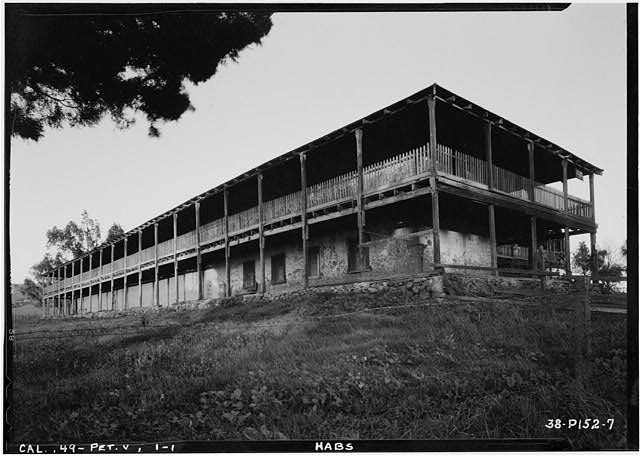
Mexican independence in 1821 and the secularisation laws of 1834 transferred enormous tracts of former mission land into private hands. Between 1834 and the American conquest in 1846, hundreds of land grants — the californio ranchos — were issued, each typically anchored by a long single-storey adobe ranch house built around an interior courtyard or under a wide covered corridor. The Moraga Adobe in present-day Orinda, the Yorba-Slaughter Adobe in Chino, the Montañez Adobe in San Juan Capistrano, and dozens of other rancho seats catalogued here belong to this period. They share a recognisable vocabulary: long low rooms strung in a row, a porch on milled posts wrapping two sides, walls usually whitewashed, a wood-shingle or fired-tile roof projecting wide enough to throw the rain clear of the adobe.
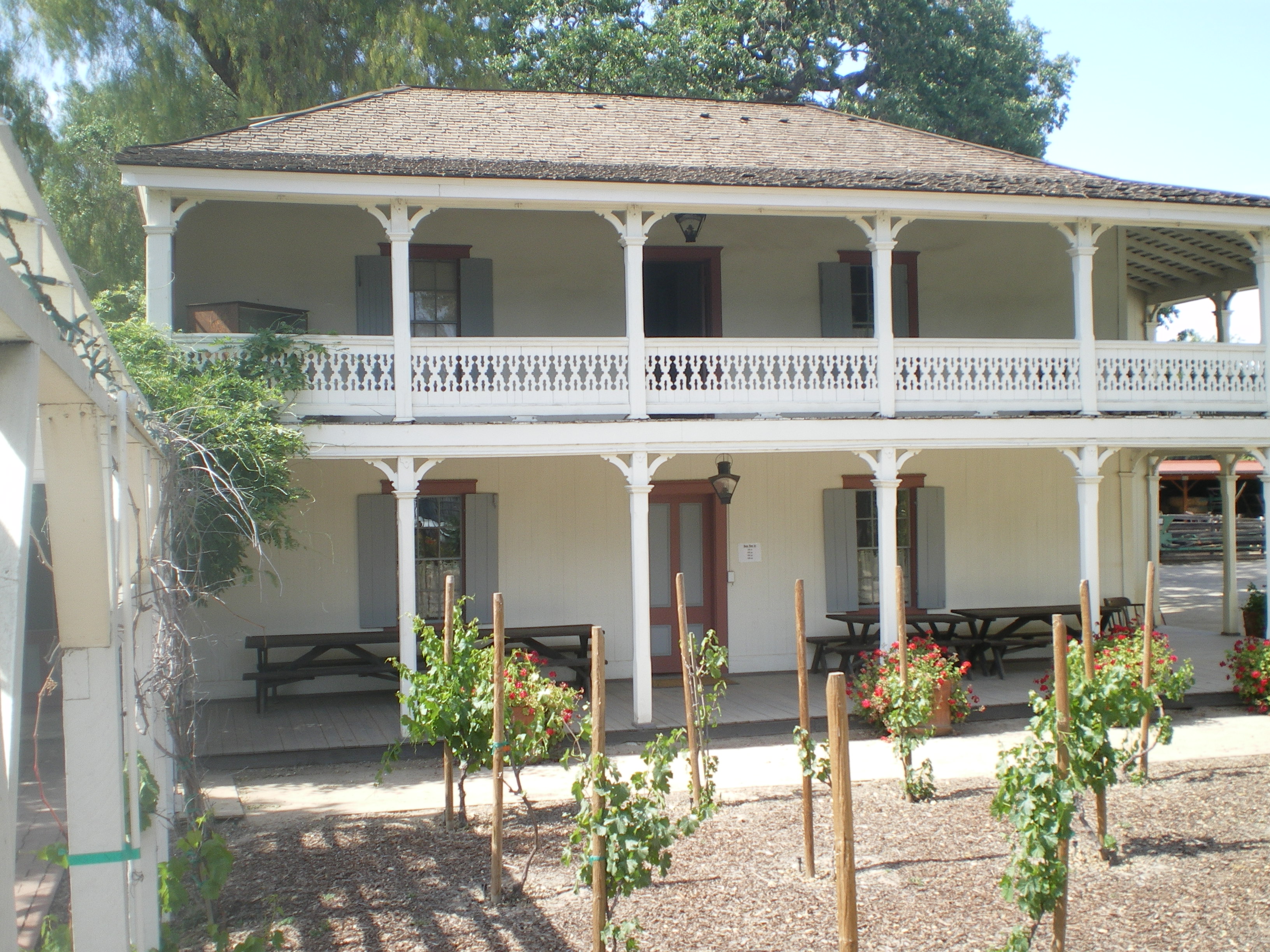
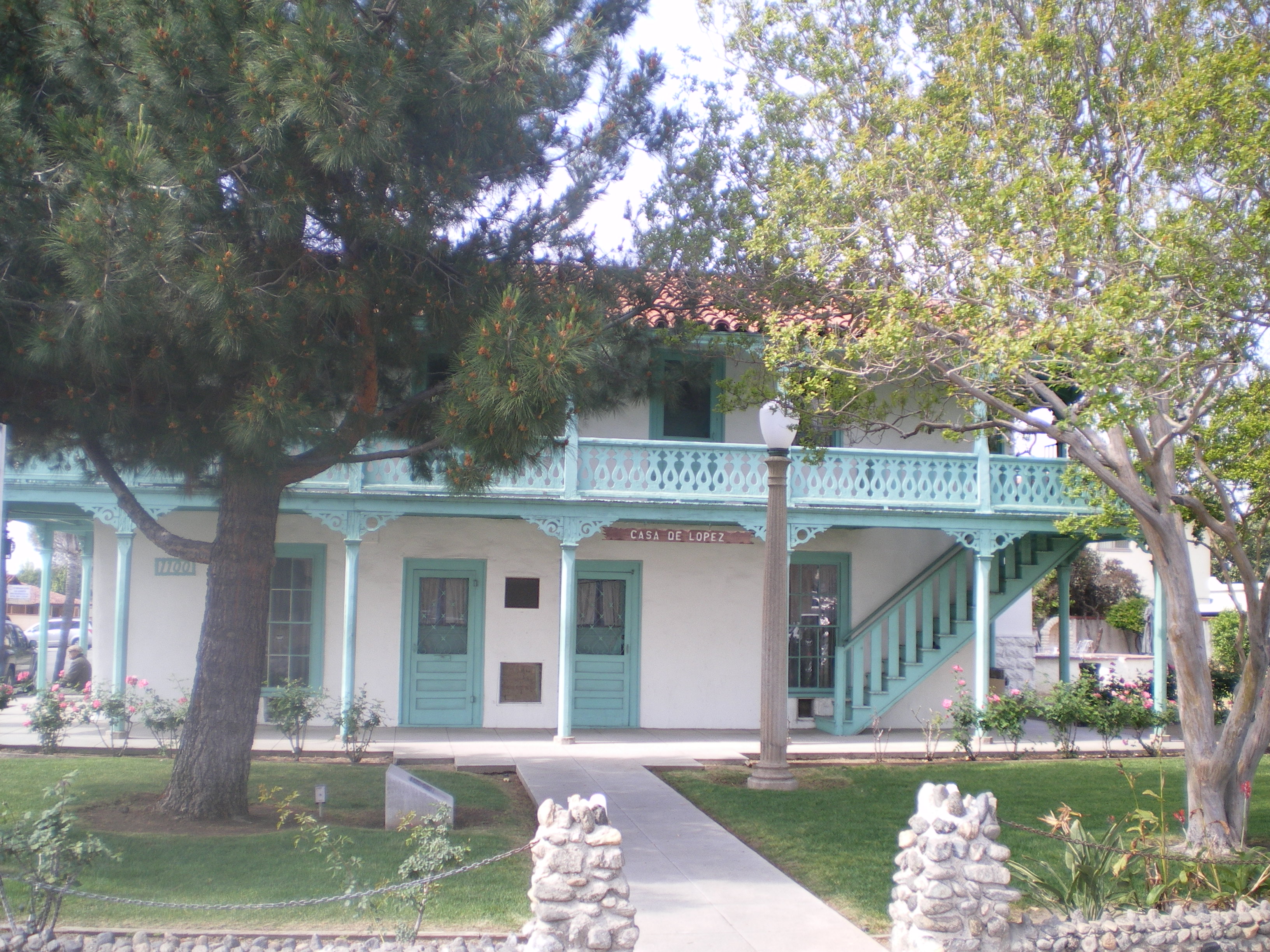
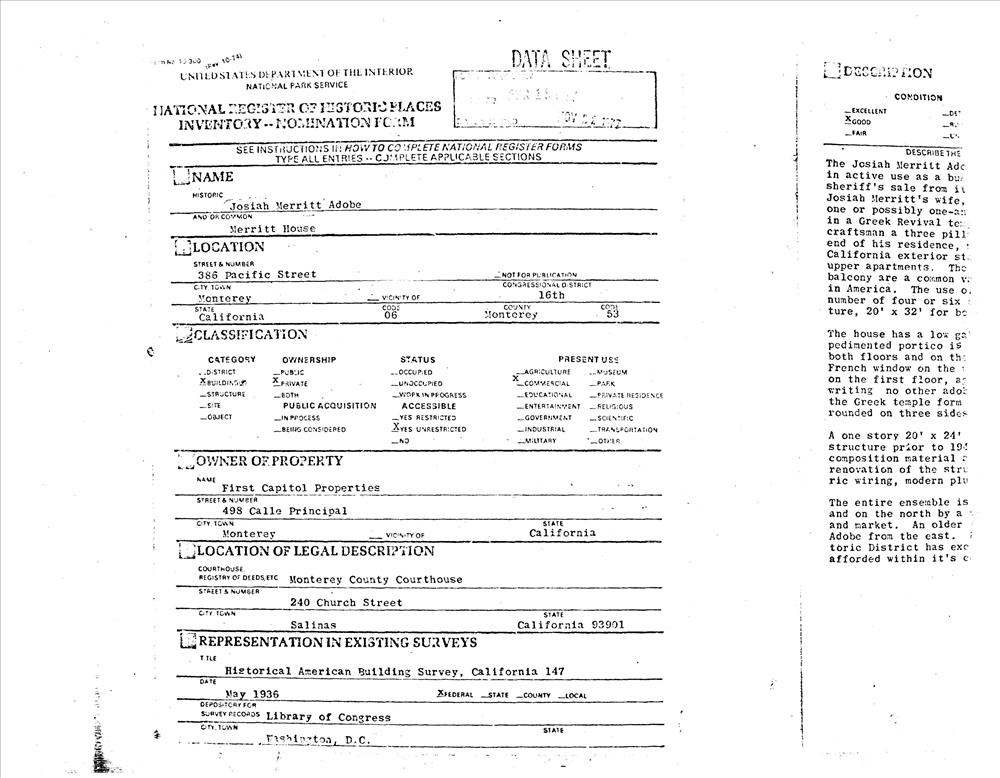
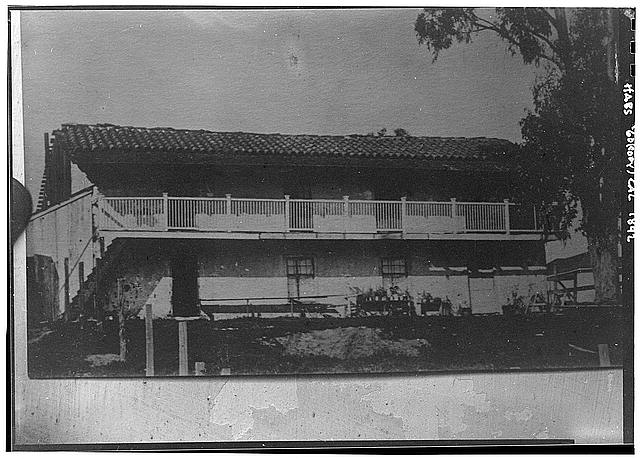
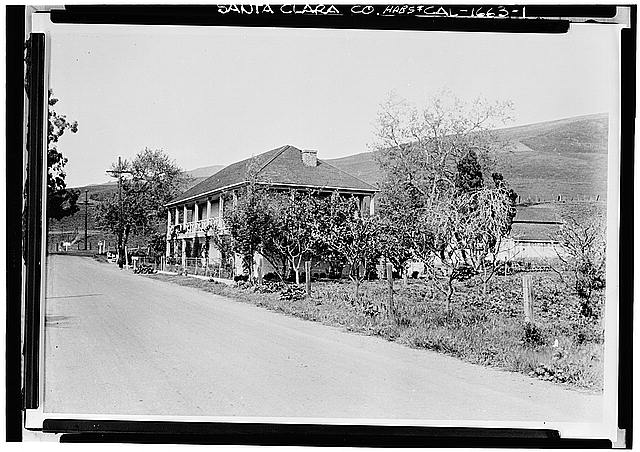
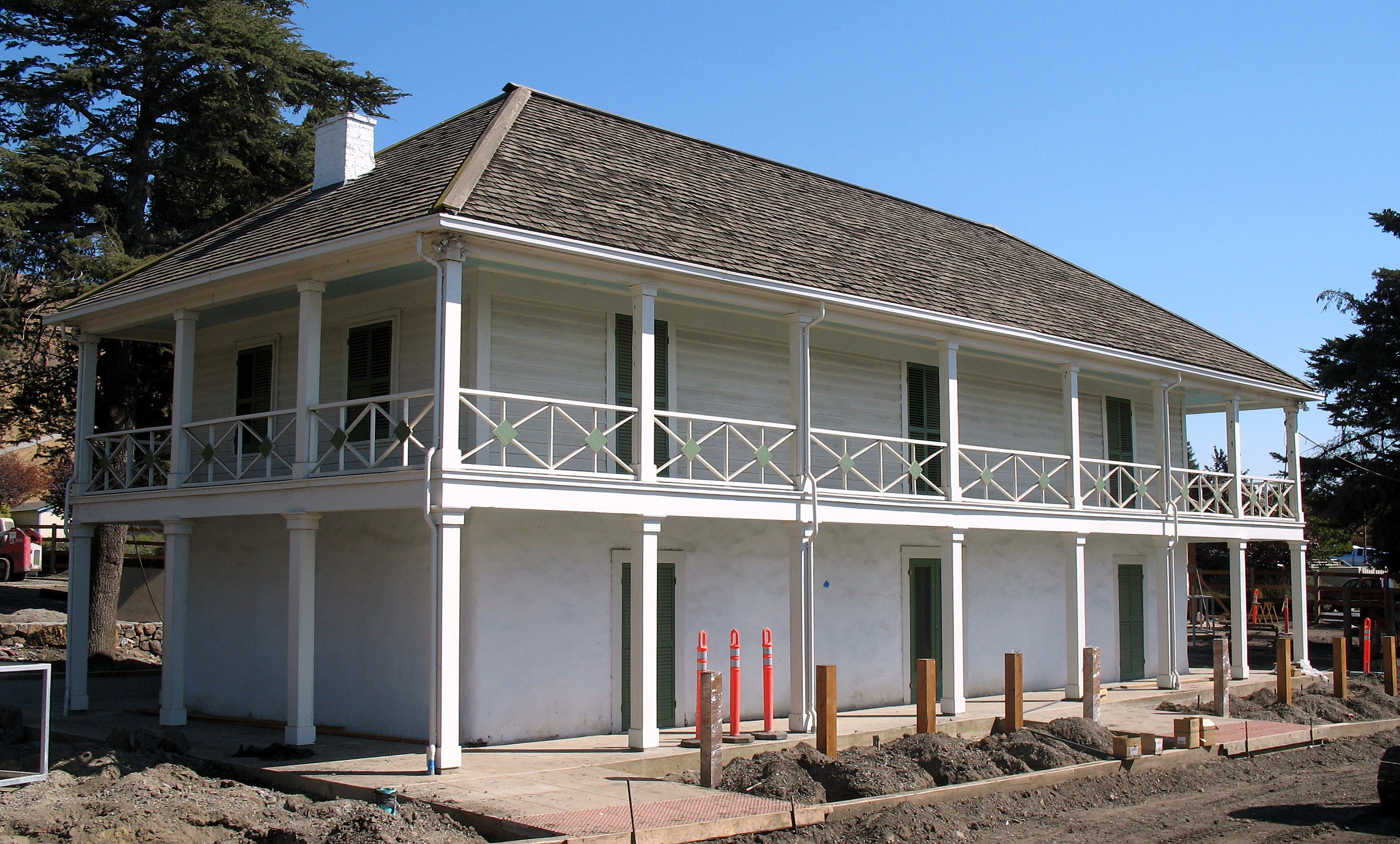
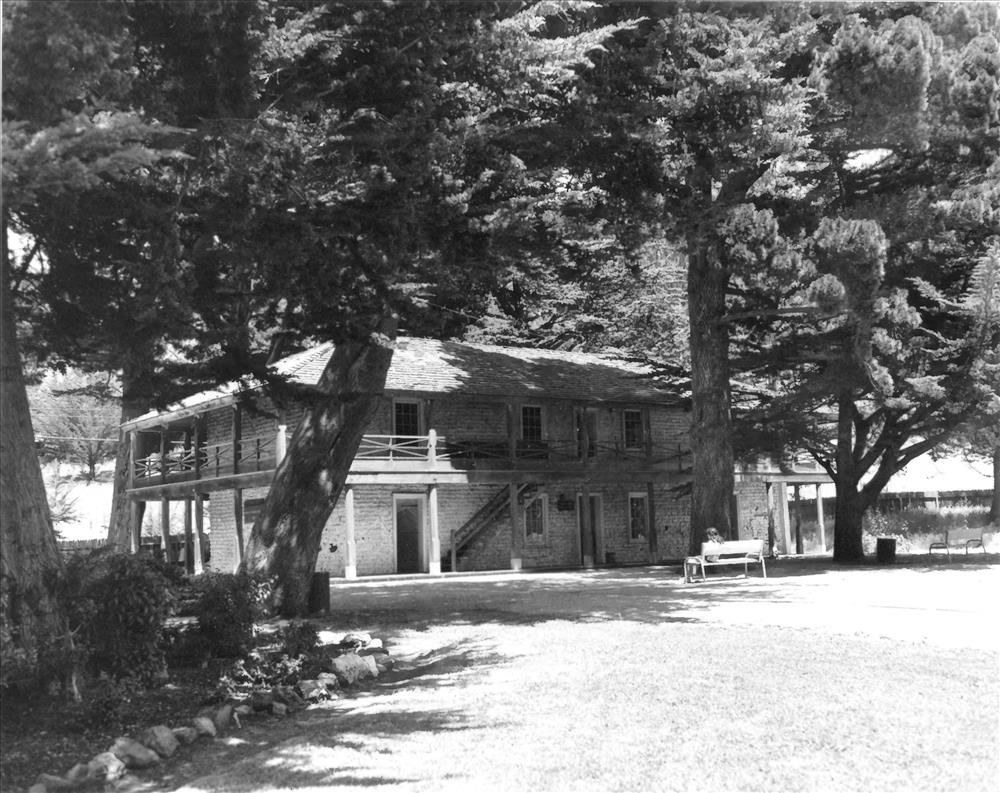
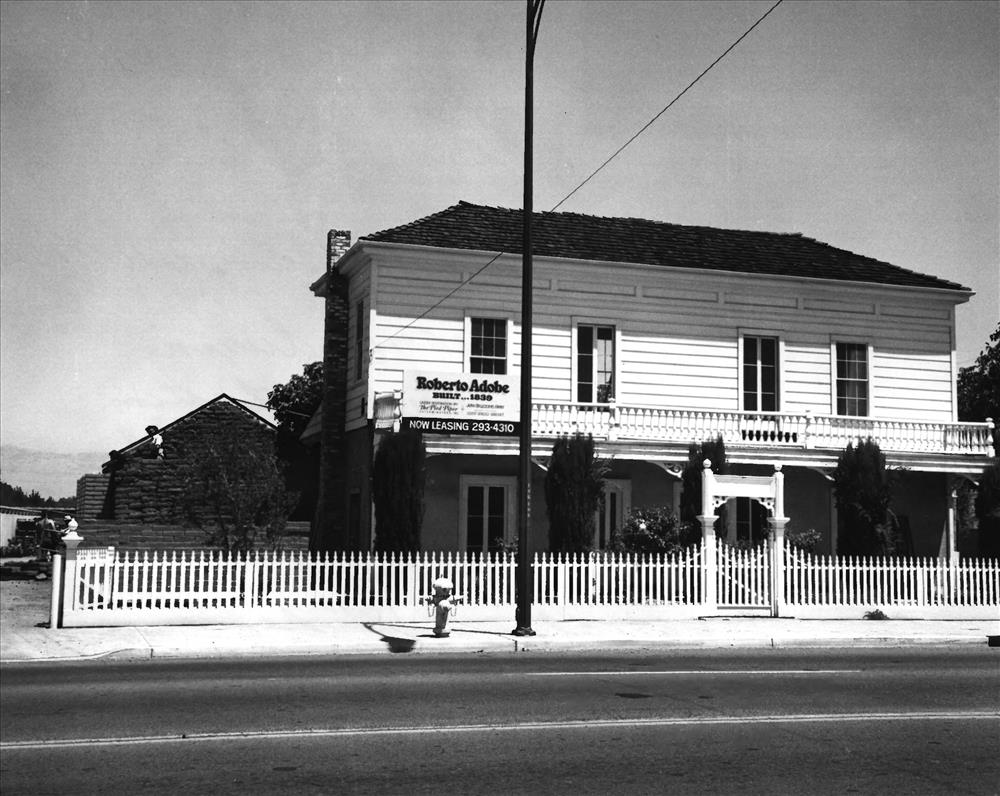
Monterey, the capital of Alta California under the Mexican administration, developed a distinct urban variant — the Monterey Colonial — that combined the californio adobe plan with a second-storey balcony of New England carpentry. Thomas Larkin’s house, the Cooper-Molera Adobe, the Customs House, and the Zanetta House at San Juan Bautista are the canonical examples. The form was widely imitated in Santa Barbara, San Diego, and the South Coast through the 1840s.
The American period and the long decline — 1848 to 1900
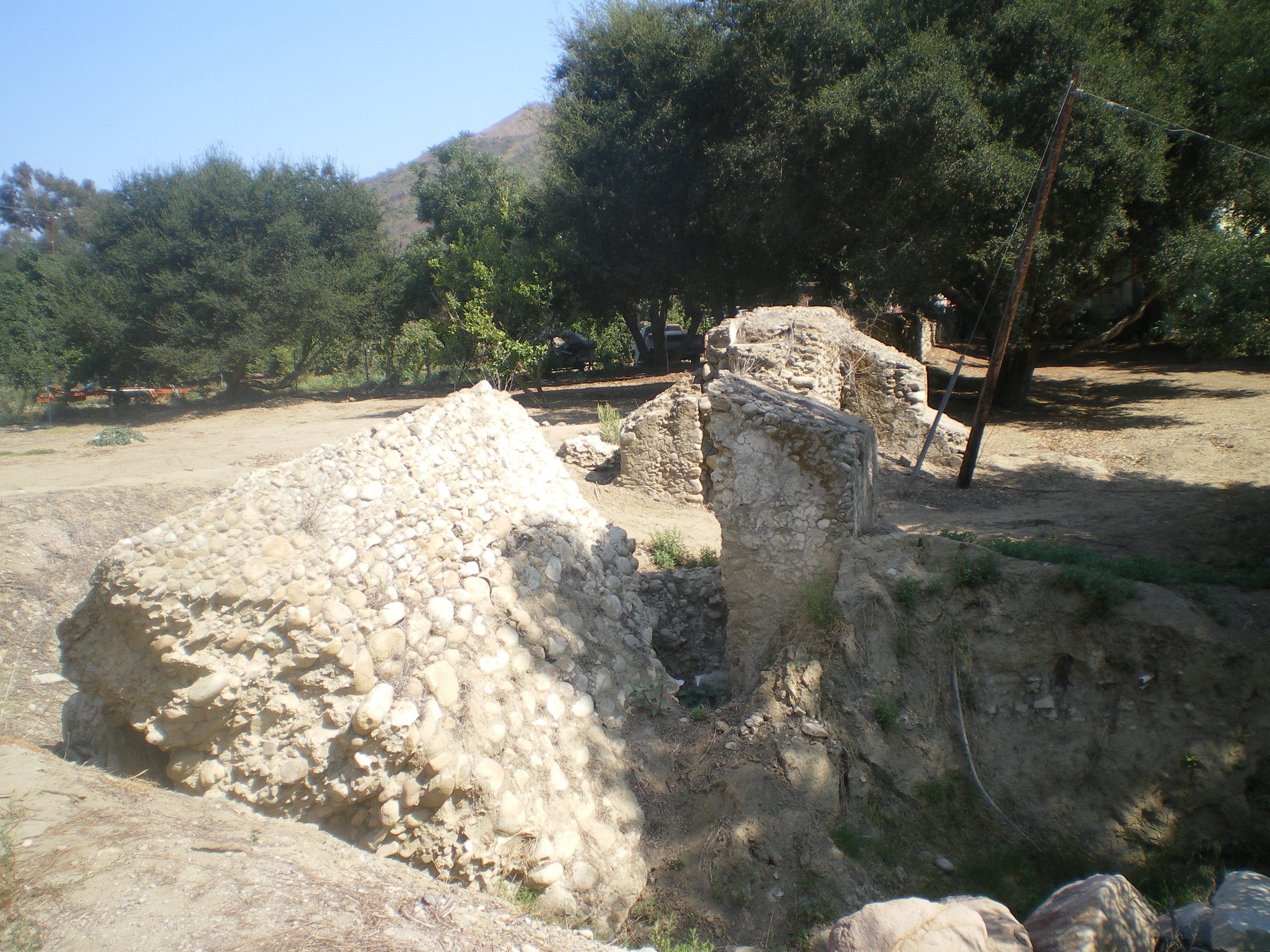
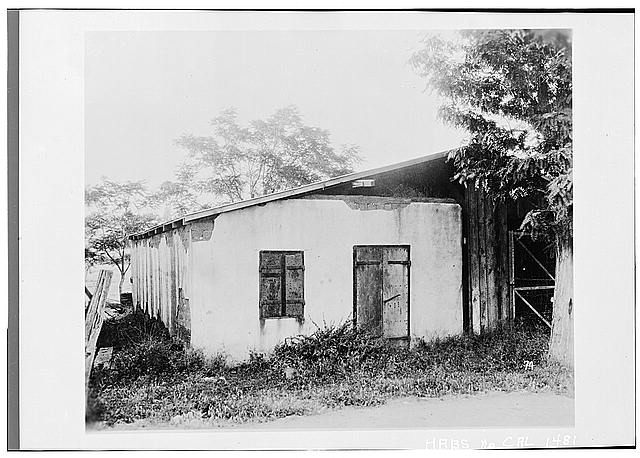
The American conquest of 1846, statehood in 1850, and the Gold Rush brought rapid change. Adobe construction continued for a generation in the working ranchos and in the smaller pueblos, but in the new American towns it was treated as old-fashioned, and many californio adobes were torn down or buried under wood-frame additions. Earthquakes did real damage as well — the 1857 Fort Tejon quake, the 1906 San Francisco earthquake, and the long sequence of smaller events along the coast — and unreinforced adobe is vulnerable to seismic loading. By 1900 the adobe tradition was, in working terms, dormant.
Mission Revival and the Spanish Colonial Revival — 1890 to 1940
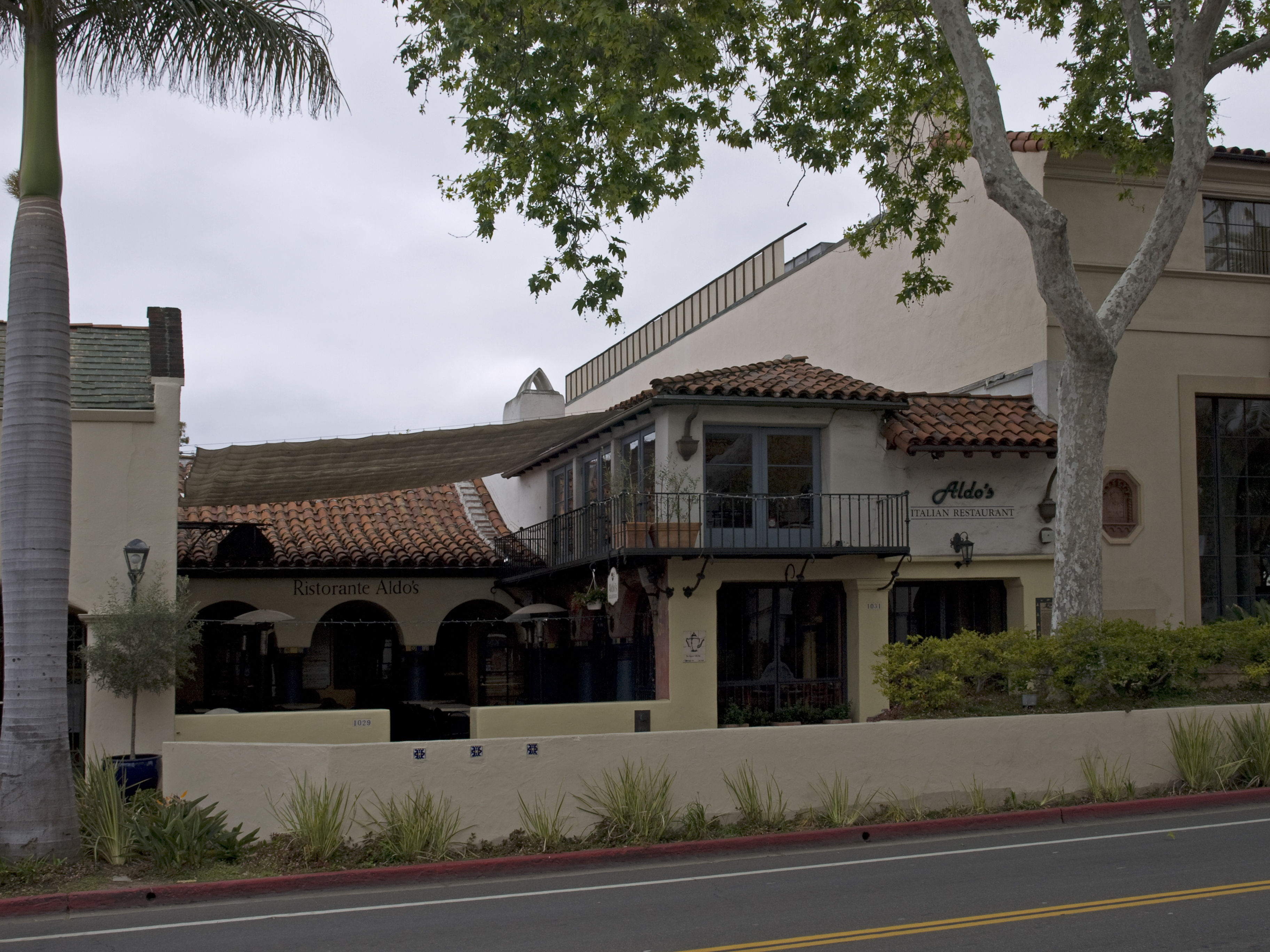
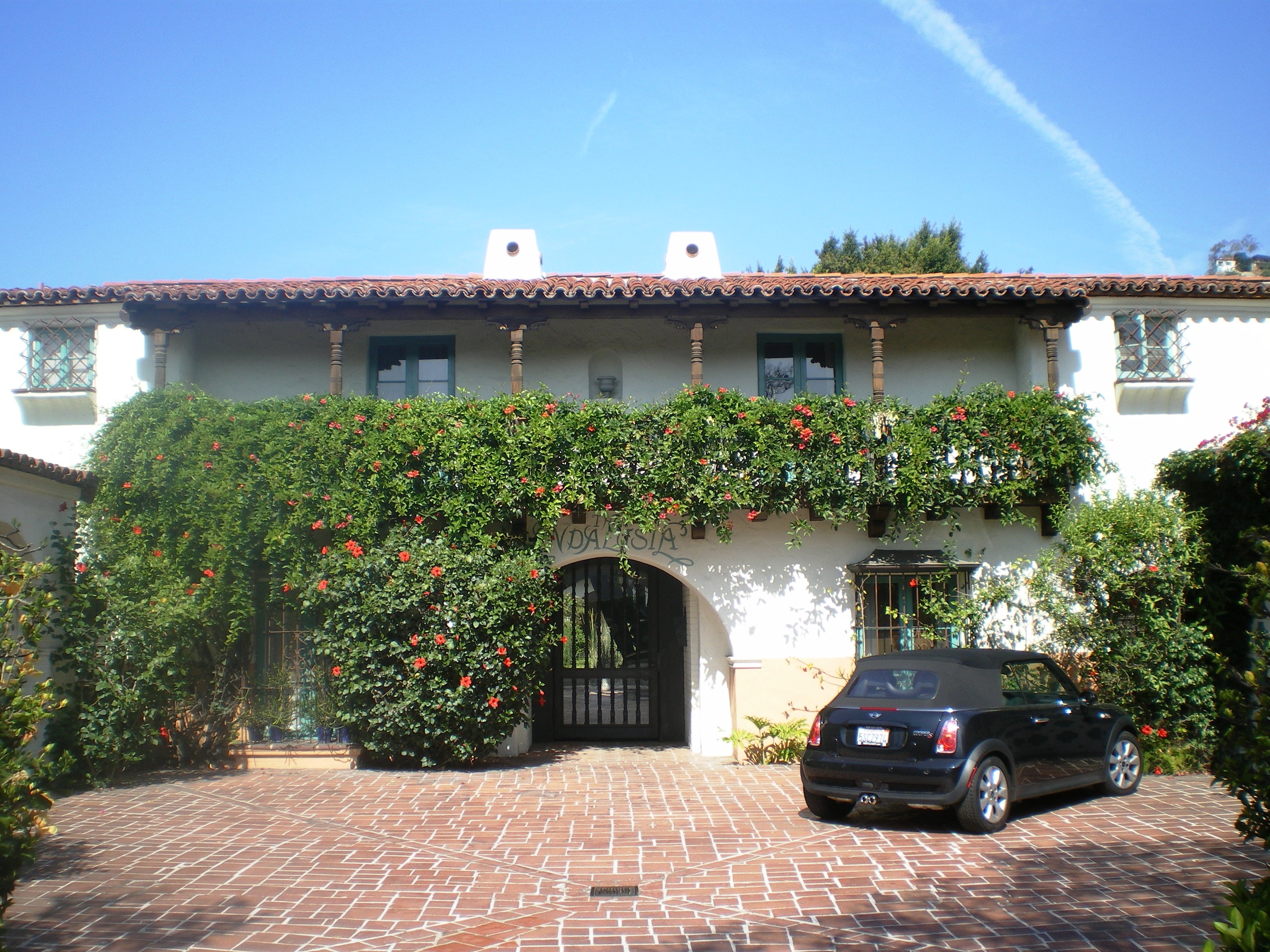
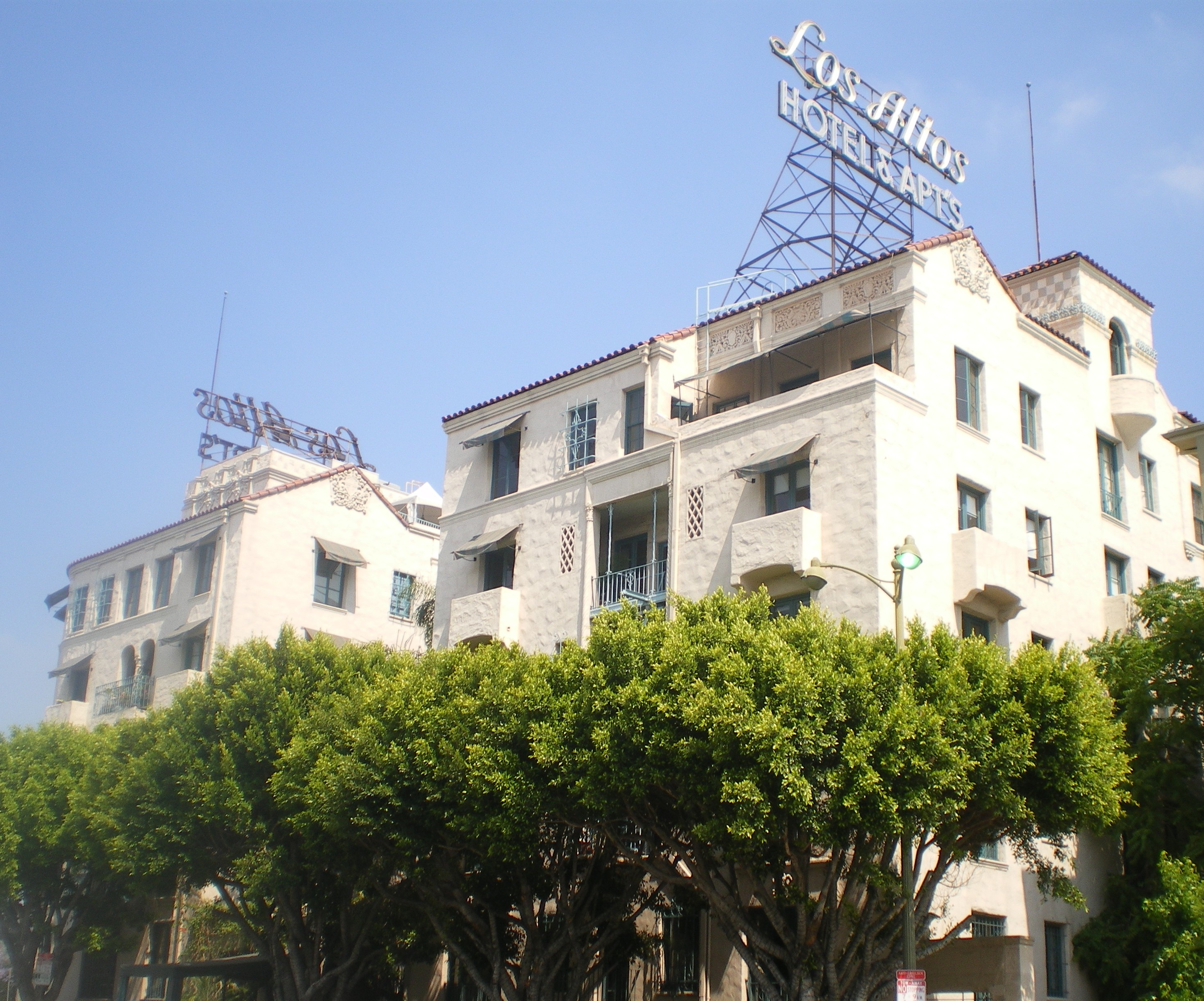
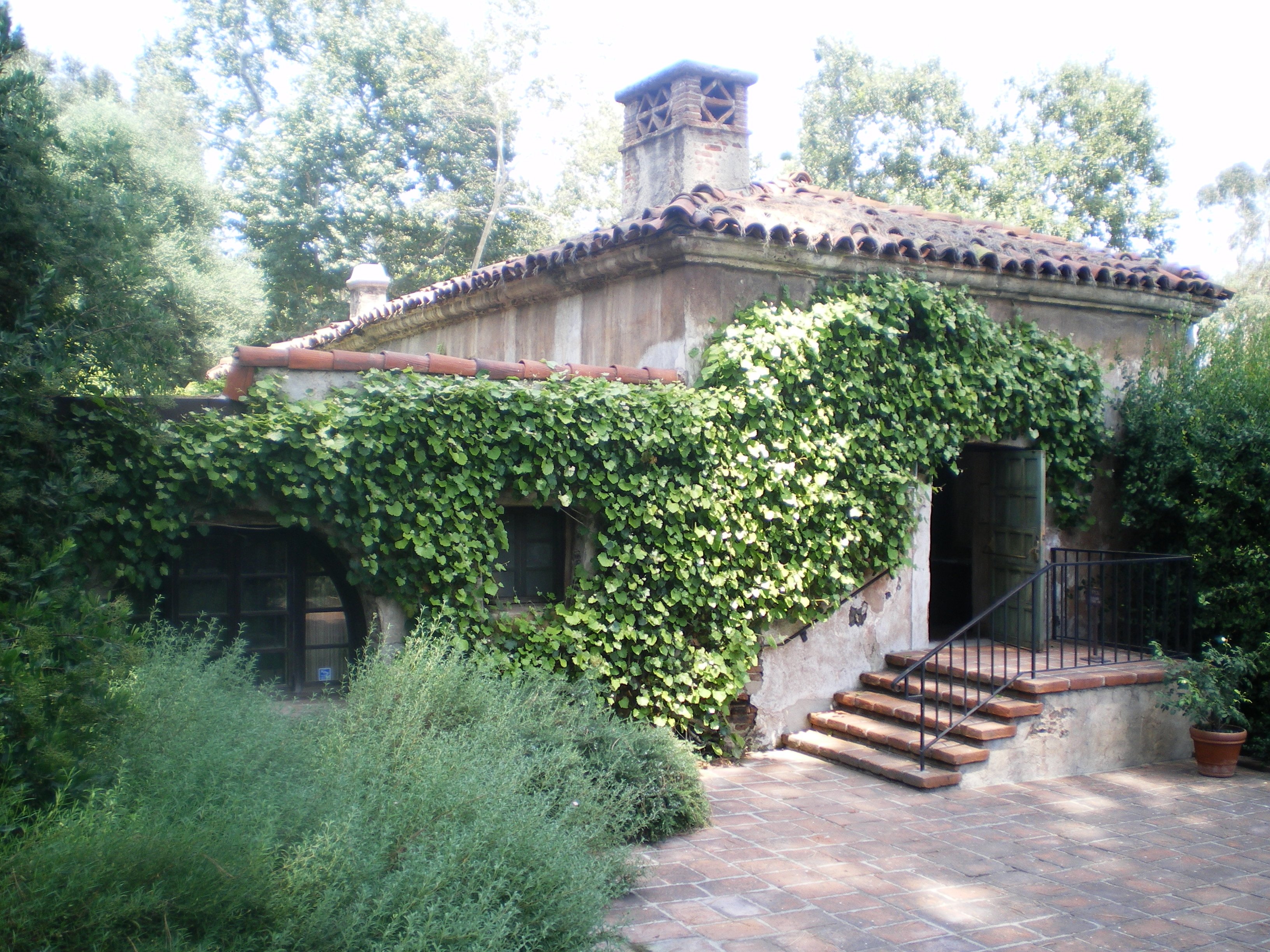
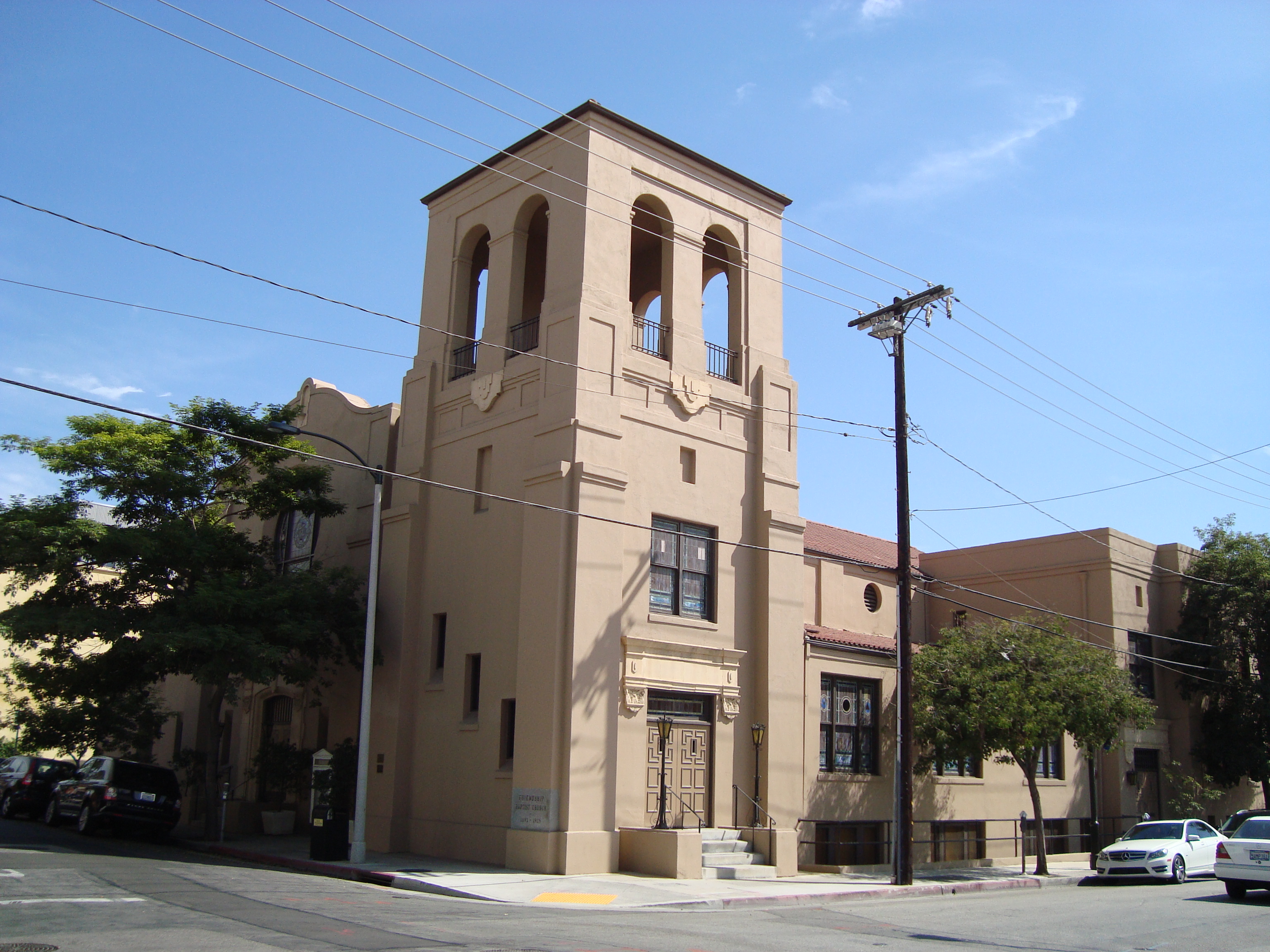
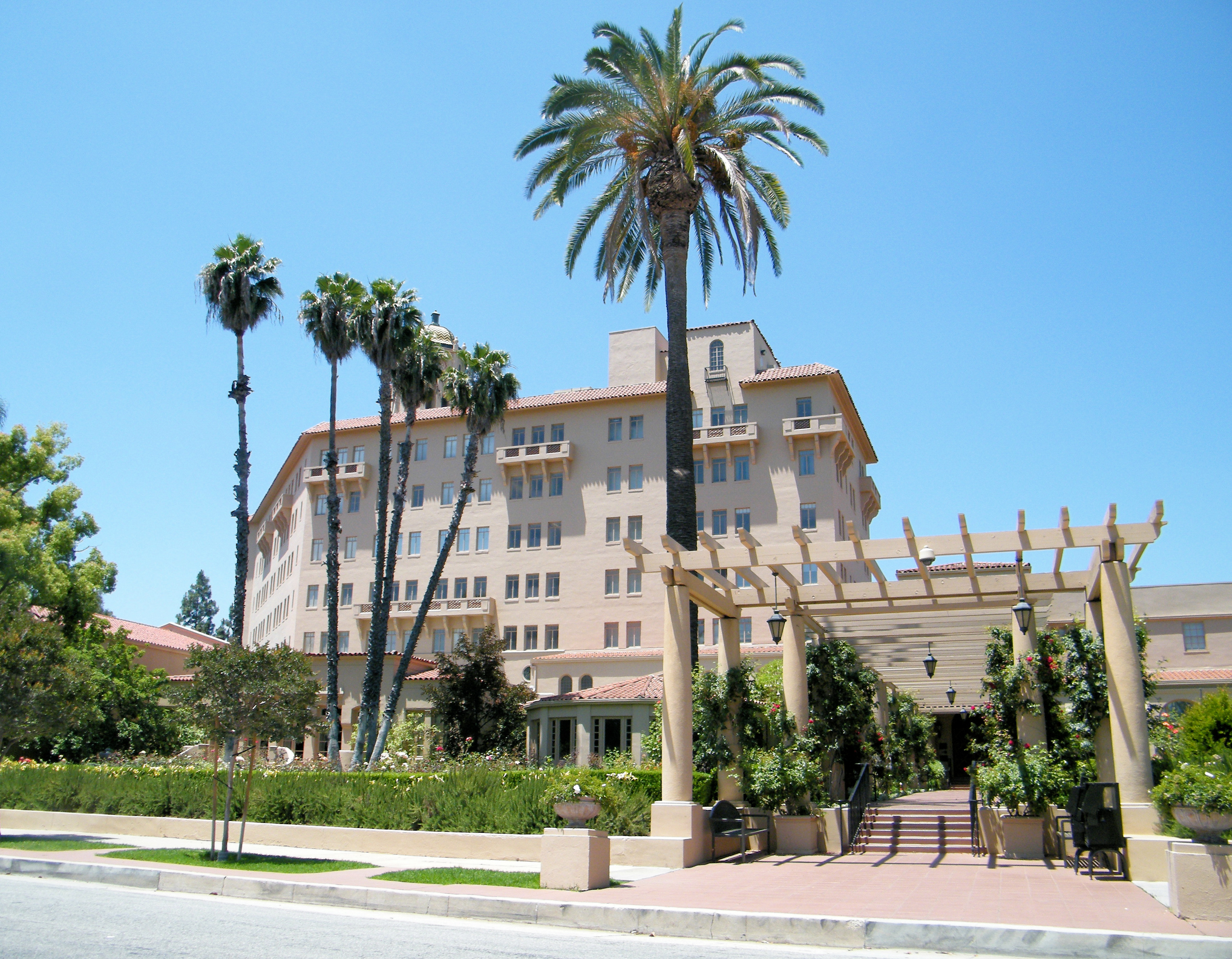
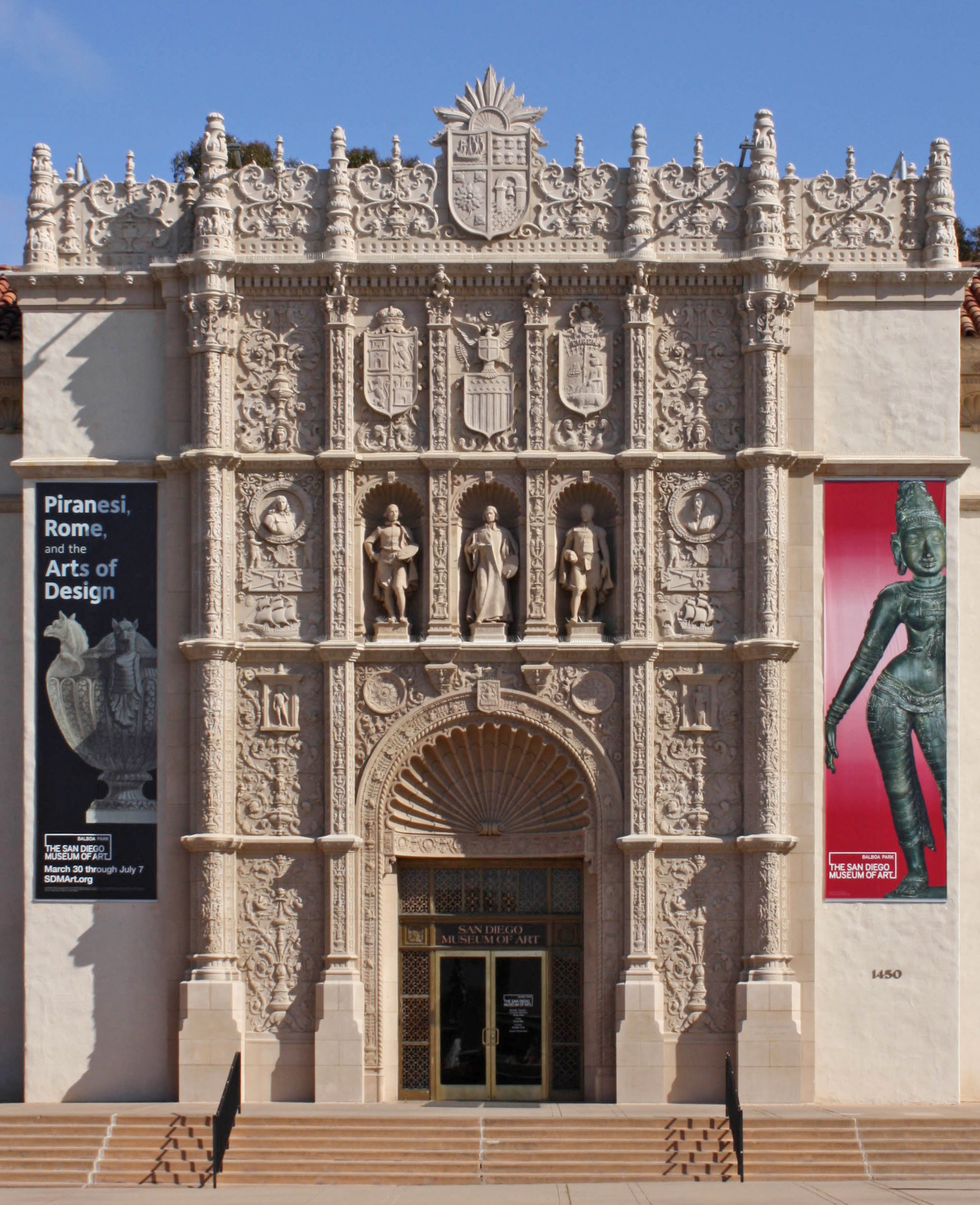
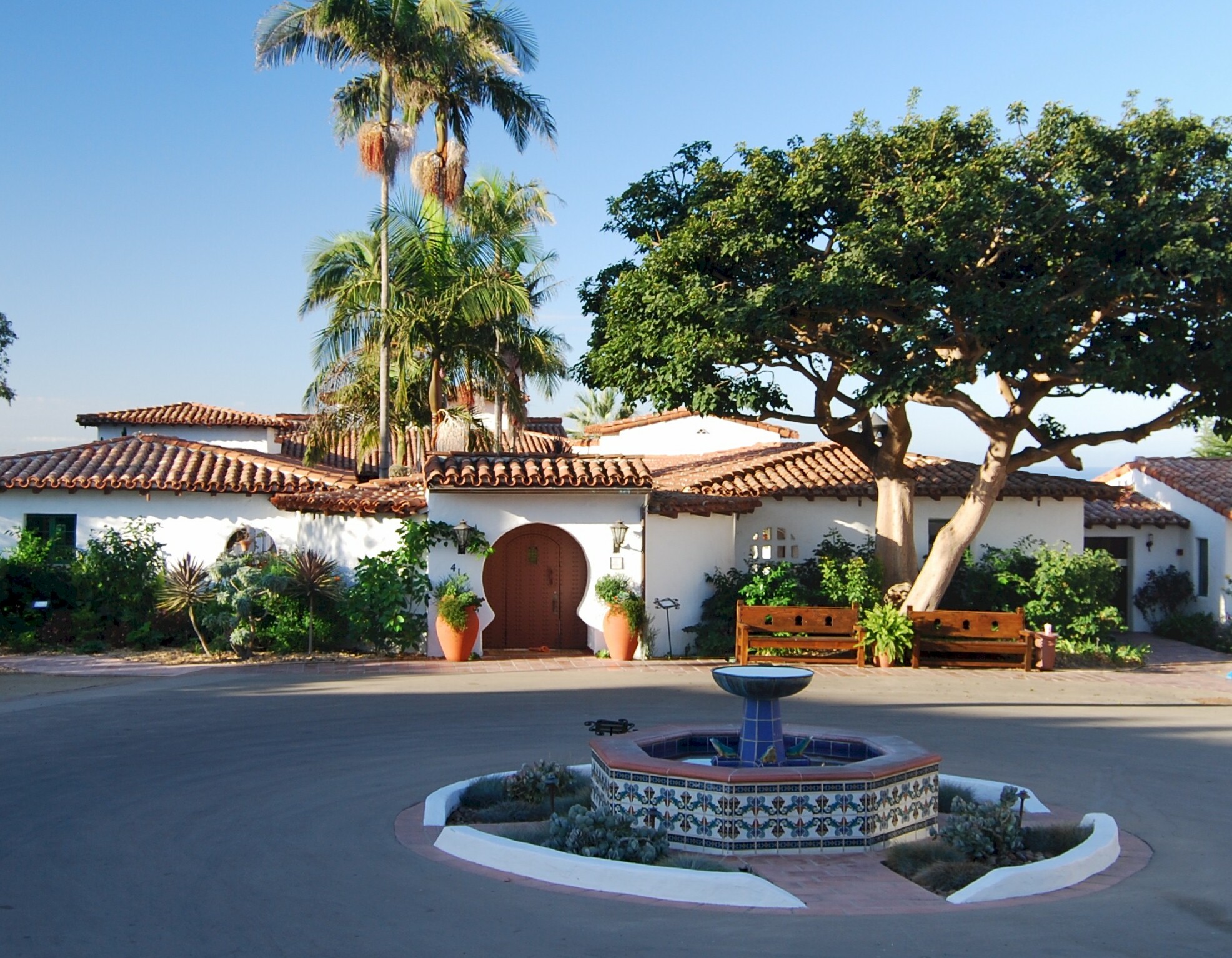
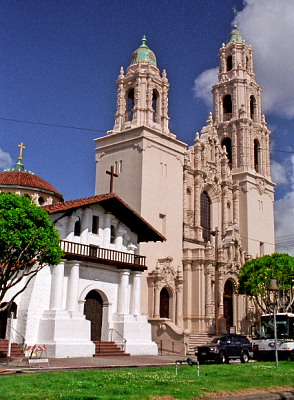
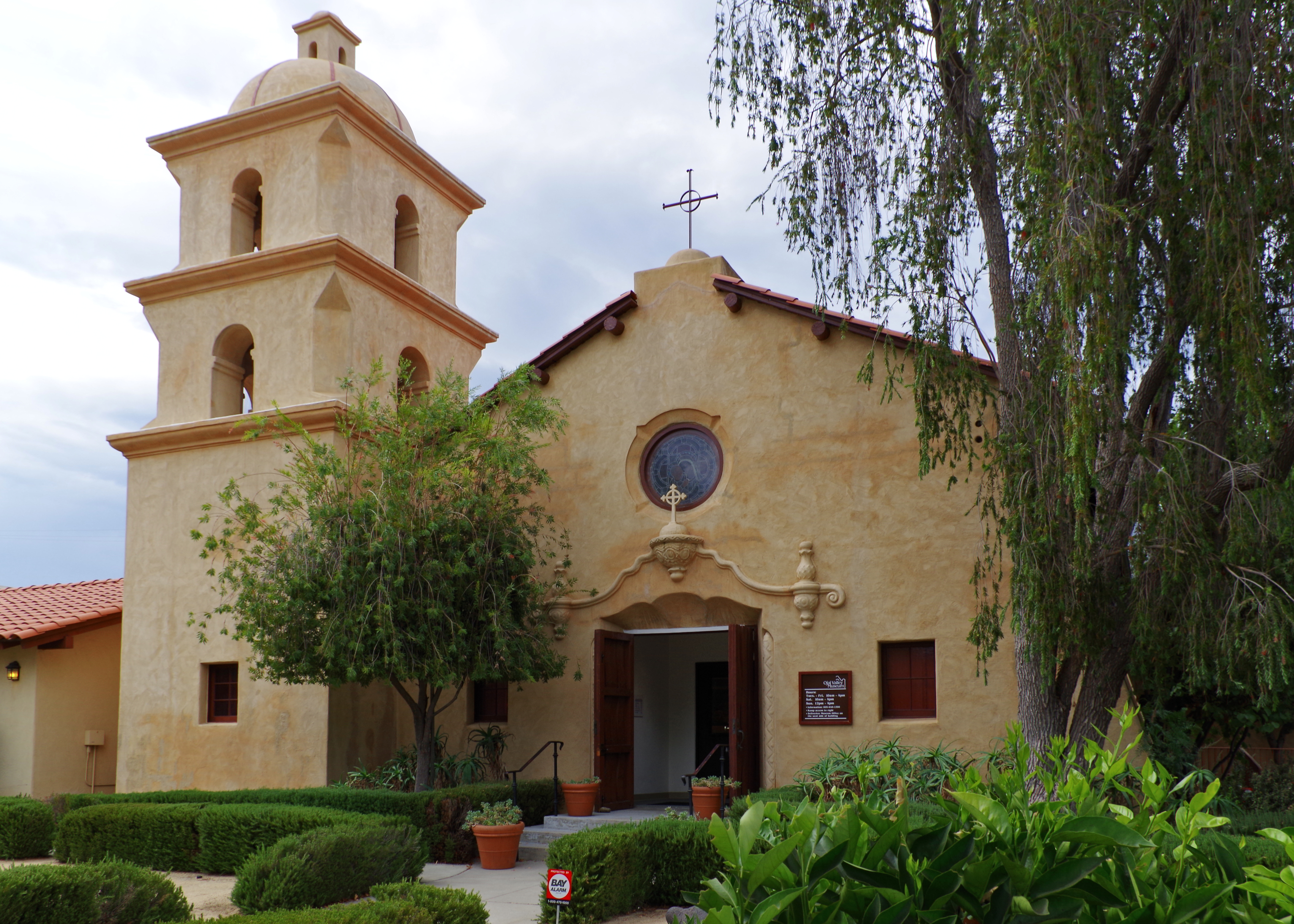
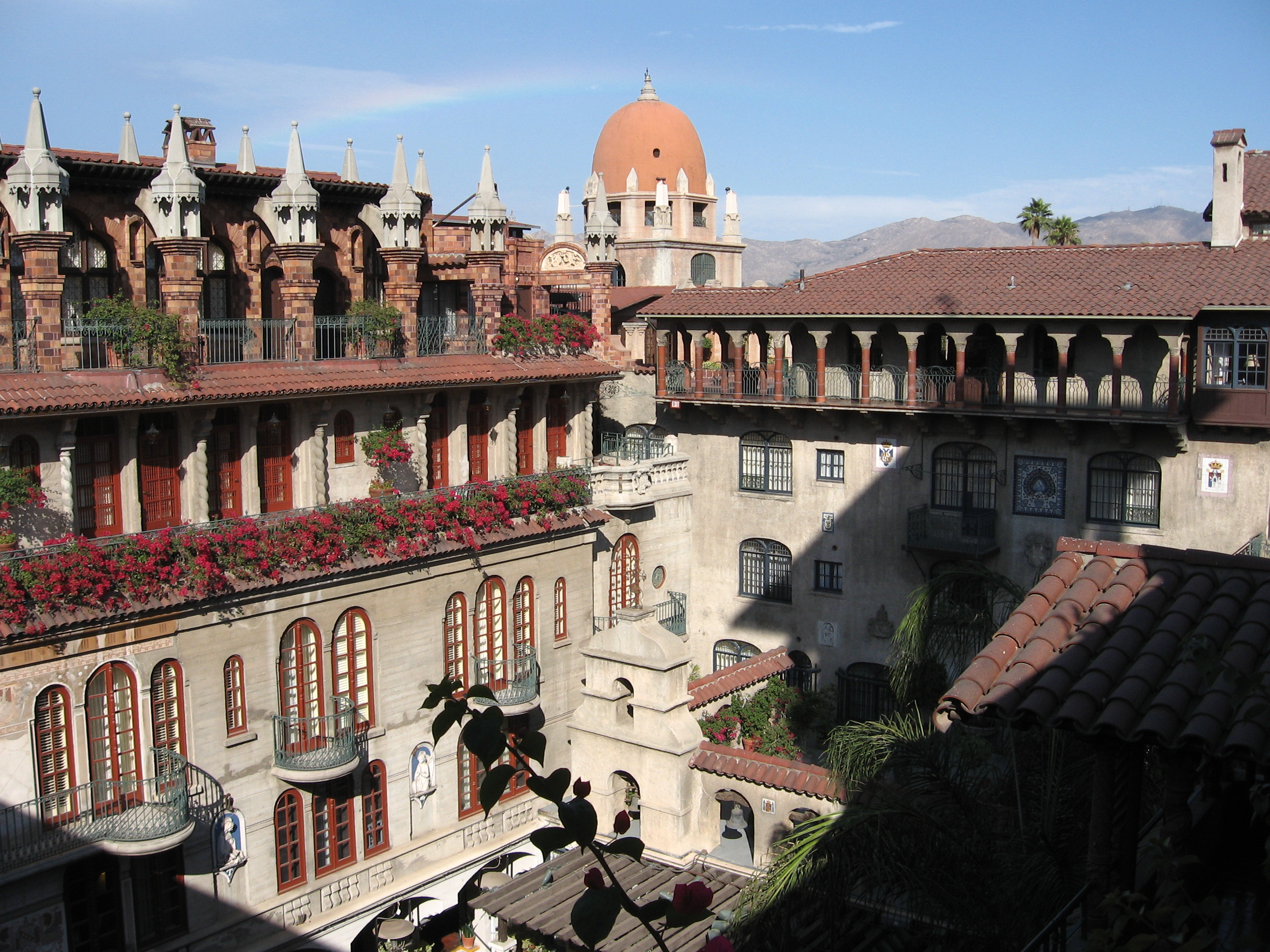
The reversal began with the Mission Revival of the 1880s and 1890s — the Helen Hunt Jackson reading of californio architecture as a romantic regional inheritance — and culminated in the great Spanish Colonial Revival projects of the 1920s and 1930s. Santa Barbara codified the style after the 1925 earthquake; Stanford White and George Washington Smith built it for the resort and university trade; the Adamson House at Malibu (Stiles O. Clements, 1929) and Casa del Herrero at Montecito (George Washington Smith, 1925) are the residential summits of the movement. These buildings are not all adobe in the strict sense — many are stucco over a steel-and-concrete frame — but they consciously revive the californio plan, the long covered loggia, the tile roof, the interior courtyard, and the catalog includes the most distinguished of them alongside the earlier originals.
What follows is the catalog of California’s adobe houses, grouped by city in roughly geographic order from the southern coast to the upper San Joaquin and the Bay Area.
Adobes to see in California
A short list — ordered roughly by date — drawn from the catalog for first-time visitors. Each entry links to its documented page in the Atlas.
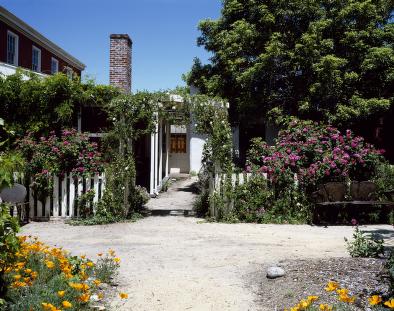 Plate II NHL
 Cooper-Molera Adobe
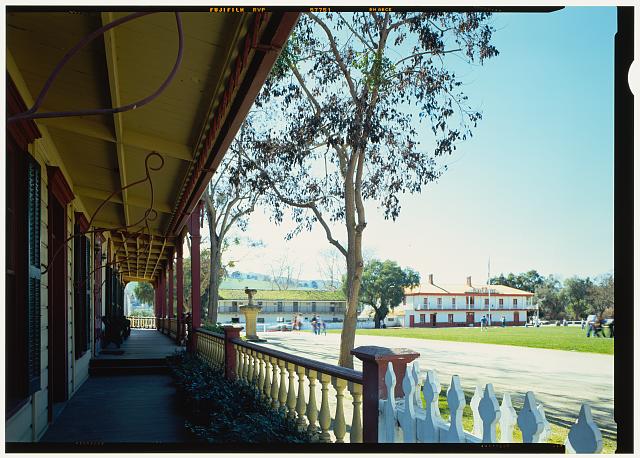 Plate III NHL
 Zanetta House
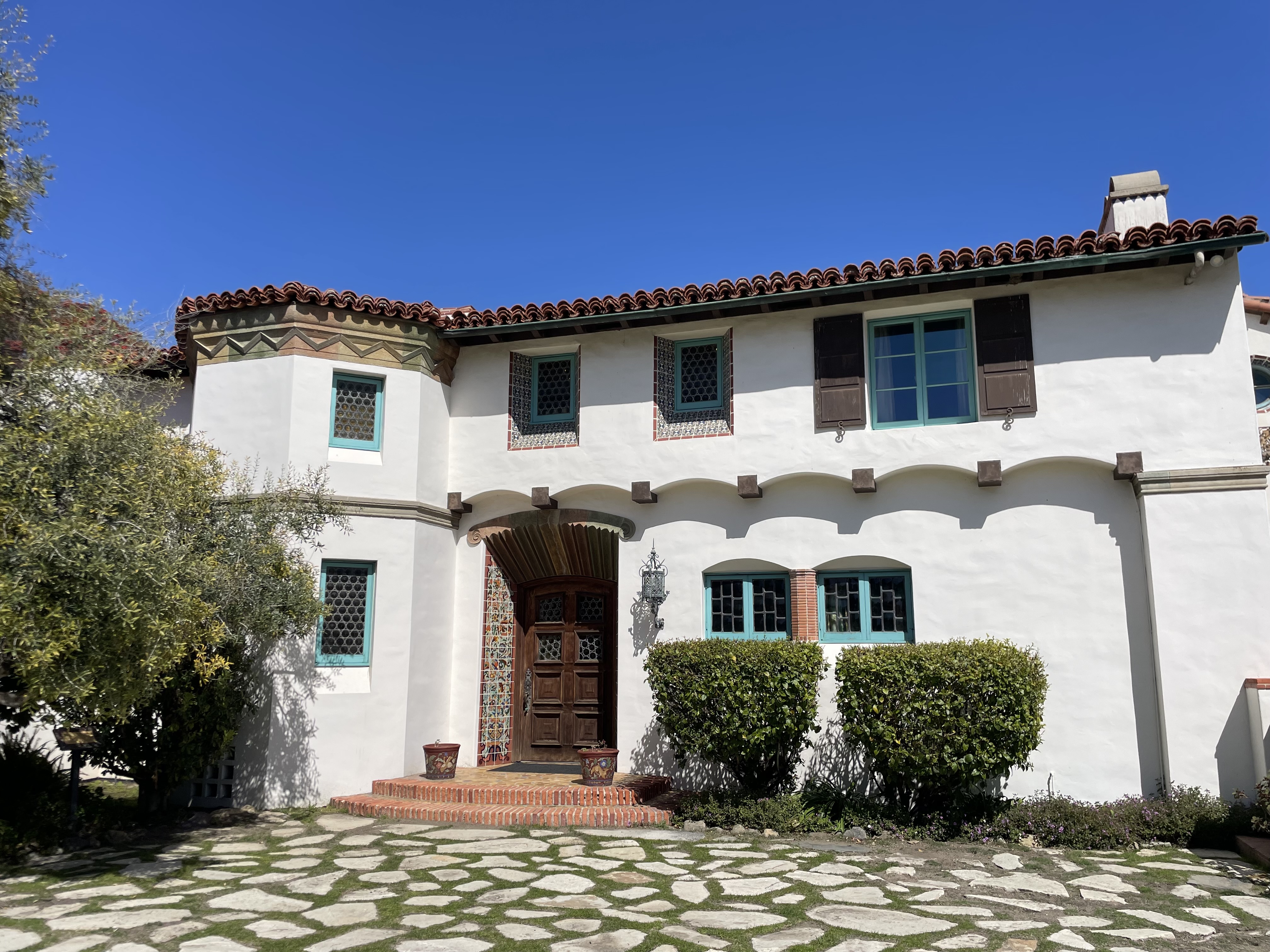 Plate IV NRHP
 Adamson House
 Plate V
 Casa del Herrero
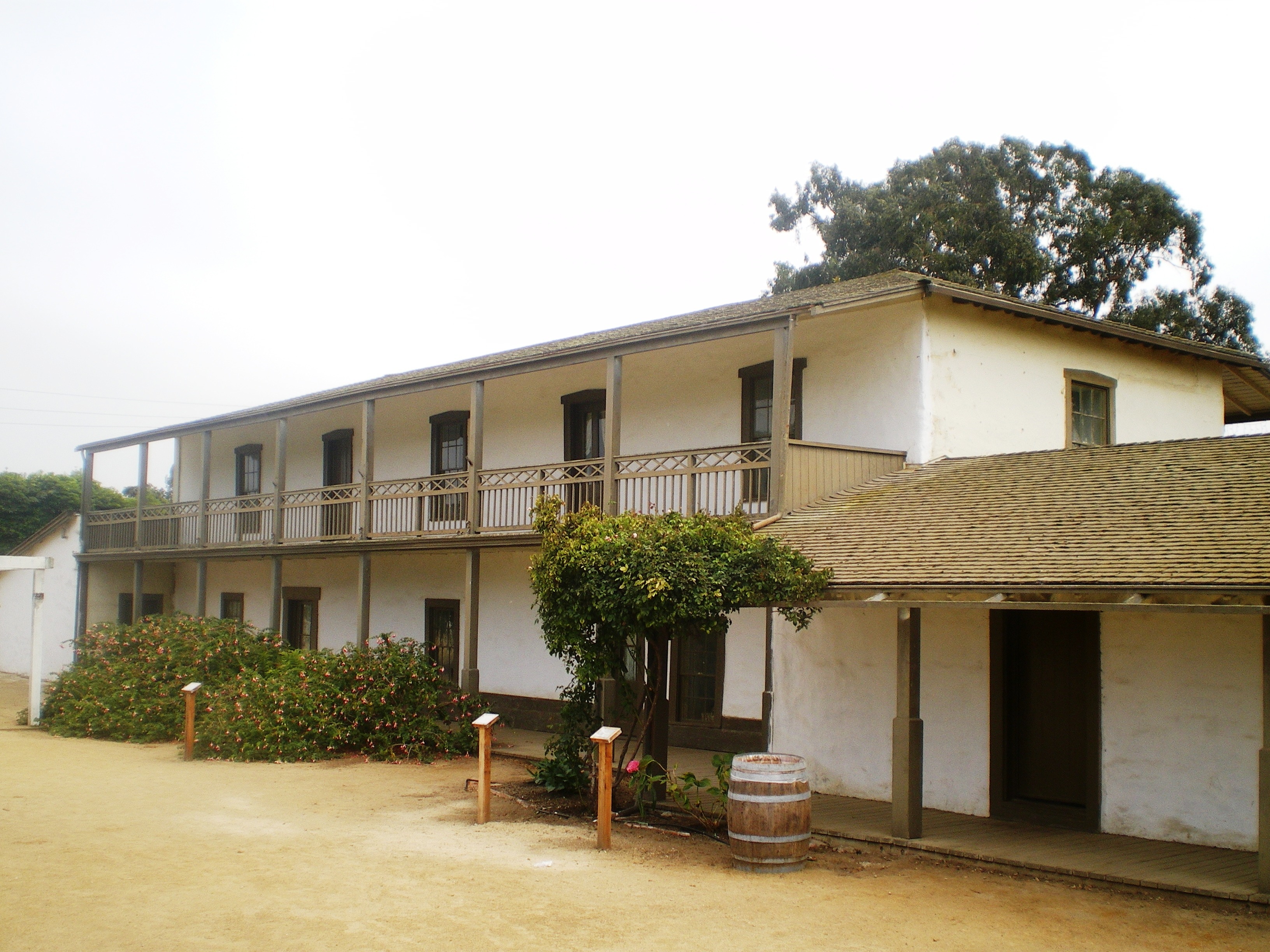 Plate VI NRHP
 Olivas Adobe
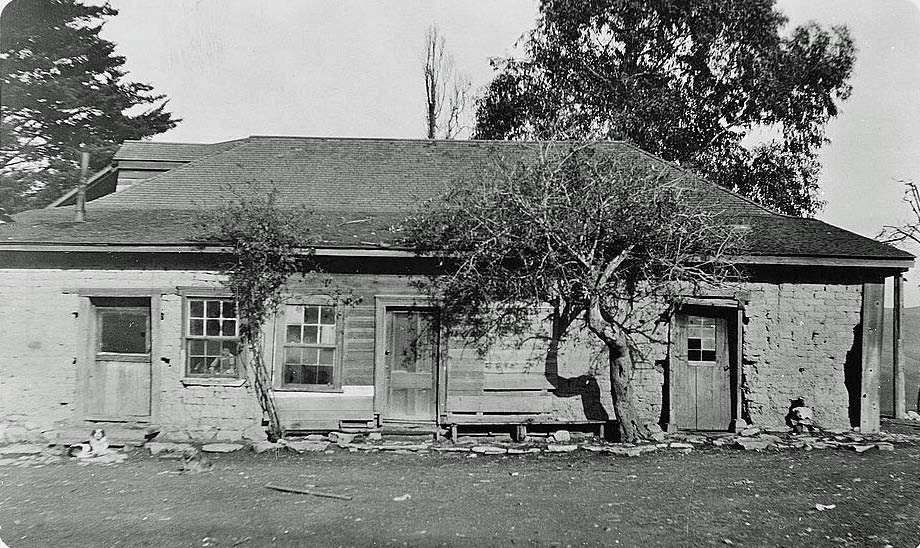 Plate VII NRHP
 Moraga Adobe
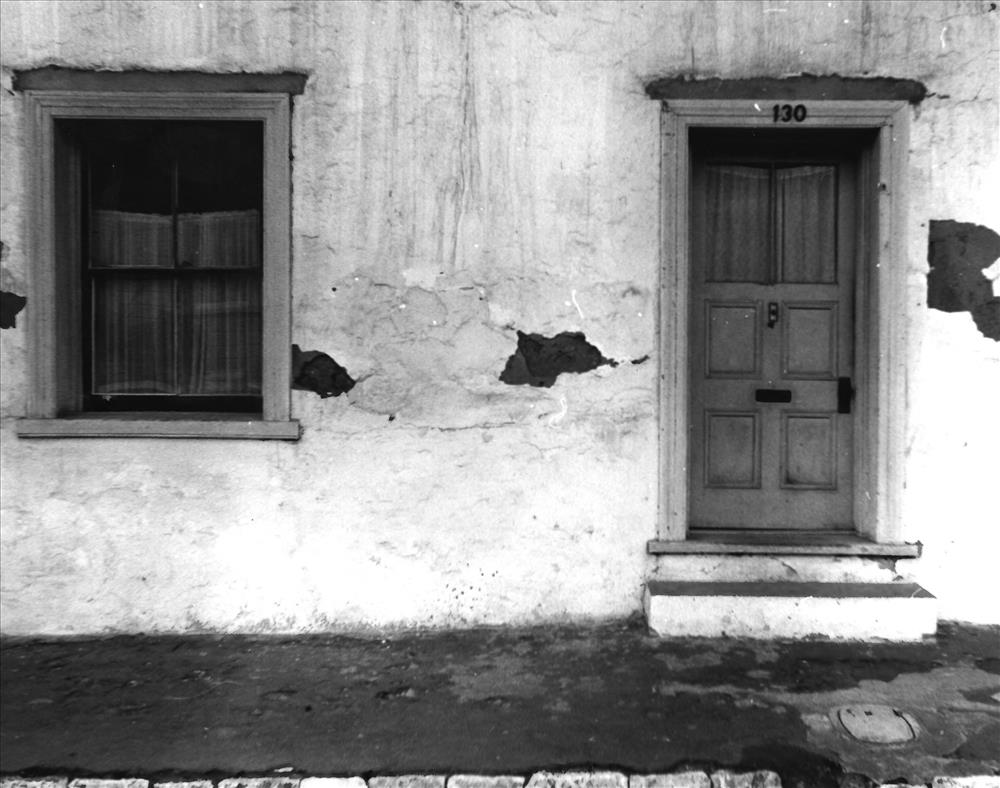 Plate VIII NRHP
 Neary-Rodriguez Adobe
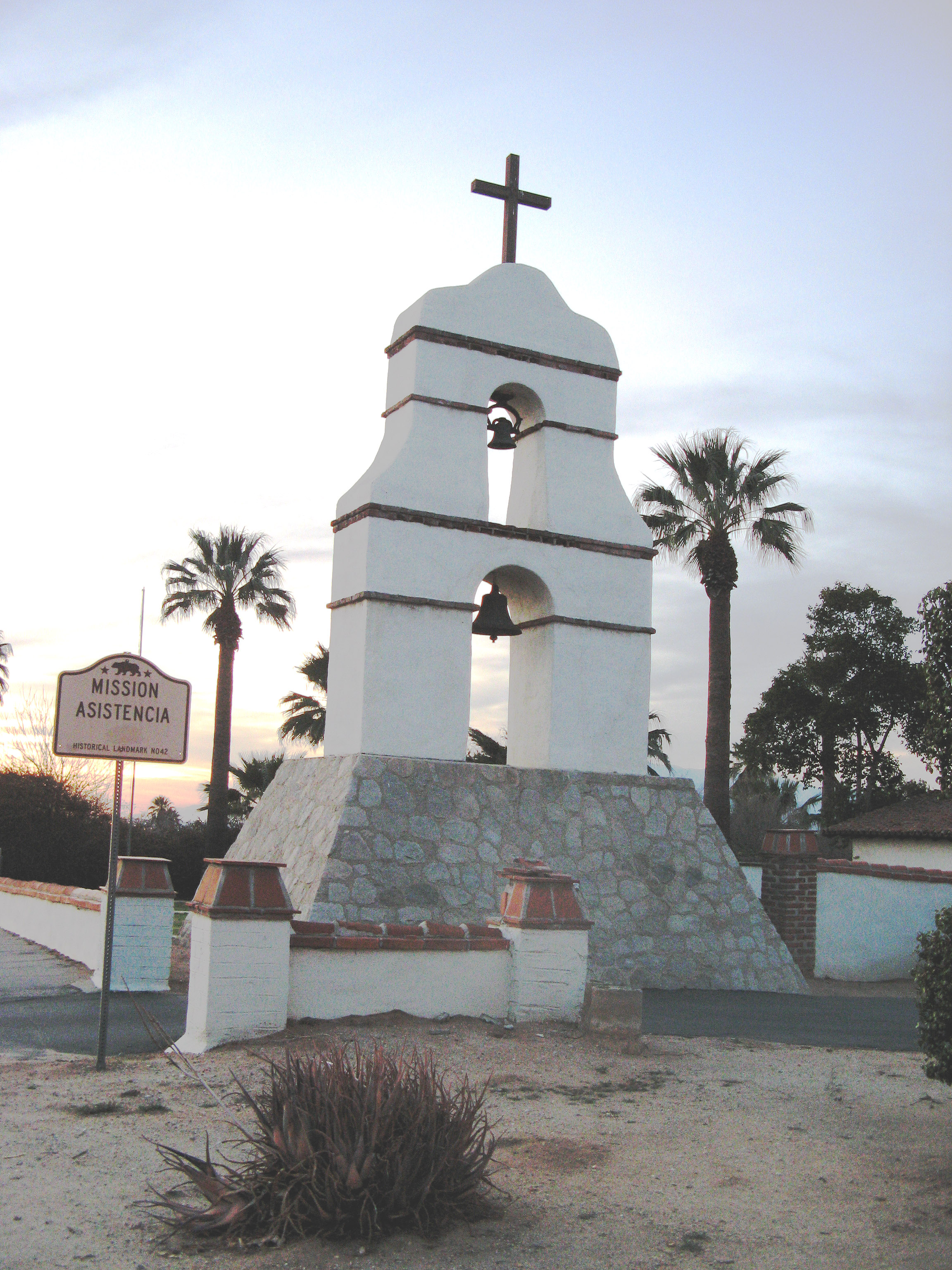 Plate IX
 San Bernardino de Sena Estancia
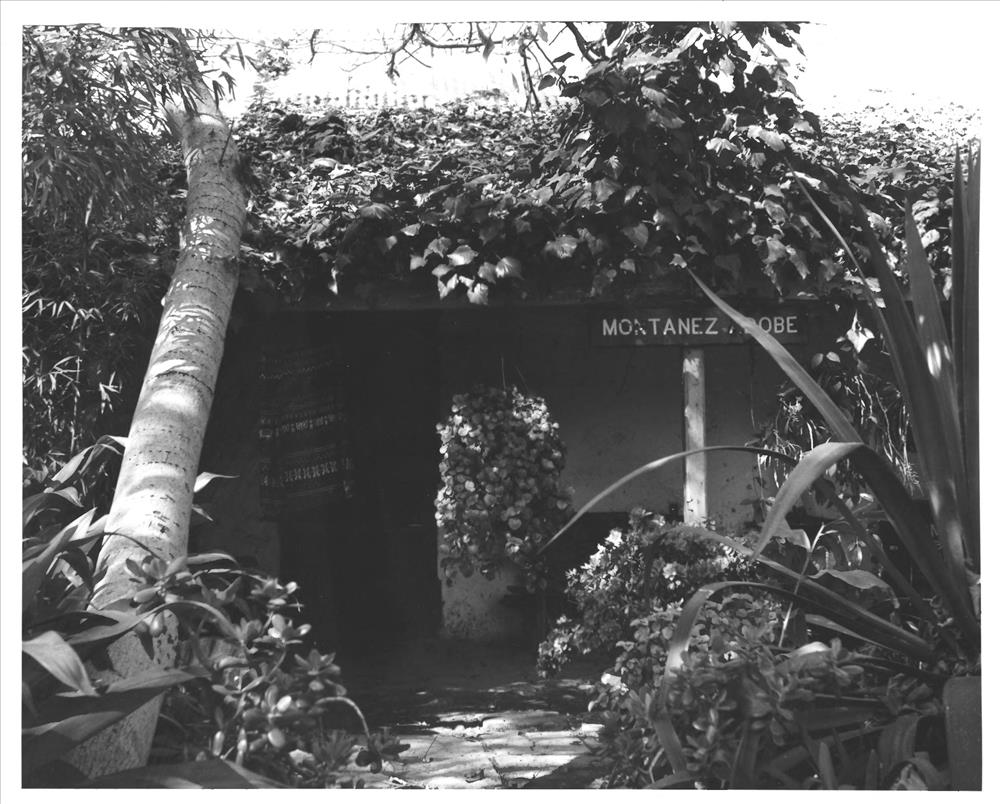 Plate X NRHP
 Montanez Adobe
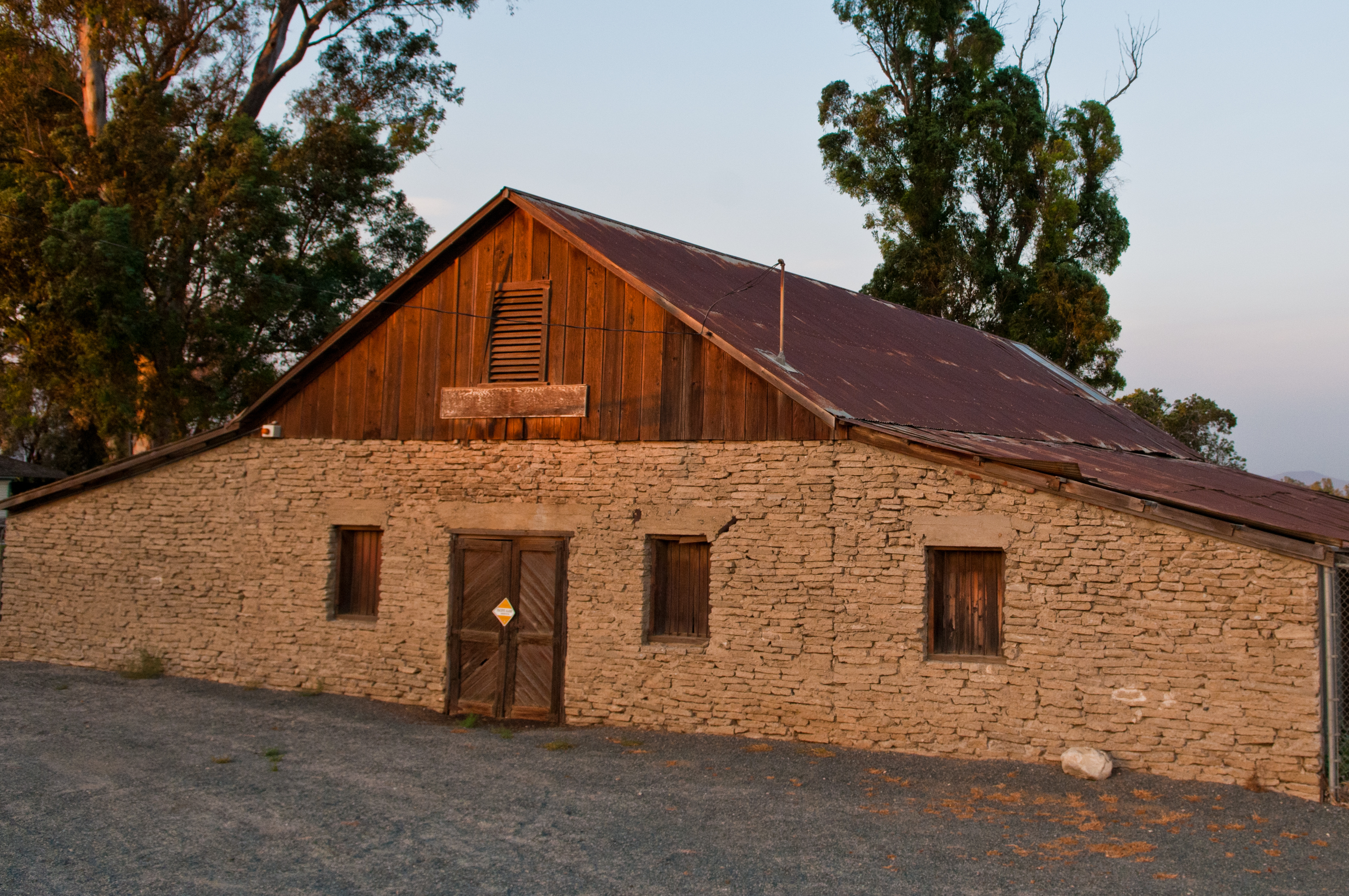 Plate XI NRHP
 Yorba-Slaughter Adobe
Scroll · drag to explore
Style distribution across California
Counts are drawn from the documented record of 111 catalogued entries. Where a building moves between periods, the catalog assigns the style of original construction.
- Vernacular Adobe 1750 – 195065
59% - Spanish Colonial 1598 – 182145
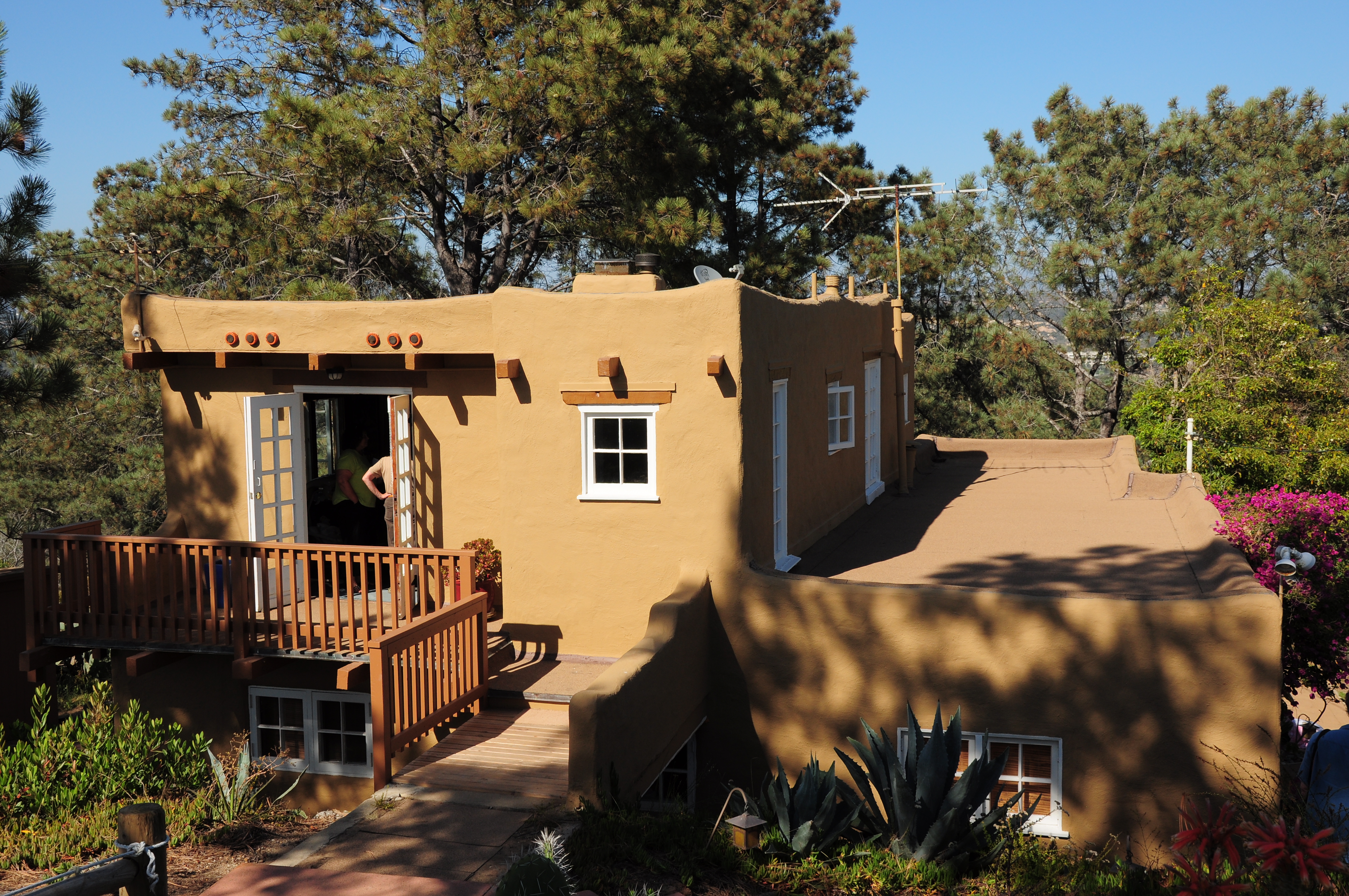
41% - Pueblo Revival c.1900 – present1
1%
Cities and villages in California
66 settlements hold catalogued entries.
All California entries, by city
Every catalogued property in the state, grouped by city in rough order of catalog depth. Tap a card to open the documented entry.