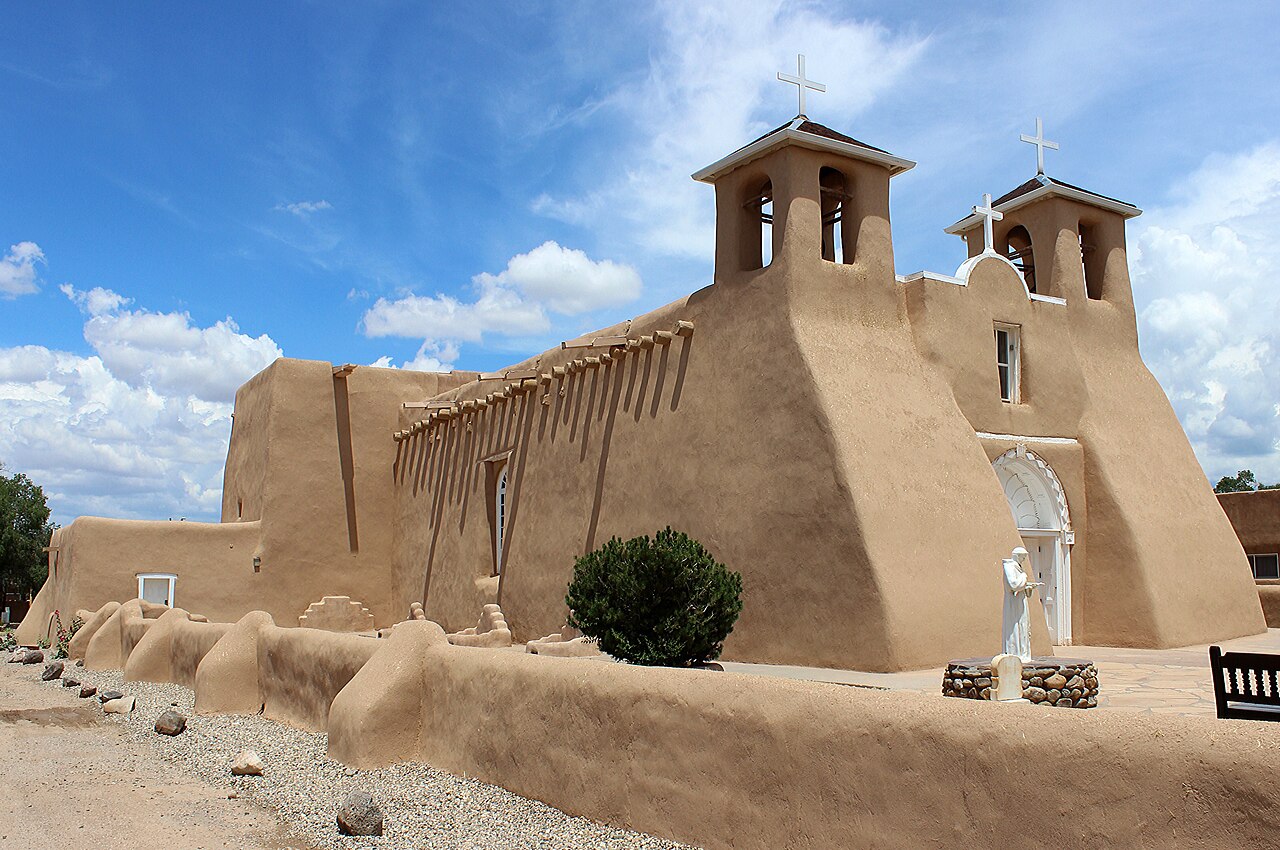
The architectural categories used in this catalog are working categories — useful in the field, and visible in the surviving record — not academic ones. The four traditions below are the ones that produced enough buildings to constitute a body of work. Properties that resist classification (the federal-survey outlier, the experimental monastery, the mining-camp duplex) are recorded in the catalog with the closest fit and flagged in the entry text.
Each guide opens with a hallmark example, an era range, and three diagnostic features — the lines you can pick out from the curb. Use them as a starting place; the state-by-state chapters have the full regional context.
The four traditions
-
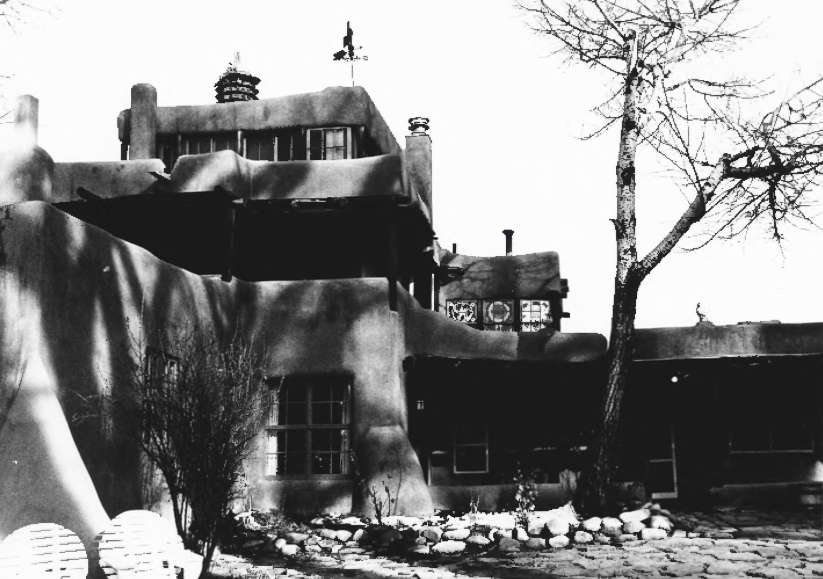 № 01 · Plate
 Pueblo Revival
1900 — presentThe early-twentieth-century revival of Ancestral Puebloan and Spanish-Pueblo building traditions — thick earth-toned walls, flat parapeted roofs, projecting vigas, and softly rounded corners — that gave Santa Fe its now-protected look and remains the dominant regional manner of New Mexico, Arizona, and southern Colorado.
Key Identifying features- 01 Flat roof concealed behind a continuous low parapet
- 02 Stepped or softly rounded parapet corners that mimic weathered adobe
- 03 Round timber vigas projecting horizontally through the wall at the roofline
ExemplarsRead the Pueblo Revival field guide →- Luhan, Mabel Dodge, House
- Painted Desert Inn
- Blumenschein, Ernest L., House
- Navajo Nation Council Chamber
-
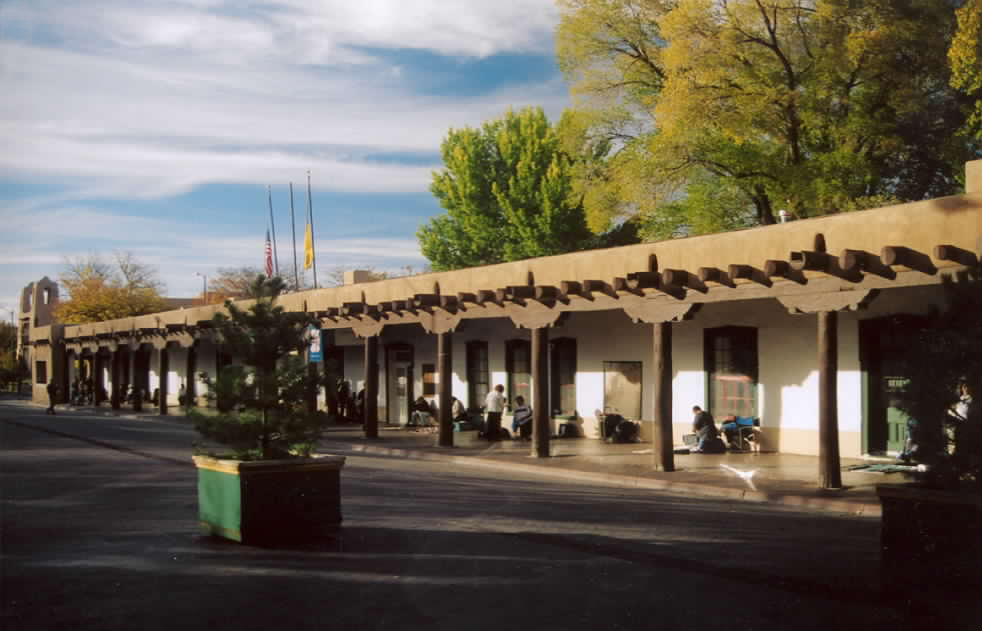 № 02 · Plate
 Spanish Colonial
1598 — 1821The original colonial-era adobe of the Spanish and Mexican periods — single-story rooms ranged around courtyards, thick load-bearing earthen walls, long covered portals on hand-hewn posts, and the deep, low silhouette that the Pueblo Revival a century later would look back to.
Key Identifying features- 01 Single-story rooms arranged around an interior placita courtyard
- 02 Massive load-bearing adobe walls, two to three feet thick
- 03 Long covered portal porch on hand-hewn wooden posts and zapatas
ExemplarsRead the Spanish Colonial field guide →- Palace of the Governors
- San Francisco de Asís Mission Church
- El Santuario de Chimayó
- San José de Gracia Church
-
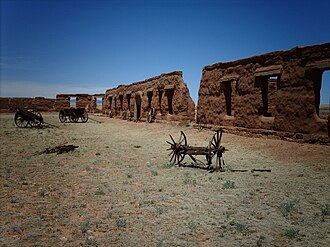 № 03 · Plate
 Territorial
1846 — 1912The hybrid New Mexico Territory style — adobe construction with American Greek Revival millwork applied on top. Fired-brick coping along parapets, pedimented white-painted window trim, milled wood porch posts, and a crisp Anglo overlay on an earthen body.
Key Identifying features- 01 Crisp parapet capped with a course of fired brick coping
- 02 Pedimented or squared white-painted trim around windows and doors
- 03 Milled lumber porch posts with chamfered or turned profiles
ExemplarsRead the Territorial field guide →- Fort Union National Monument
- Double Eagle Restaurant
-
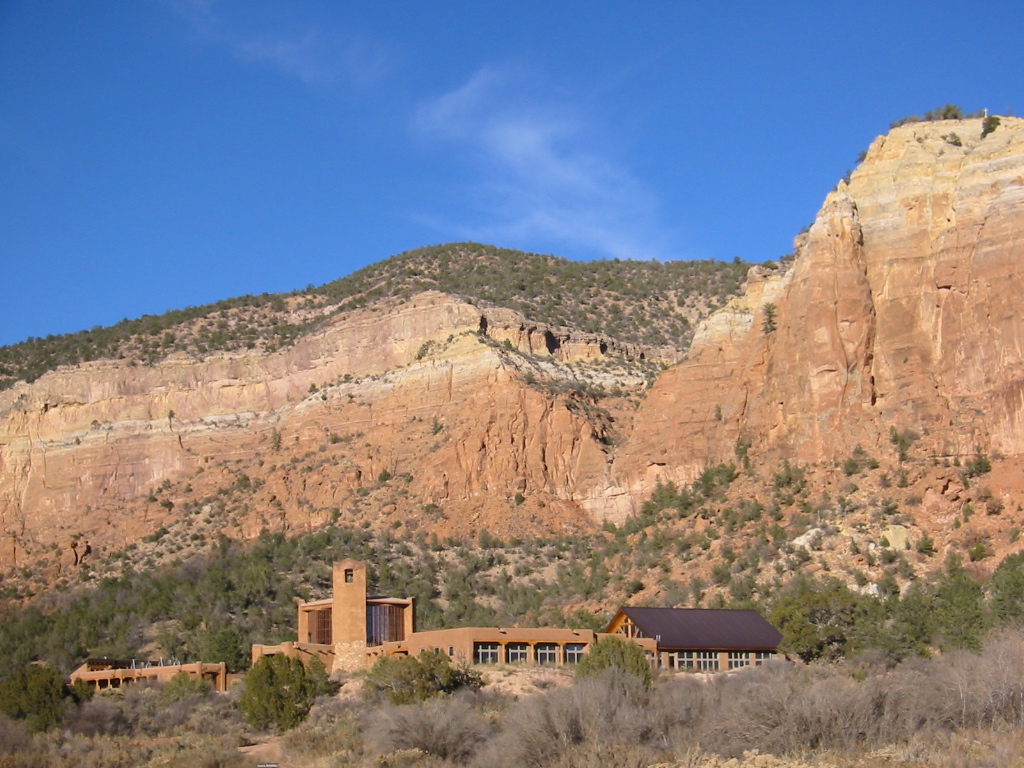 № 04 · Plate
 Modern Adobe
1950 — presentContemporary earthen building — stabilized and reinforced adobe, passive-solar siting, concrete bond beams, and code-compliant wall sections that keep the material alive. The living continuation of a tradition that has been built without interruption since 1610.
Key Identifying features- 01 Stabilized or semi-stabilized adobe brick with asphalt or lime additives
- 02 Reinforced concrete bond beam at the top of the wall
- 03 Continuous concrete footings carried below the local frost line
ExemplarsRead the Modern Adobe field guide →- Christ in the Desert Monastery
The identifier carries the same vocabulary.
The identifier tool walks through wall thickness, surface finish, roof form, parapet line, viga treatment, and a handful of other diagnostic checks — exactly the features defined above — to estimate whether a property is true adobe, an adobe-style stucco revival, or something else. It then routes you to the field guide that best matches what you described.