Atlas region II
The record at a glance
This chapter documents 21 catalogued adobe properties across 17 Arizona settlements. The summary at right breaks the catalog down by architectural style, current status, and recorded date range.
Sonoran row houses and presidio adobe in Tucson and the southern desert, with a northern frontier of Pueblo Revival mountain hotels and Navajo civic landmarks.
Where the entries are
A short history of adobe in Arizona
Arizona’s adobe tradition runs along two distinct frontiers — the Spanish missions and presidios of the Sonoran south, and the Pueblo Revival lodges and civic landmarks of the high Colorado Plateau in the north. The earthen wall arrived twice and from opposite directions, and both currents are still legible in the catalog.
The Sonoran missions — 1687 to 1821
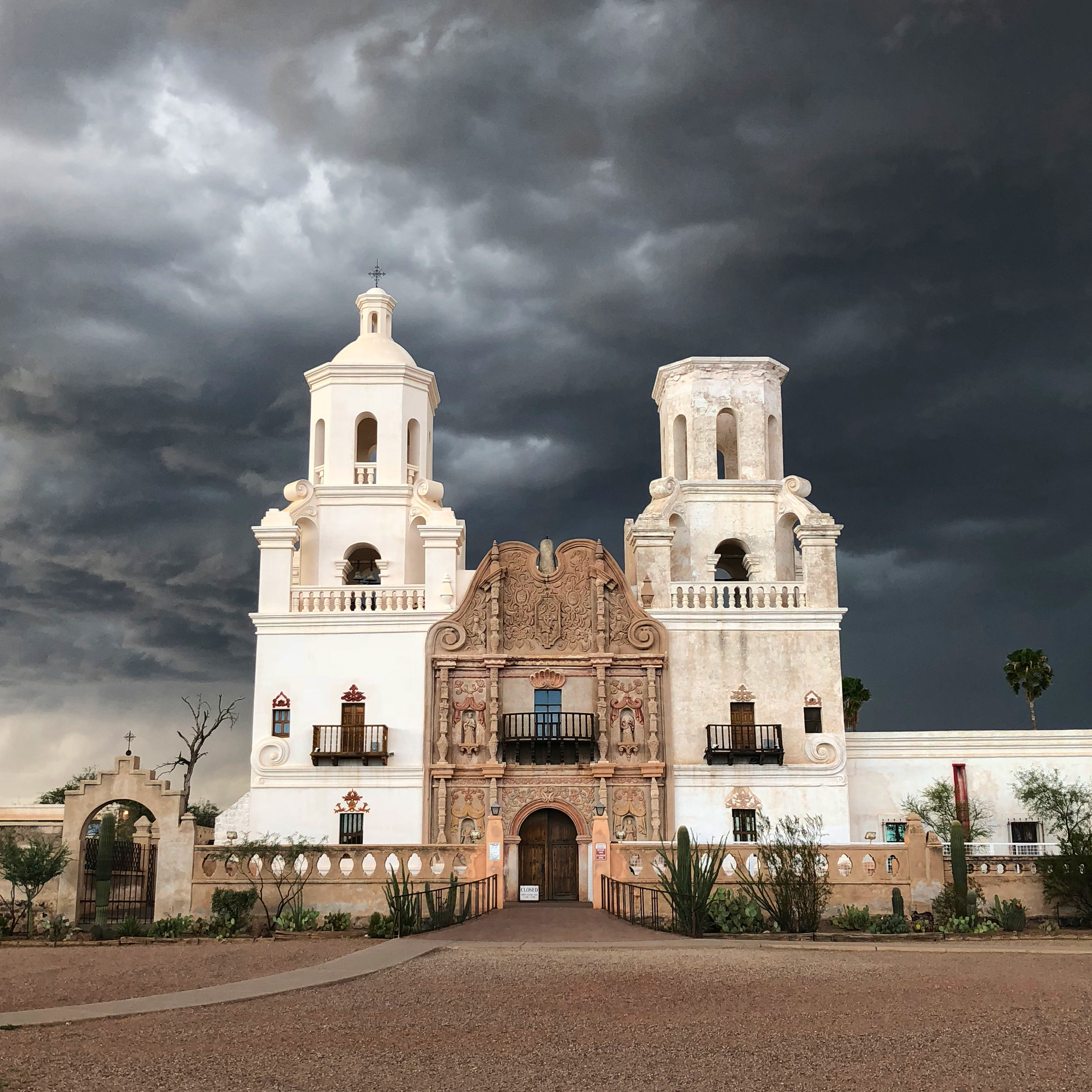
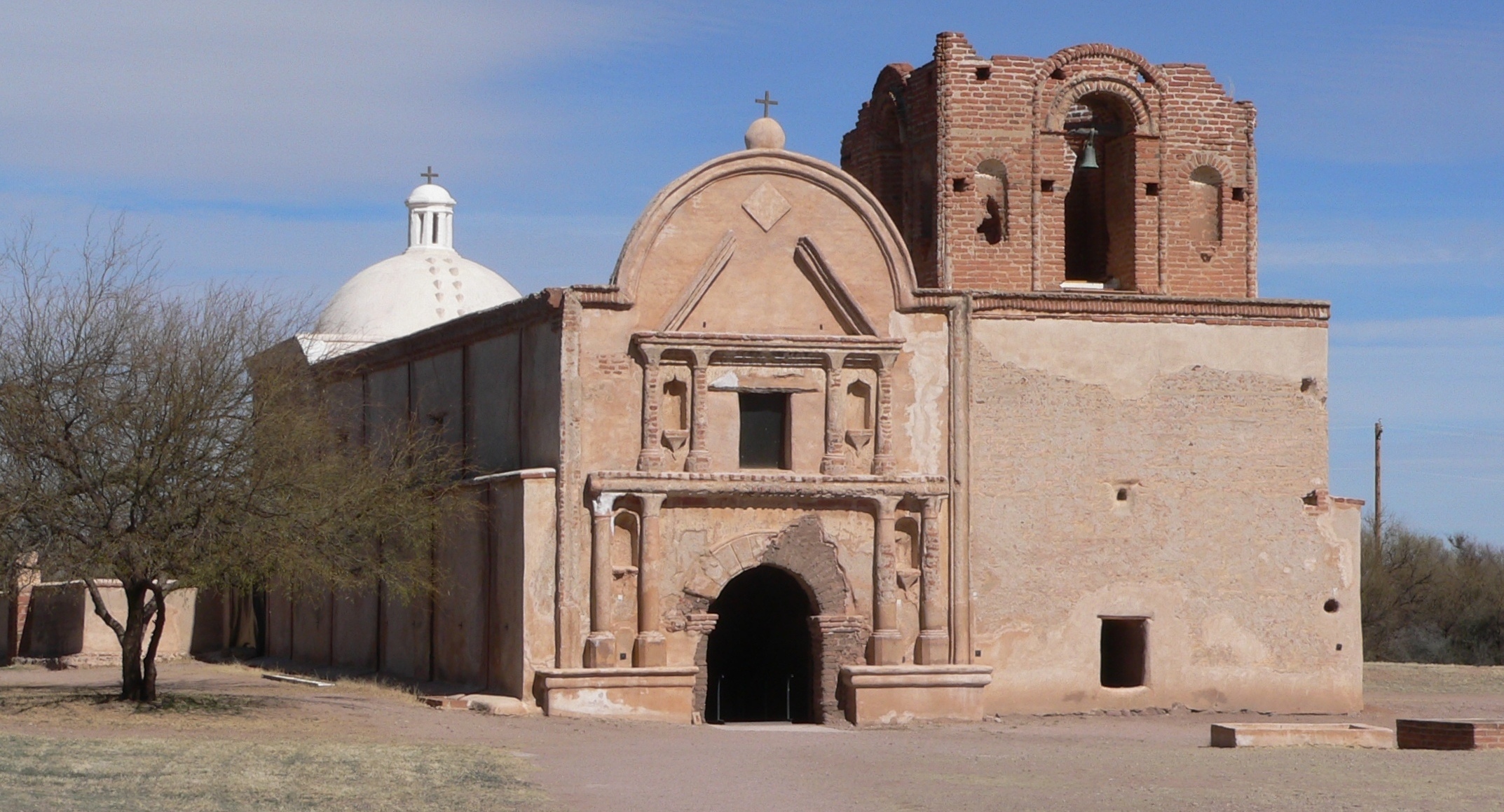
The earliest documented adobe in present-day Arizona belongs to the chain of Jesuit and then Franciscan missions Eusebio Kino and his successors laid down across the Pimería Alta from 1687 onward. San Xavier del Bac at Pima, the most photographed adobe church in the United States, is the great surviving expression of that programme: a vaulted brick-and-adobe basilica of the late eighteenth century, plastered white and surrounded by the same low Sonoran flatland that supplied its earth. Tumacácori, Guevavi, and the long-ruined Calabazas downstream were of the same Franciscan campaign, each a chapel with a walled patio of priest’s quarters cast in coursed adobe and laid up over fieldstone footings.
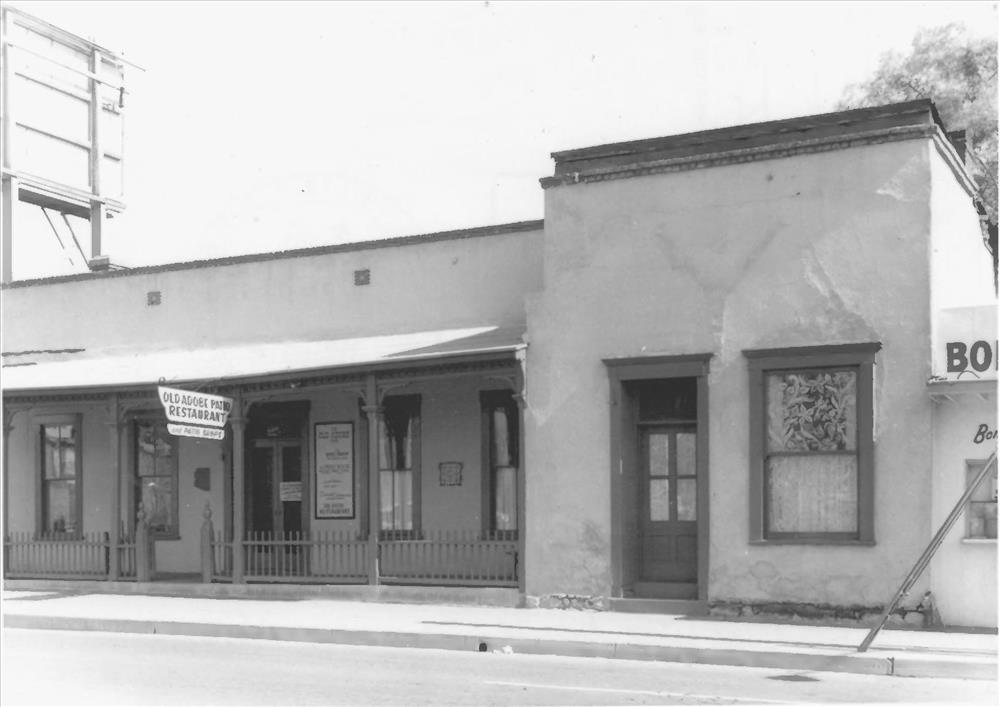
Tucson grew up between the missions, around the Presidio de San Agustín founded in 1775. The presidio’s adobe walls have long since been pulled down, but a handful of nineteenth-century Sonoran row houses survive in the old quarter — the Old Adobe Patio among them — one-room-deep townhouses laid flush to the dirt street, their windows shuttered, their courtyards turned inward away from the heat. This is the southwestern Sonoran type at its purest: flat-roofed, parapet-walled, plastered in a warm lime wash, and built into a continuous wall of like buildings rather than standing free on its own lot.
The American period and the territorial frontier — 1854 to 1912
The Gadsden Purchase of 1854 transferred southern Arizona to the United States, and the prospectors, freighters, and military posts that followed brought milled lumber and fired brick into the territory along the new wagon roads. Adobe persisted because it was cheap and the climate was right, but it picked up American detailing. Sash windows replaced shuttered openings; pedimented trim was added; flat parapets were sometimes coped with brick. The Tucson townhouses of the 1880s and 1890s carry exactly this hybrid character, and the same idiom turns up in small numbers in Nogales, Tubac, and the mining camps of the Mogollon Rim.
By the time Arizona became a state in 1912, the southern adobe tradition had largely passed its working peak. The railroads pulled lumber-frame architecture from California and the East, and the new resort and irrigation economies that would shape twentieth-century Arizona were not built of earth.
Pueblo Revival on the plateau — 1900 to 1950
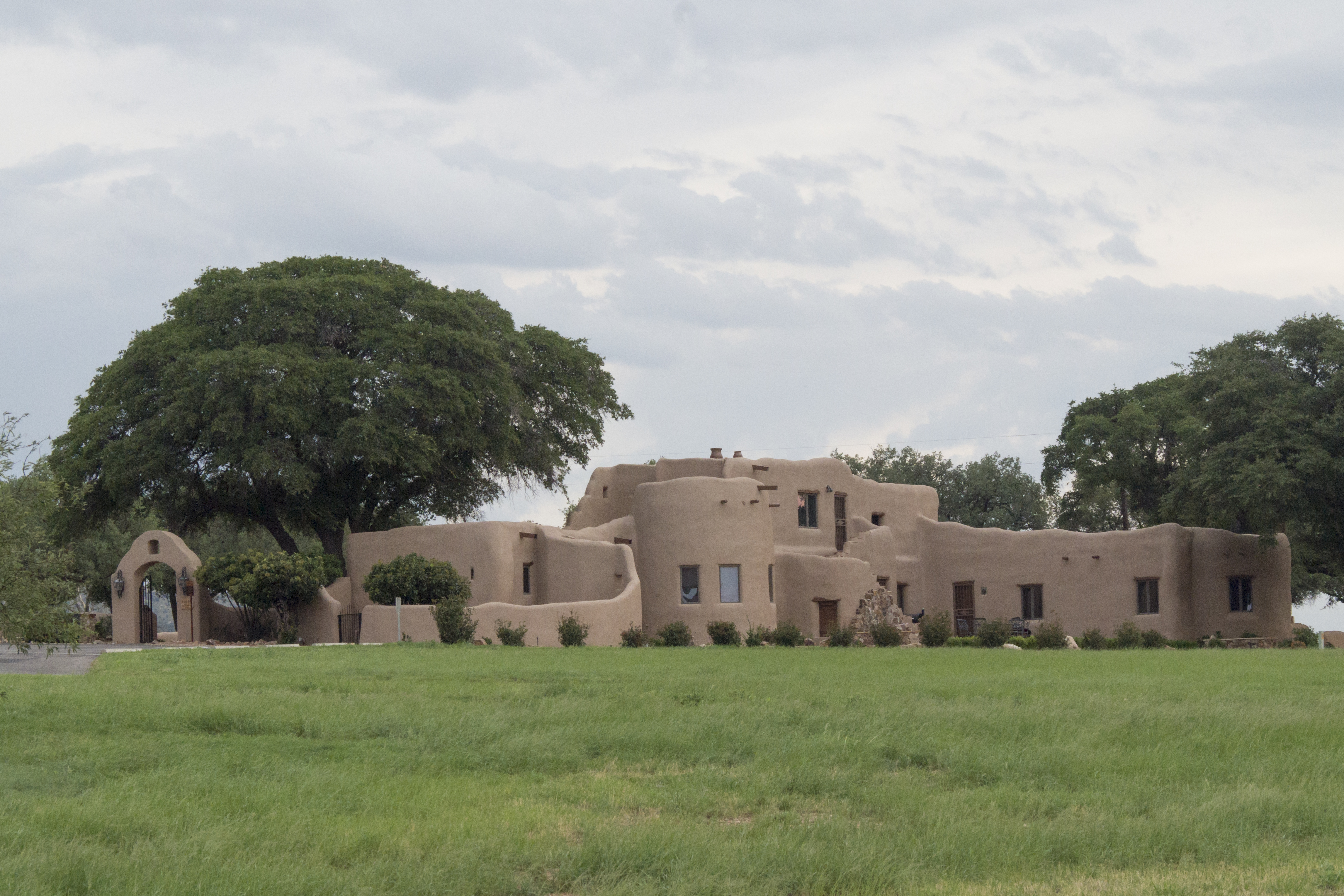
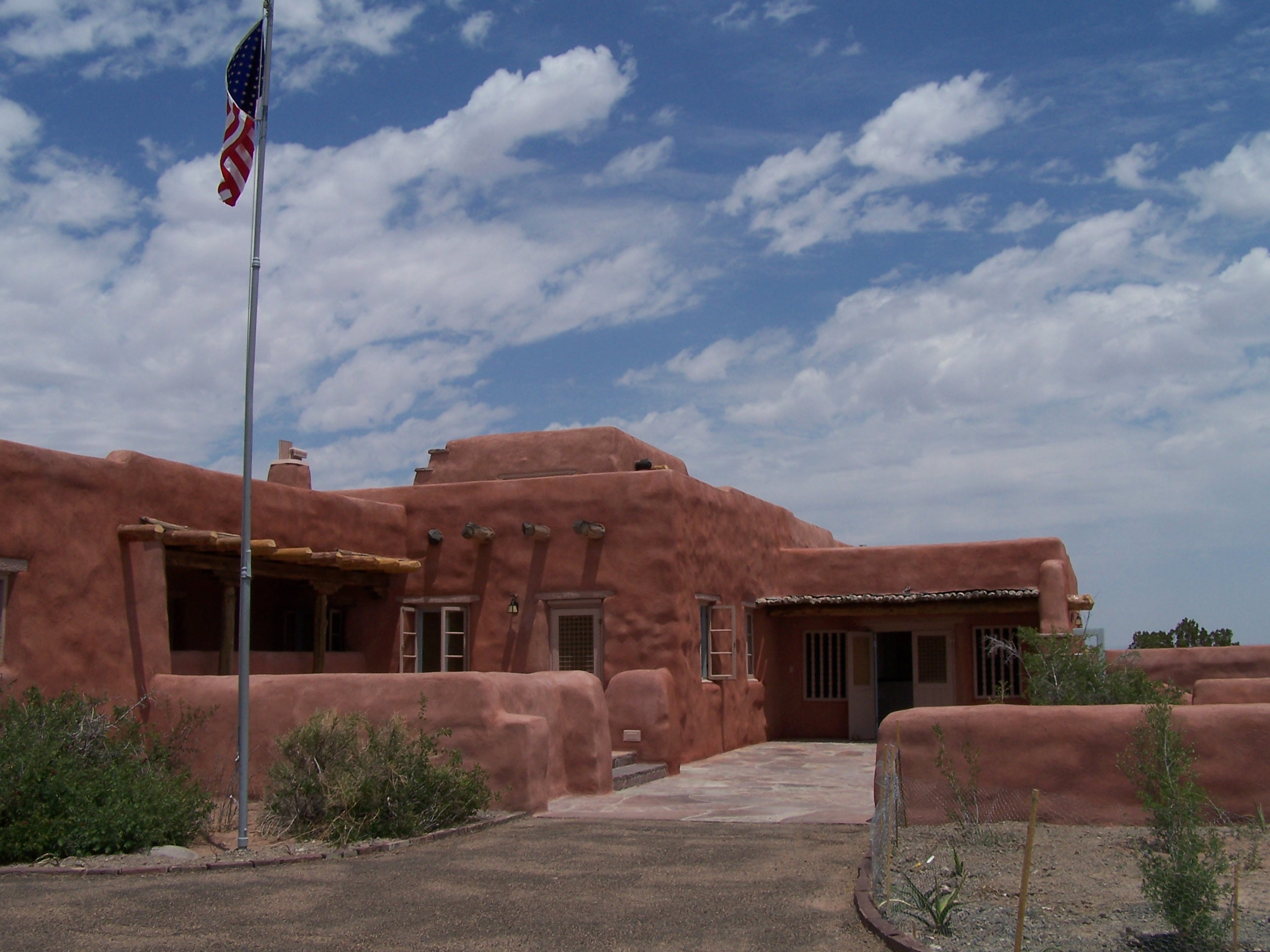
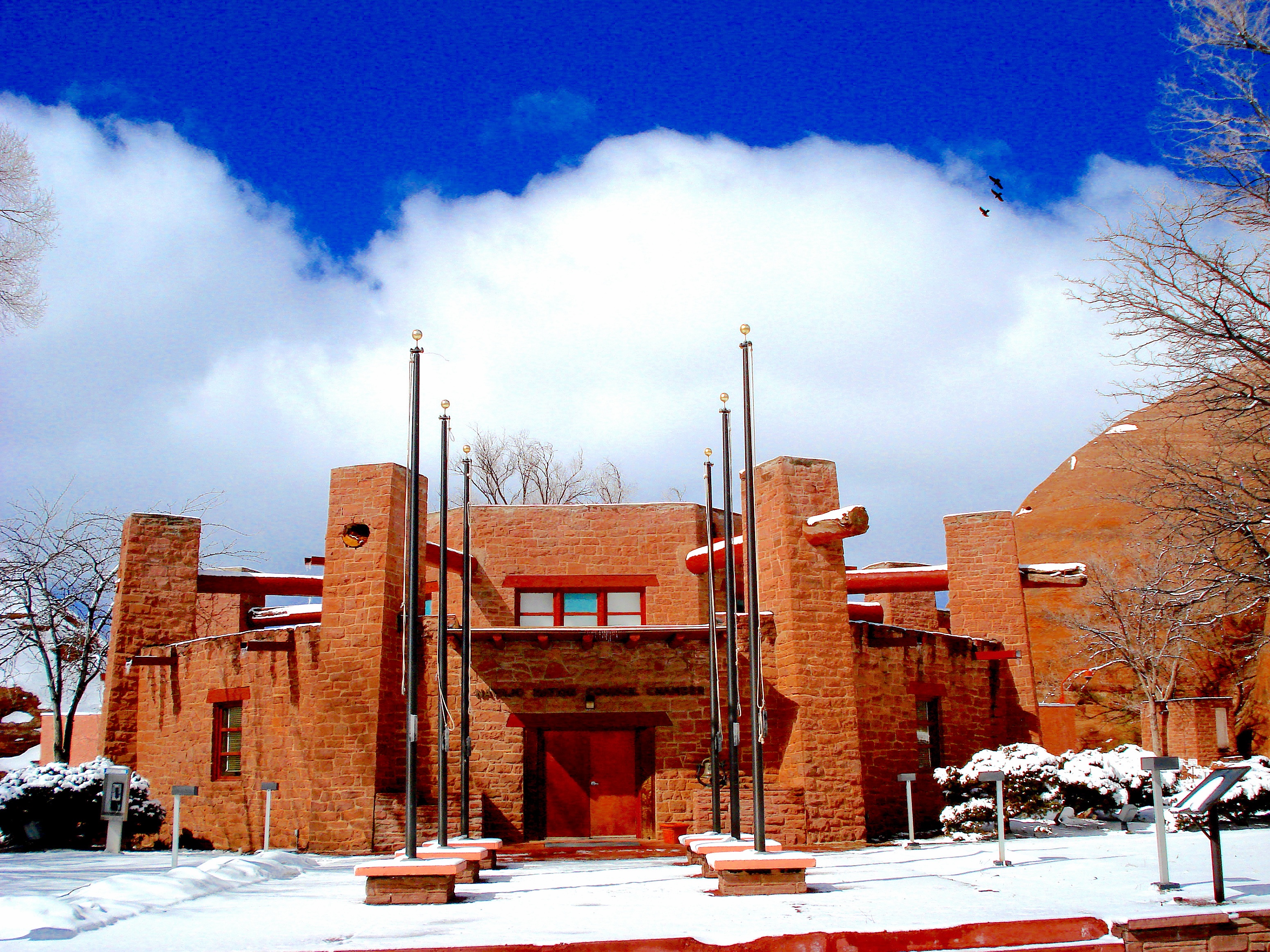
The northern Arizona story is different. Beginning with the Fred Harvey Company’s commission of Mary Colter at the Grand Canyon, and continuing through the Painted Desert Inn (rebuilt as a CCC Pueblo Revival lodge in 1937–40) and the Navajo Nation Council Chamber at Window Rock (1935), a deliberate Pueblo Revival programme moved across the plateau on the back of the early national-park system. Walls are typically frame-and-stucco rather than coursed adobe, but the silhouette — battered parapets, projecting vigas, rounded buttresses, a kiva fireplace in the lobby — is faithful to the Pueblo originals it borrows from. These are the most significant twentieth-century earthen-style buildings in the state, and several are National Historic Landmarks.
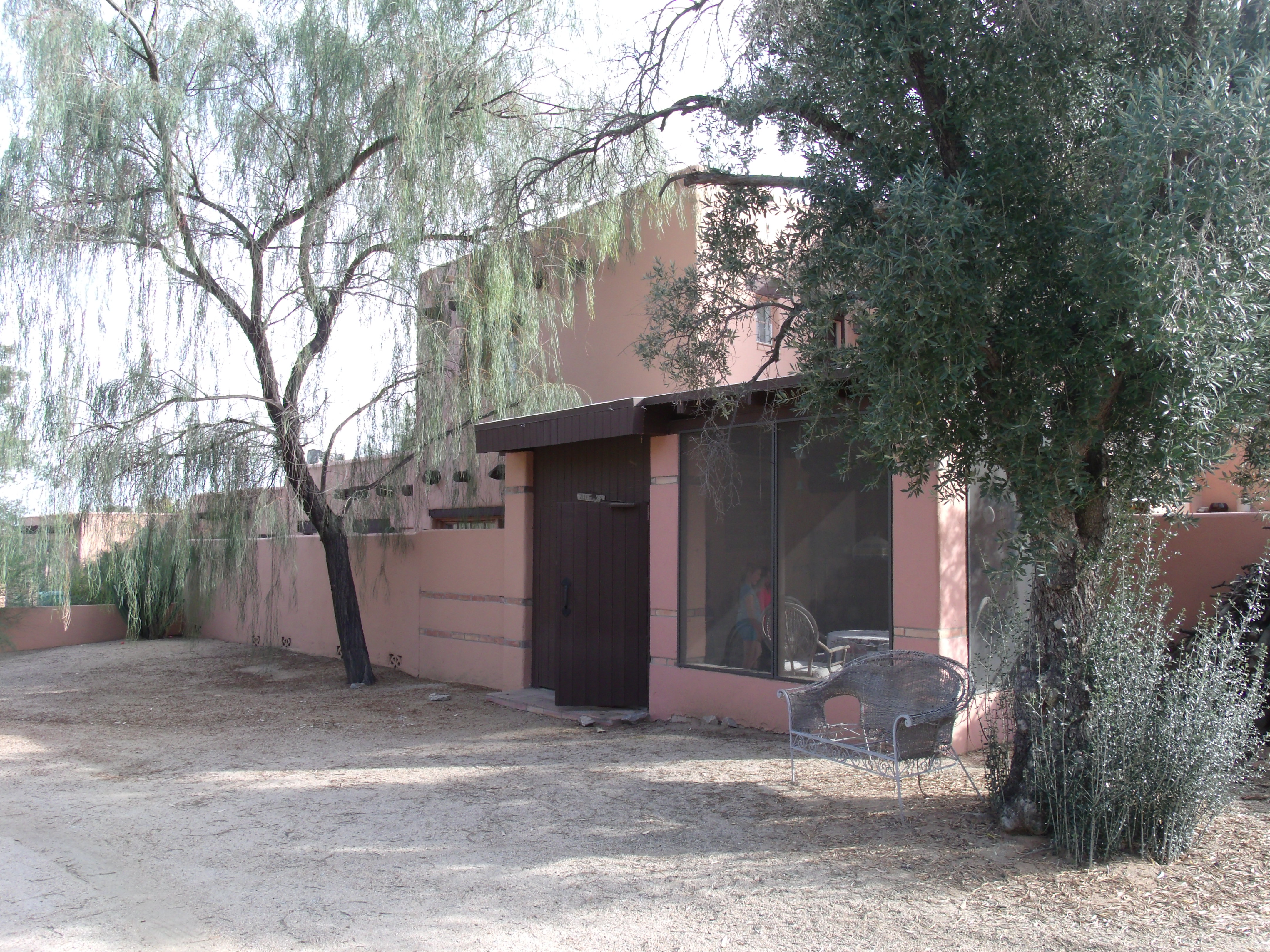
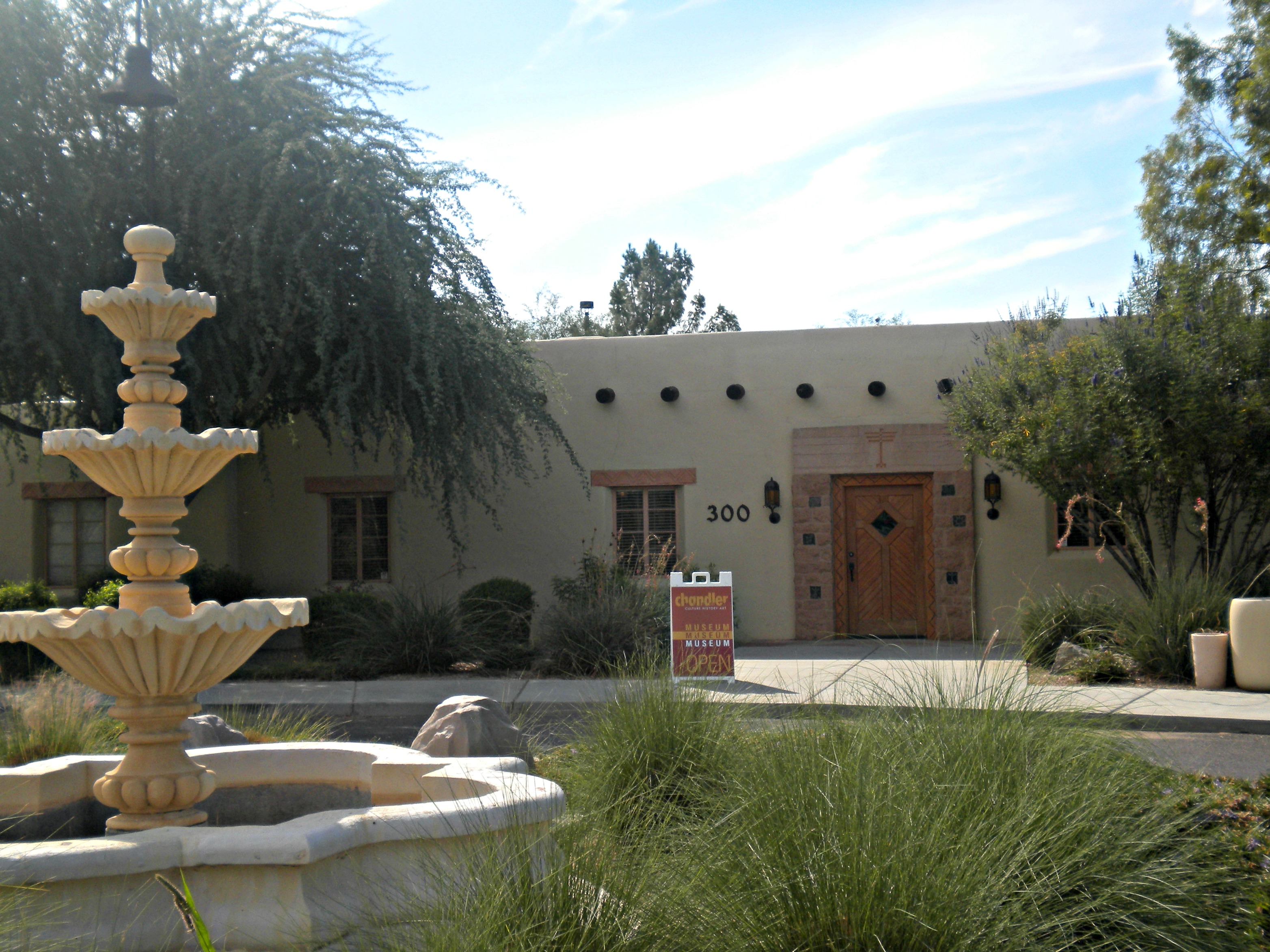
Pueblo Revival also reached the Phoenix valley in the 1920s and 1930s, where Frank Lloyd Wright’s circle and a small group of locally-trained architects built stuccoed houses and small hotels in the manner. The McCullough-Price House in Chandler, an early Maricopa County example, and Squaw Peak Inn in north Phoenix are catalog examples of that suburban transposition.
The contemporary period — 1950 to present
True adobe construction in Arizona, like New Mexico’s, never went entirely dormant. A small school of architects working in the Sonoran tradition — Bob Vint in Tucson, Architects Workshop at Taliesin West — has built modern adobe houses to code since the 1970s, and stabilised-adobe revival projects have reopened a number of older properties as house museums or galleries. The Atlas catalog leans on the documented earlier corpus: the Sonoran row houses of the Tucson presidio quarter, the missions of the Santa Cruz valley, and the Pueblo Revival civic landmarks of the northern plateau.
What follows is the catalog of Arizona’s adobe houses, grouped by city in roughly geographic order from the Sonoran south to the Colorado Plateau north.
Adobes to see in Arizona
A short list — ordered roughly by date — drawn from the catalog for first-time visitors. Each entry links to its documented page in the Atlas.
Scroll · drag to explore
Style distribution across Arizona
Counts are drawn from the documented record of 21 catalogued entries. Where a building moves between periods, the catalog assigns the style of original construction.
- Pueblo Revival c.1900 – present11
52% - Spanish Colonial 1598 – 18216
29% - Vernacular Adobe 1750 – 19504
19%
Cities and villages in Arizona
17 settlements hold catalogued entries.
All Arizona entries, by city
Every catalogued property in the state, grouped by city in rough order of catalog depth. Tap a card to open the documented entry.