Atlas region II
The record at a glance
This chapter documents 60 catalogued adobe properties across 30 New Mexico settlements. The summary at right breaks the catalog down by architectural style, current status, and recorded date range.
The deepest and oldest body of adobe building in the United States — from the inhabited Pueblos of Taos and Acoma to the colonial heart of Santa Fe and the high villages of the Sangre de Cristos.
Where the entries are
A short history of adobe in New Mexico
No state in the country carries adobe as continuously as New Mexico. The earthen wall has been built here for more than a thousand years, through four distinct cultural periods, and the building tradition is still in active use in the twenty-first century.
The Pueblo period — before 1540
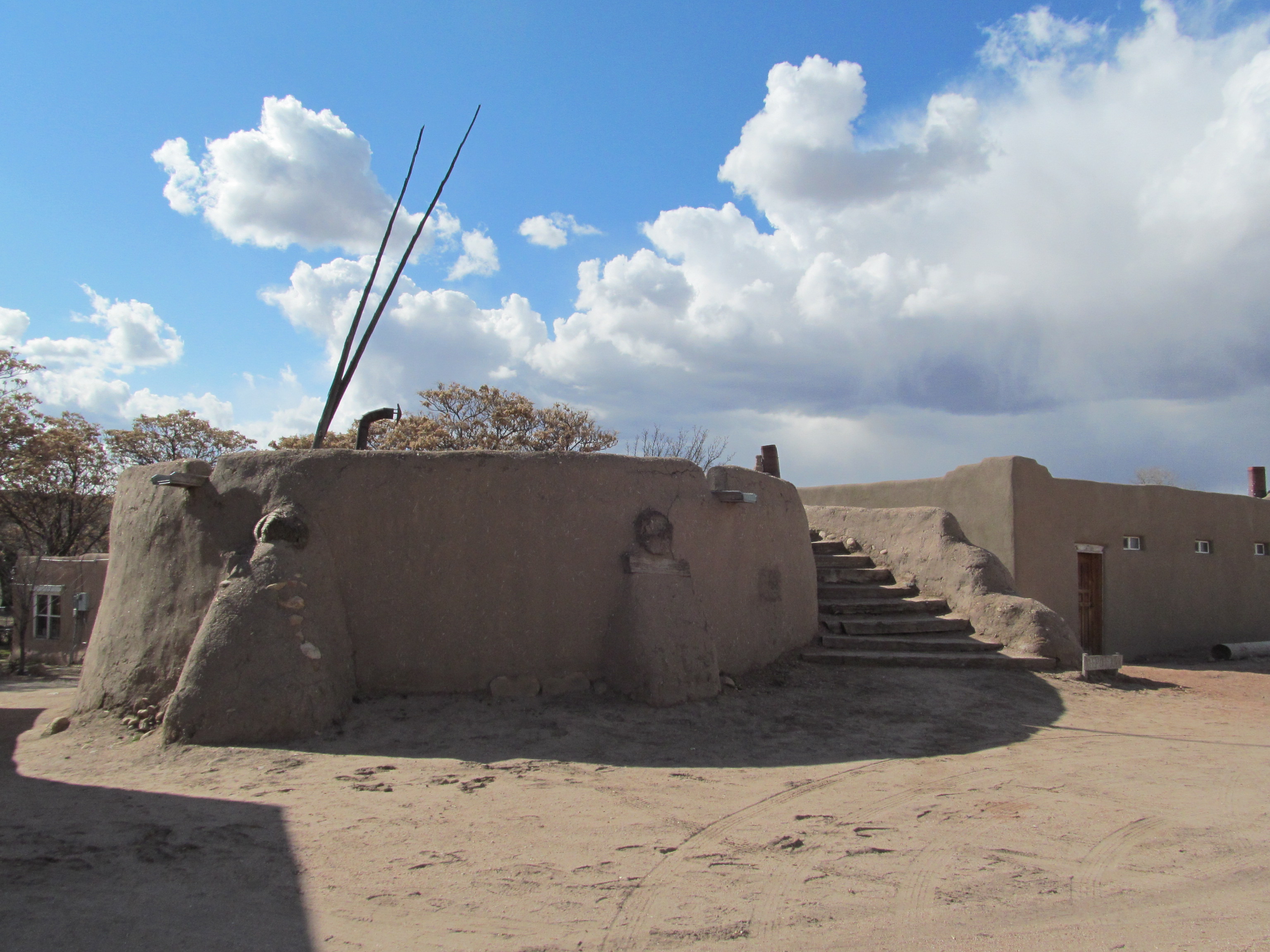
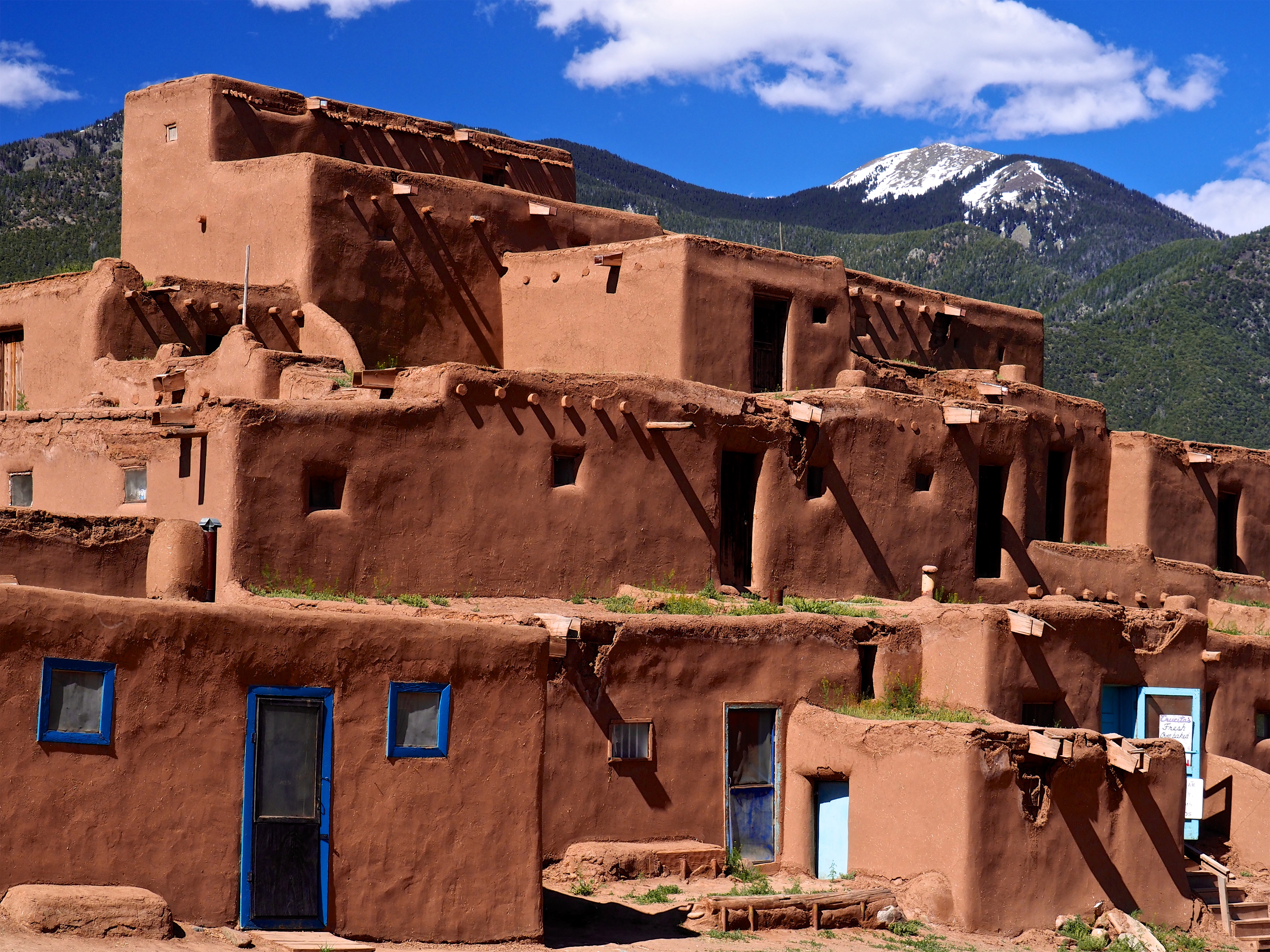
Adobe construction in New Mexico predates European contact by several centuries. The ancestors of the present-day Pueblo peoples built their first multi-storey communal houses along the Rio Grande and its tributaries by about 1200, working in coursed adobe, puddled mud, and shaped sandstone. Where the river met a defensible mesa, settlements rose four and five storeys high, entered by ladder, with thick load-bearing walls of hand-shaped earth and timber roofs carried on round pine beams the builders called vigas. The oldest continuously inhabited examples — the North House and South House of Taos Pueblo, the mesa-top village at Acoma, and the small house clusters now preserved at Bandelier — are among the longest-used dwellings on the continent. Their walls were not cast as bricks but laid up wet, course by course, and re-plastered each year by the women of the village. That cycle of seasonal re-plastering, treated everywhere else in the country as maintenance, is in the Pueblos a defining cultural act.
When the first Spanish entradas reached the region in the 1540s they found towns of stacked adobe rooms that astonished them — not because adobe was new to a Castilian eye, but because the scale of the Pueblo apartment blocks exceeded anything they had built at home. The vocabulary that would later define New Mexican architecture — viga, latilla, canale, banco, nicho, the small recessed hearth in the corner — was already in place when the colonists arrived.
The Spanish Colonial period — 1598 to 1821
Spanish settlement formalised in 1598 under Juan de Oñate and resumed, after the Pueblo Revolt of 1680 and its reconquest in 1692, as a permanent colonial province. The settlers brought a Mediterranean building grammar — the placita house arranged around an inner courtyard, the long covered portal carried on hand-hewn posts, the casting of adobe into wooden moulds — and laid it down over the existing Pueblo craft. The two traditions merged with unusual cleanliness. Bricks were now cast and sun-dried before they were laid, but they were laid in the same thick coursed walls; roofs were still flat, still carried on vigas, still drained by canales; interior plaster was still applied by hand. What changed was the plan. Rooms enclosed a placita rather than rising in stacked tiers; a covered portal replaced the rooftop terrace; the kiva fireplace, rounded and built into a corner, became the standard interior hearth.
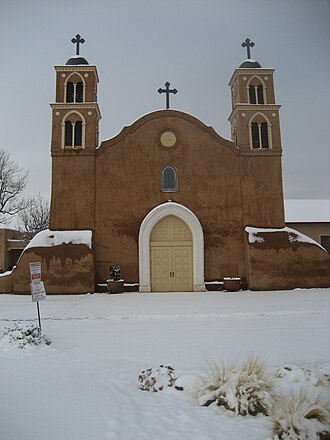
The Palace of the Governors, finished about 1610 at the head of the Santa Fe plaza, is the surviving expression of this period at civic scale. So are the great mission churches at Acoma (San Esteban del Rey, completed 1629), at the Santa Fe presidio (San Miguel Mission, founded c.1610), and the early hacienda complexes preserved at Los Martínez in Taos and Las Golondrinas south of Santa Fe. By the end of the colonial period, almost every building in the province — Spanish, Pueblo, or genízaro — was built of the same earthen material, with the same flat roof and the same hand-finished plaster.
The Mexican and Territorial periods — 1821 to 1912
Mexican independence in 1821 reopened the region to outside trade. The Santa Fe Trail, marked that same year, brought American merchants, milled lumber, fired brick, and pane glass overland from Missouri. The American occupation in 1846 accelerated the exchange. Adobe walls remained, because nothing else made structural or economic sense in a country with limited timber, but their detailing changed. Carpenters added pedimented window trim, Greek Revival in spirit, sawn at the new water-powered mills along the Rio Grande. Brick coping was laid along the parapets to throw water clear of the adobe below. Glass replaced the mica panes set in earlier window openings. The Kit Carson House in Taos and the Governor Bent House nearby are the clearest small-scale examples of this hybrid; on the civic scale, the territorial-era addition to the Palace of the Governors did the same work.
The arrival of the railroad in 1880 ended Territorial New Mexico’s isolation. Brick, dimensional lumber, sheet metal, and pattern-book architecture spread along the new line. For thirty years the prestige of adobe collapsed. New buildings in Albuquerque and Las Vegas were put up in fashionable Eastern styles, and many older adobes were re-skinned in brick or hidden under fired-brick parapets to look modern. By the end of the territorial period the building was widely treated, by Anglo arrivals at least, as a temporary material to be replaced.
The Pueblo Revival — c.1900 to 1950
The reversal began with a small group of architects, archaeologists, and writers around the Museum of New Mexico, who from about 1908 onward argued that the historic adobe forms — soft battered walls, projecting vigas, stepped parapets, the recessed corner hearth — were the right architecture for this place and ought to be preserved rather than replaced. The Santa Fe Plan of 1912, formalised after statehood, gave the movement a planning instrument. Within a generation a new style had been named — Pueblo Revival, sometimes called Santa Fe Style — and was being applied to courthouses, hotels, university buildings, and a great many private houses. The Museum of Fine Arts (1917), the rebuilt La Fonda hotel (1922), and John Gaw Meem’s residential and institutional work through the 1930s and 1940s set the standard. Local ordinances in Santa Fe codified the style in 1957 and still govern building in the historic district.
Pueblo Revival is not a literal copy of the Pueblo or Spanish Colonial original. Walls are usually frame-and-stucco rather than coursed earth, parapets are stepped a touch more geometrically, vigas often project as ornament rather than as structure. But the silhouette is exact, and at the scale of a street the distinction is invisible. Taos and Santa Fe both retain large continuous neighbourhoods built or remodelled in this idiom, and the Atlas catalogues the most significant of them alongside the colonial originals from which they descend.
The contemporary period — 1950 to present
After 1950 the line between historic adobe and new construction blurs. True coursed-adobe building continued in the small villages of the Sangre de Cristos — Truchas, Las Trampas, Chimayó — into the 1970s, and stabilised-adobe construction returned to professional practice in the 1980s under architects working with the New Mexico Earthen Building Materials Code. Several entries in this catalog are twentieth-century revival houses, and a small number are still-occupied colonial-era dwellings rebuilt by their inheritors. El Santuario de Chimayó, completed in 1816 and still a working pilgrimage chapel, is the clearest example of the long continuity. So is Taos Pueblo, occupied continuously for a thousand years and re-plastered each summer by the families who live there.
What follows is a catalog of those buildings — the inhabited Pueblos, the great mission churches, the colonial haciendas, the Territorial-era town houses, and the Pueblo Revival landmarks that together make New Mexico the most complete adobe landscape in the United States.
Adobes to see in New Mexico
A short list — ordered roughly by date — drawn from the catalog for first-time visitors. Each entry links to its documented page in the Atlas.
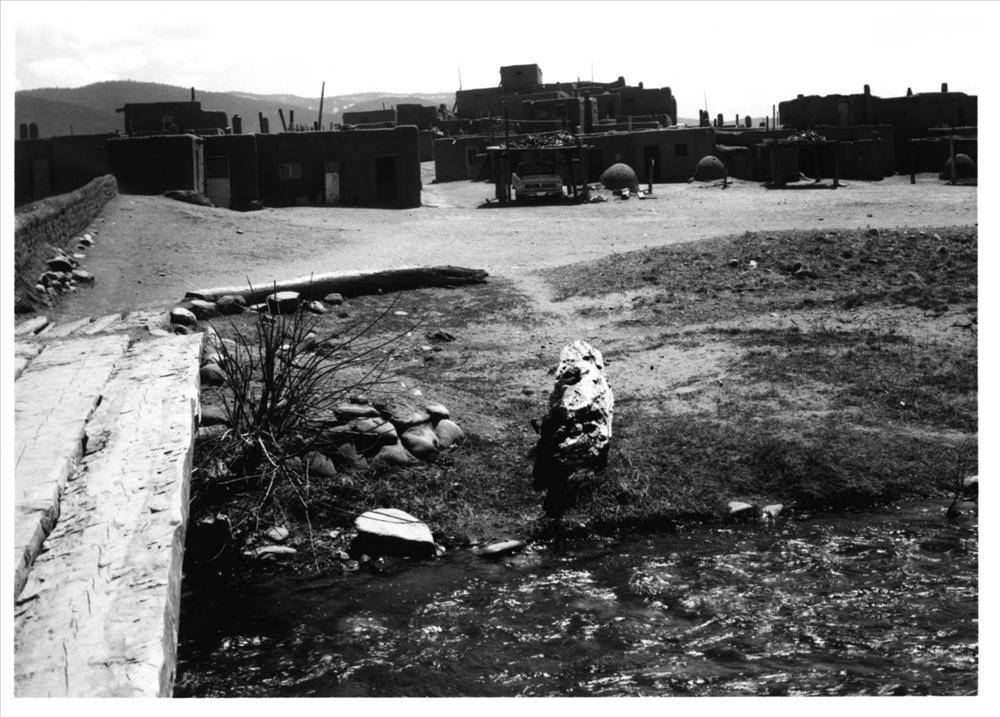 Plate II NHL
 Taos Pueblo
 Plate III
 Pueblo of Acoma
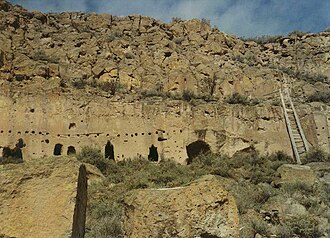 Plate IV NHL
 Puye Cliff Dwellings
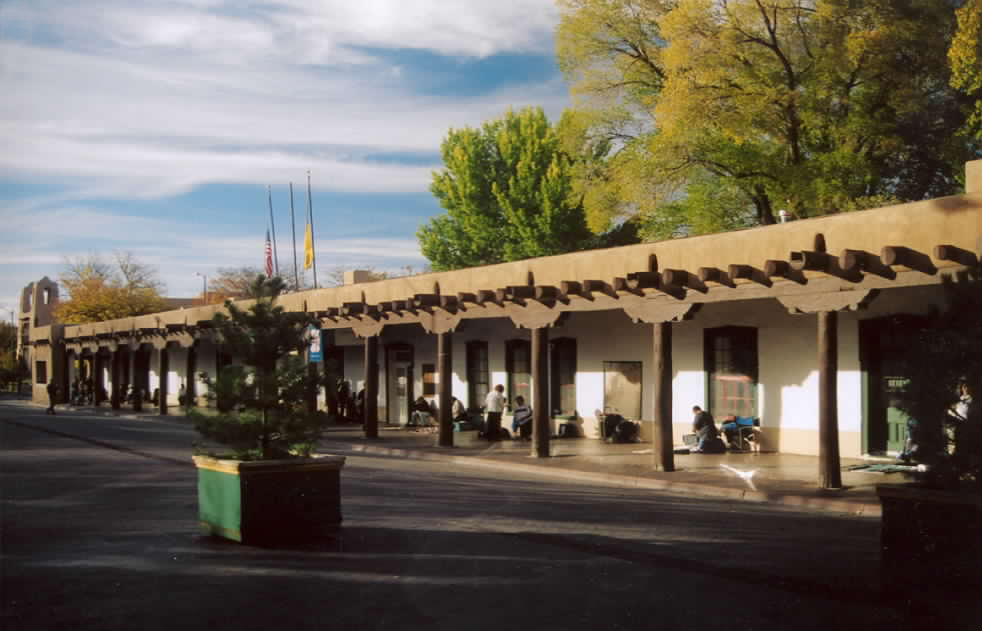 Plate V NHL
 Palace of the Governors
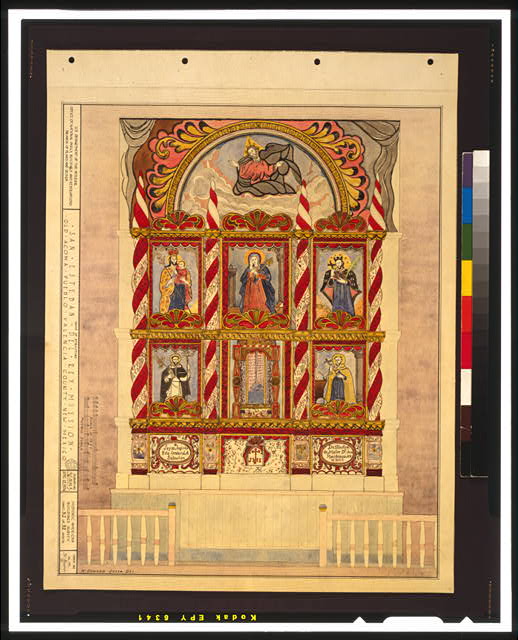 Plate VI NHL
 San Esteban del Rey Mission
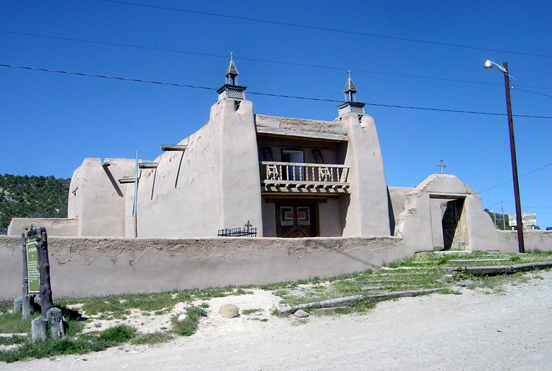 Plate VII NHL
 San José de Gracia Church
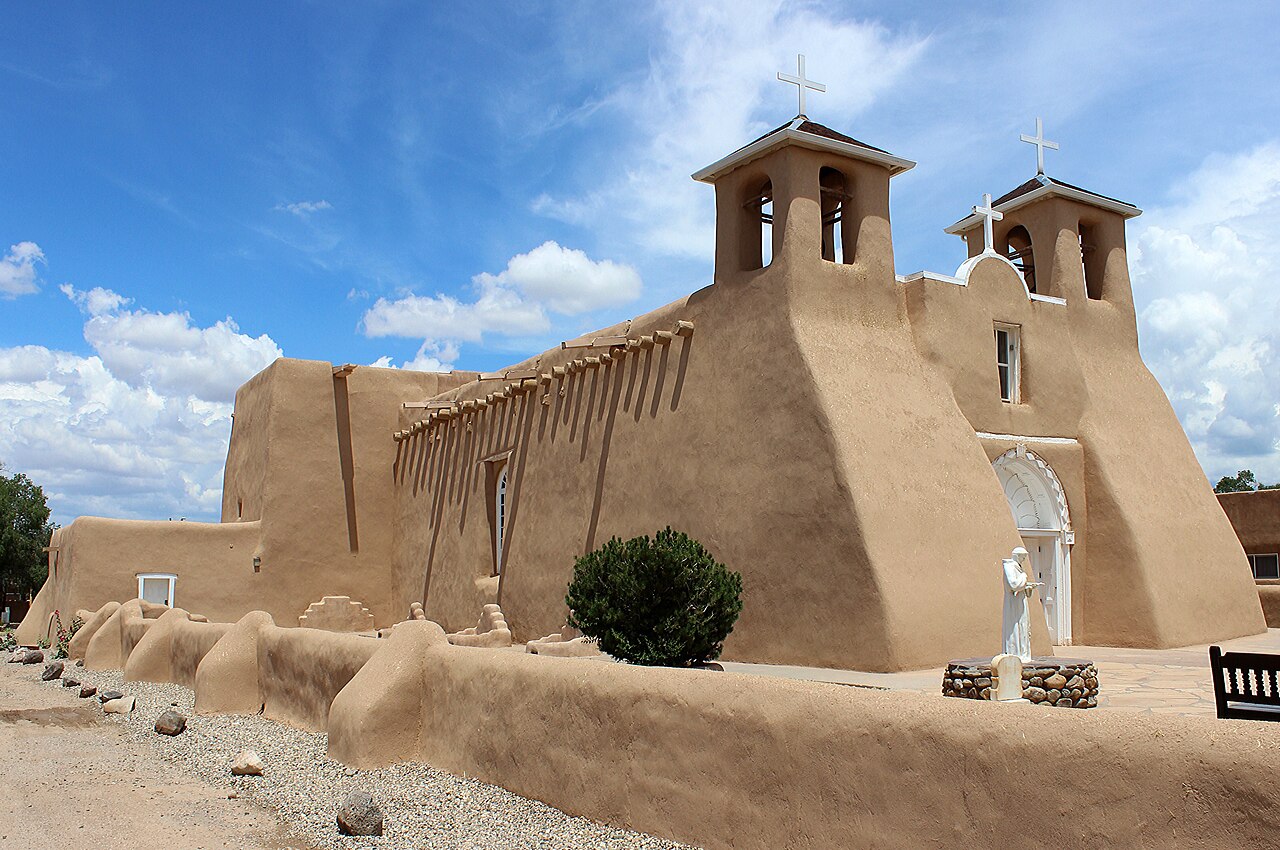 Plate VIII NHL
 San Francisco de Asís Mission Church
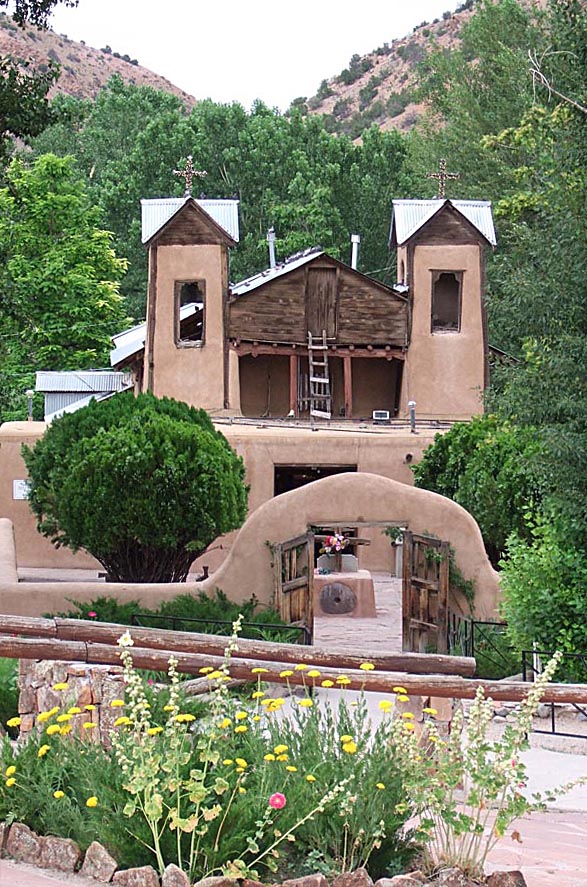 Plate IX NHL
 El Santuario de Chimayó
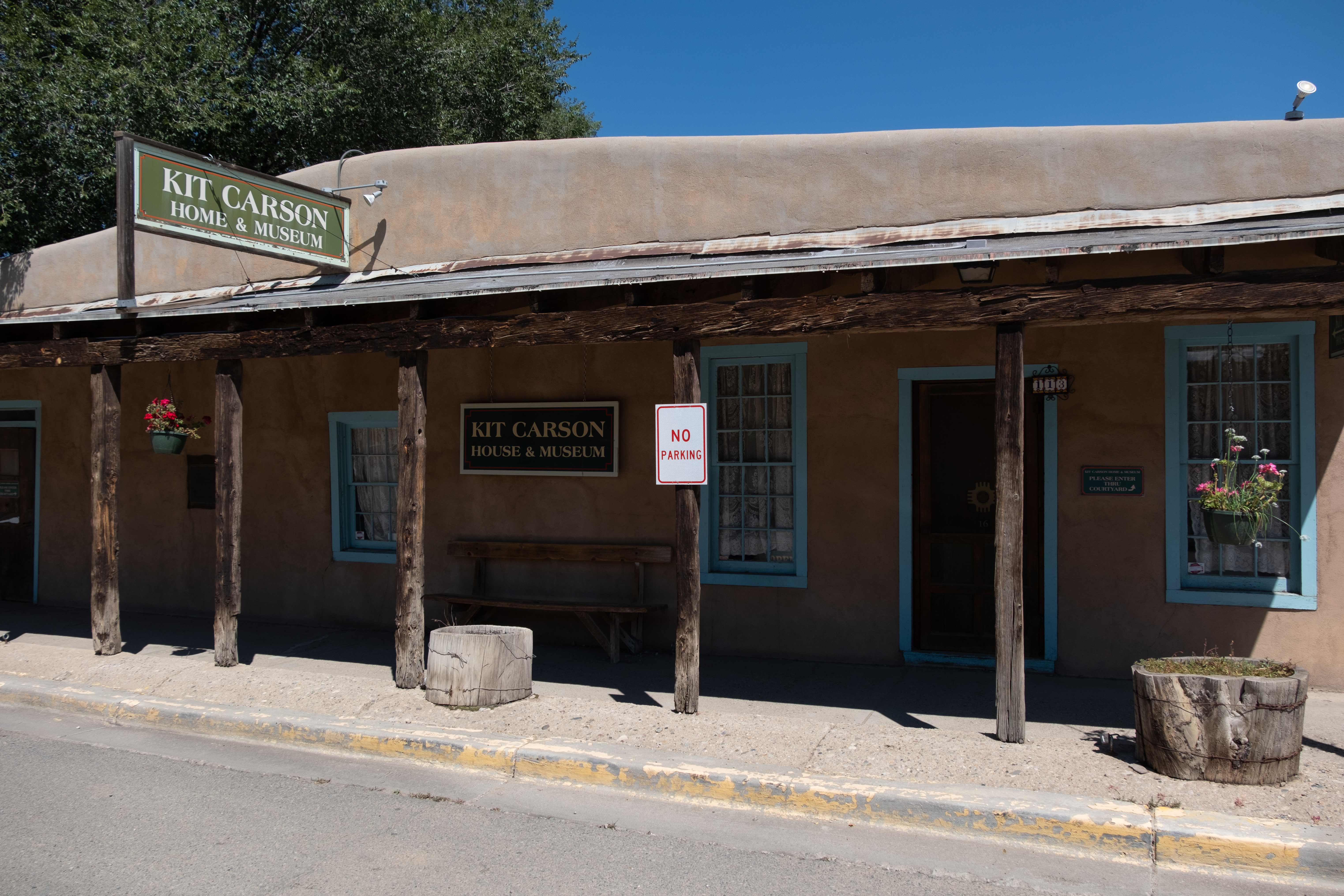 Plate X NHL
 Carson, Kit, House
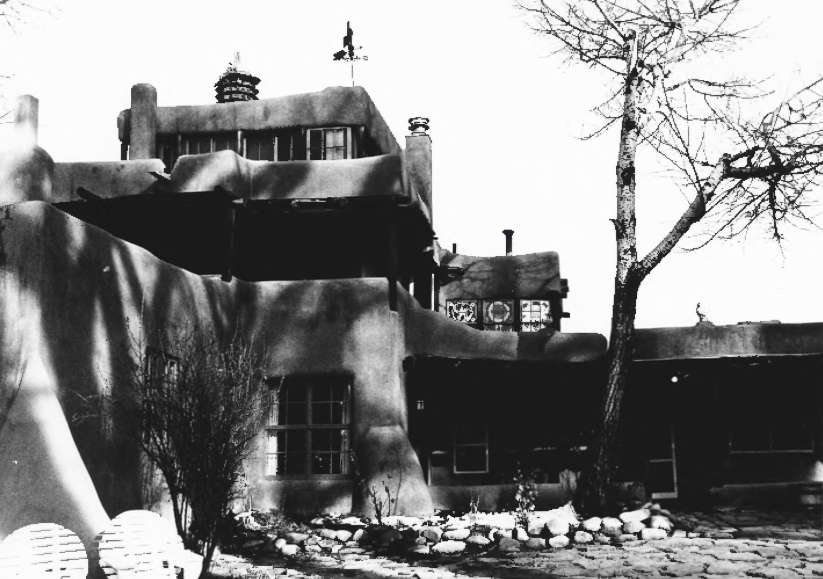 Plate XI NHL
 Luhan, Mabel Dodge, House
Scroll · drag to explore
Style distribution across New Mexico
Counts are drawn from the documented record of 60 catalogued entries. Where a building moves between periods, the catalog assigns the style of original construction.
- Vernacular Adobe 1750 – 195027
45% - Pueblo Revival c.1900 – present20
33% - Spanish Colonial 1598 – 182110
17% - Territorial 1846 – 19122
3% - Modern Adobe 1950 – present1
2%
Cities and villages in New Mexico
30 settlements hold catalogued entries.
All New Mexico entries, by city
Every catalogued property in the state, grouped by city in rough order of catalog depth. Tap a card to open the documented entry.
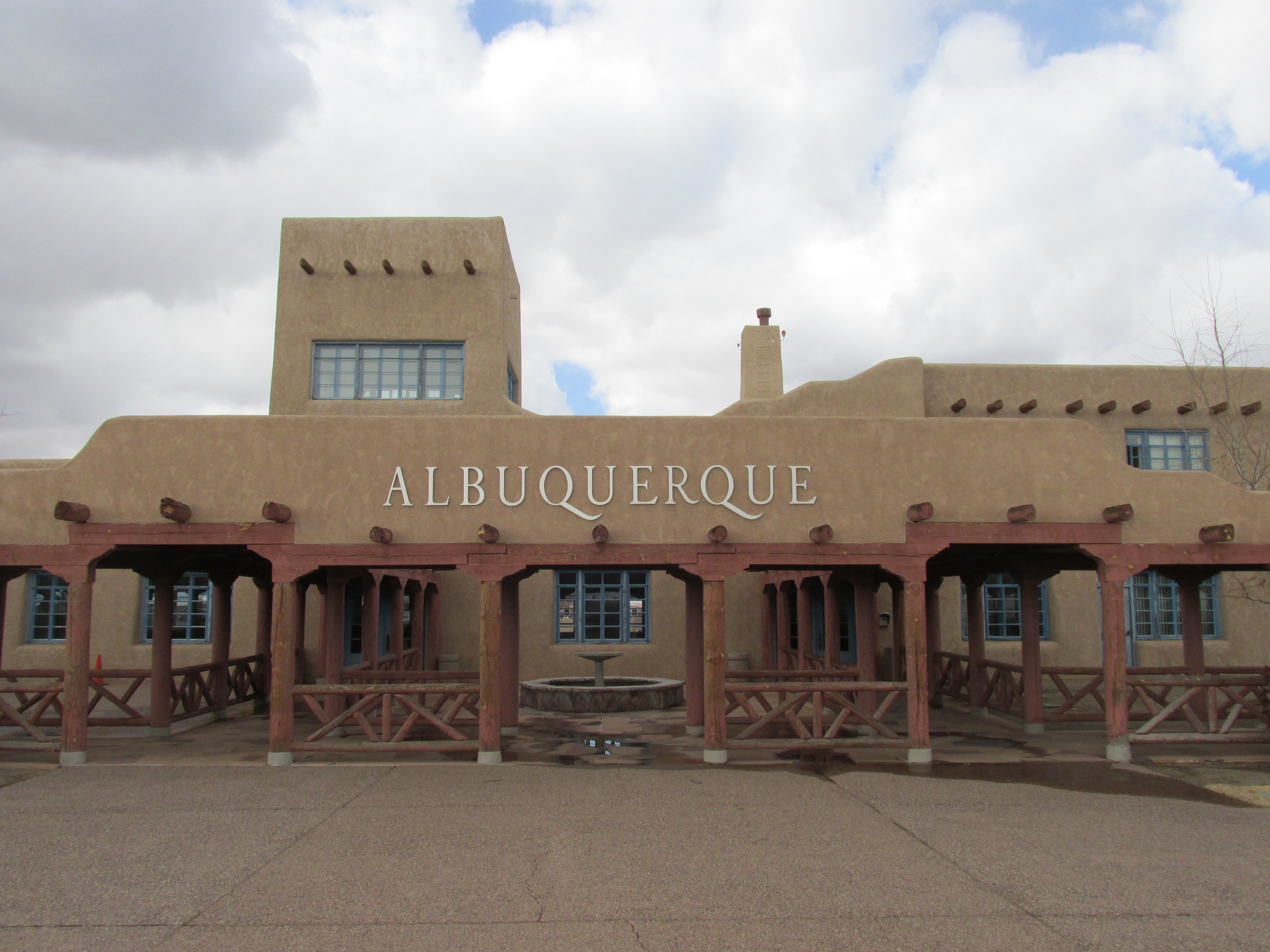
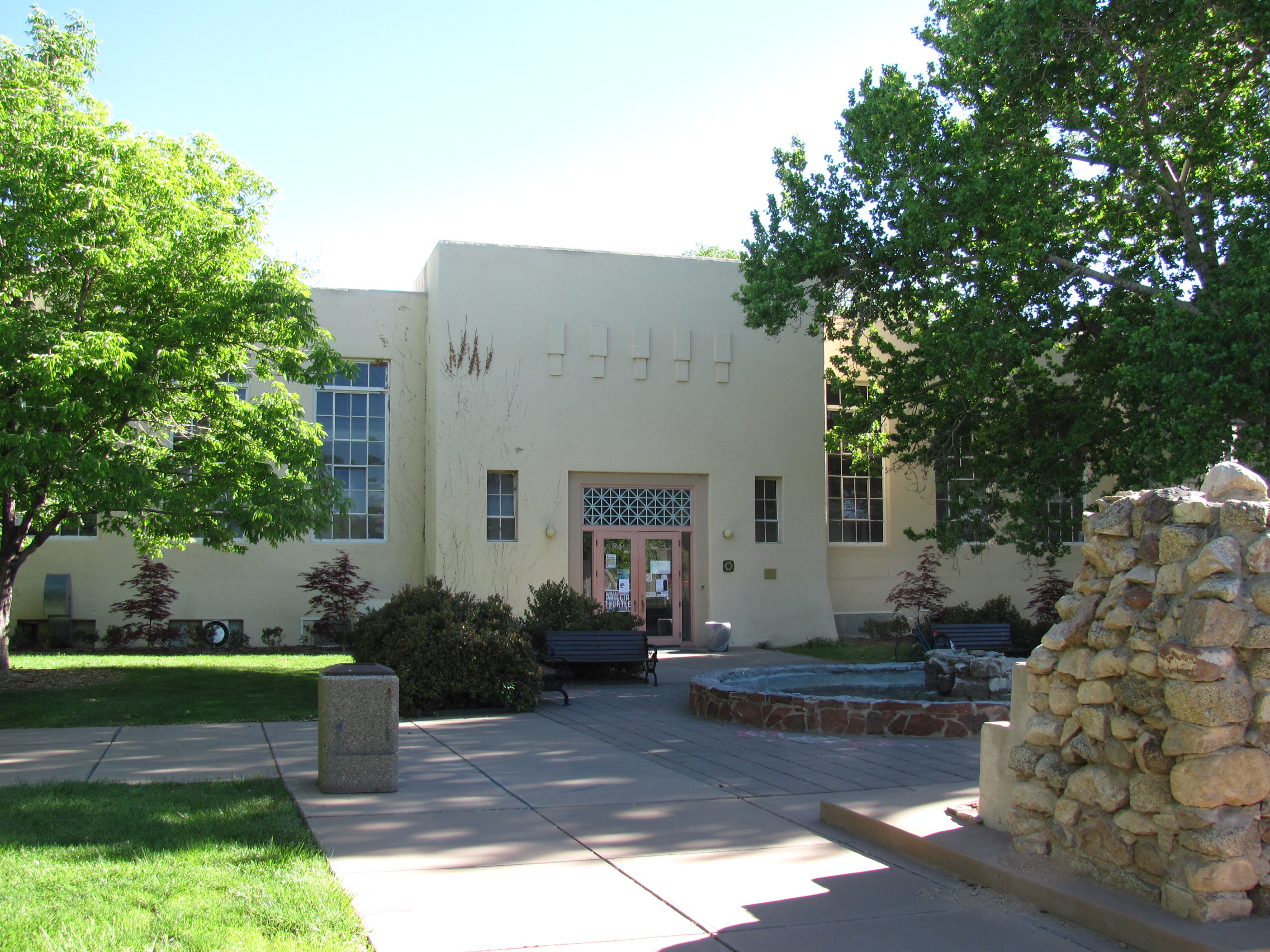
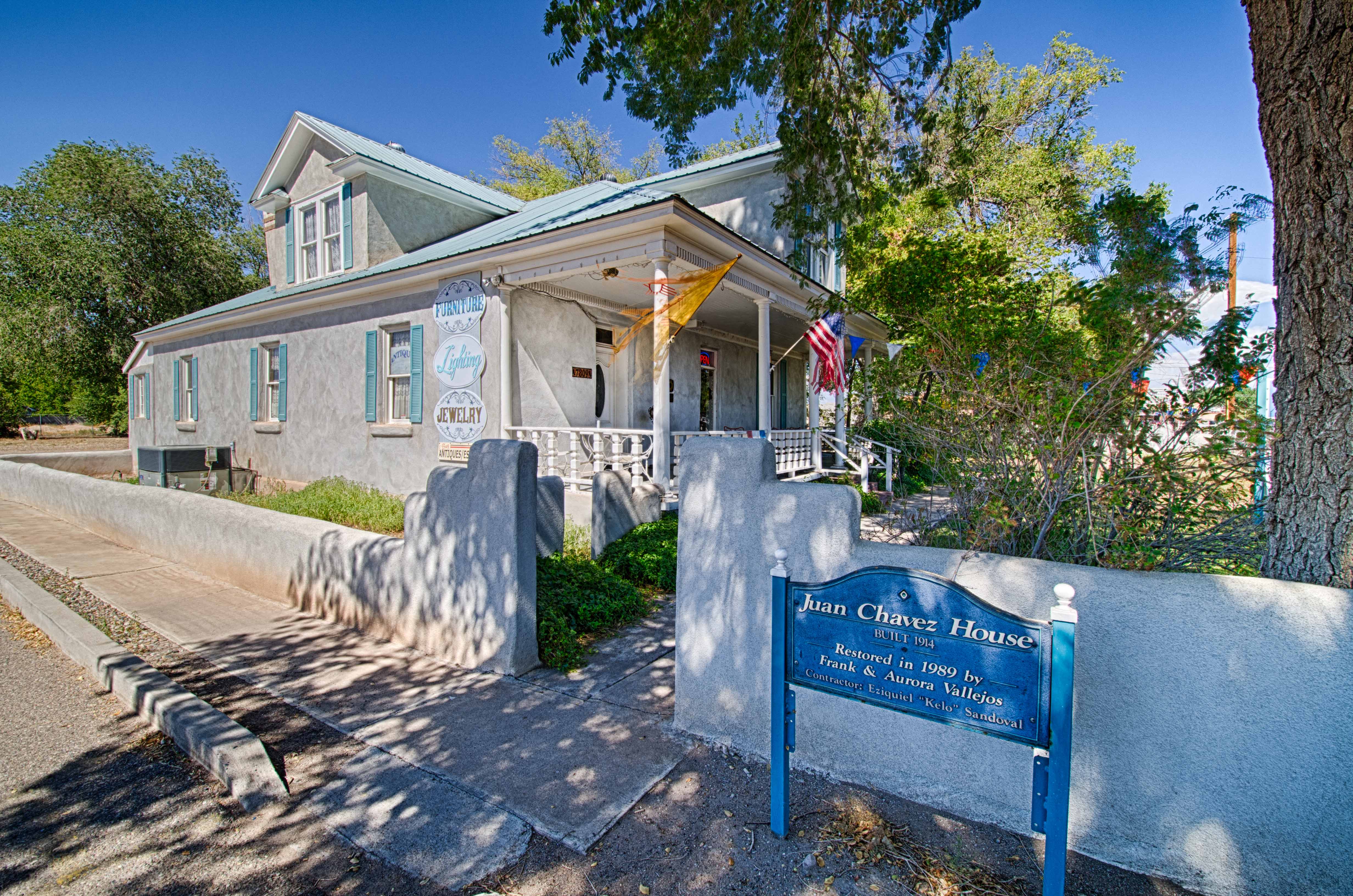
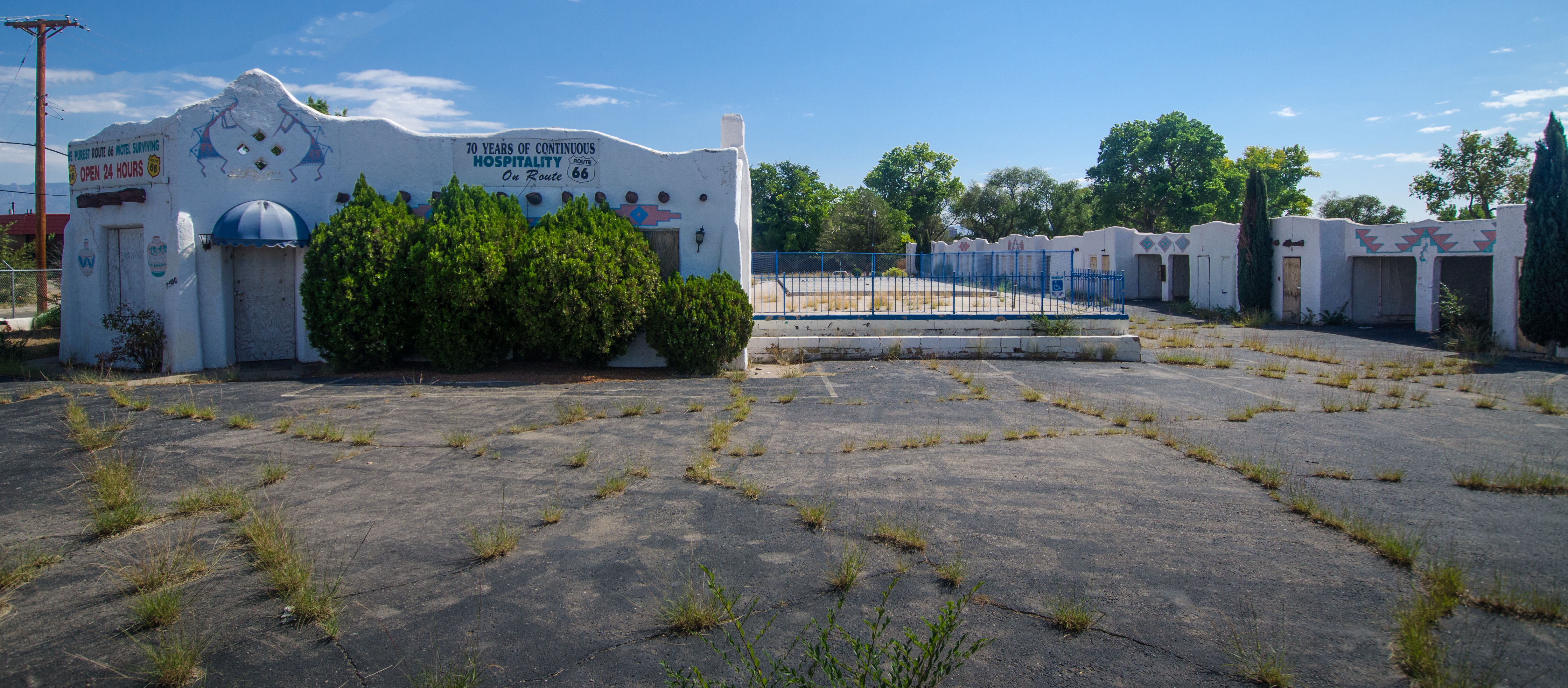
Albuquerque
Santa Fe
Taos
 № NM-001 № NM-002
  № NM-003
  № NM-004 № NM-005
  № NM-006