Atlas region III
The record at a glance
This chapter documents 4 catalogued adobe properties across 3 Texas settlements. The summary at right breaks the catalog down by architectural style, current status, and recorded date range.
Spanish Colonial adobe along the San Antonio River and the western reaches of the Trans-Pecos — a smaller catalog than the desert states to the west, but anchored by some of the country's earliest mission settlements.
Where the entries are
A short history of adobe in Texas
Texas is the eastern boundary of the American adobe country. The earthen wall was built here in two clearly separated regions — the San Antonio River missions of the early Spanish Colonial period, and the small Trans-Pecos settlements of far west Texas — and the catalog reflects that split. The state holds fewer documented adobes than its desert neighbours to the west, but several of its surviving examples are among the oldest masonry buildings in the United States.
The San Antonio River missions — 1690 to 1793
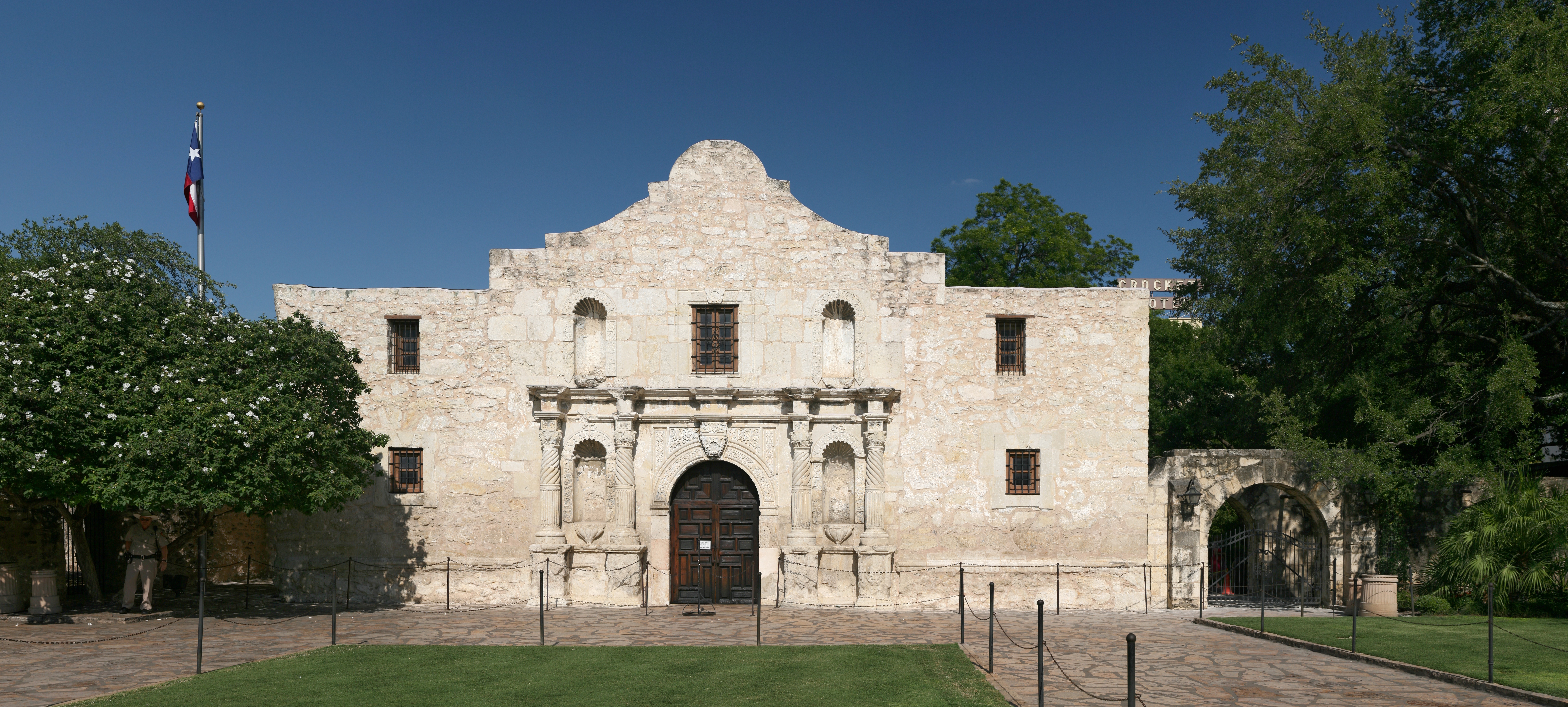
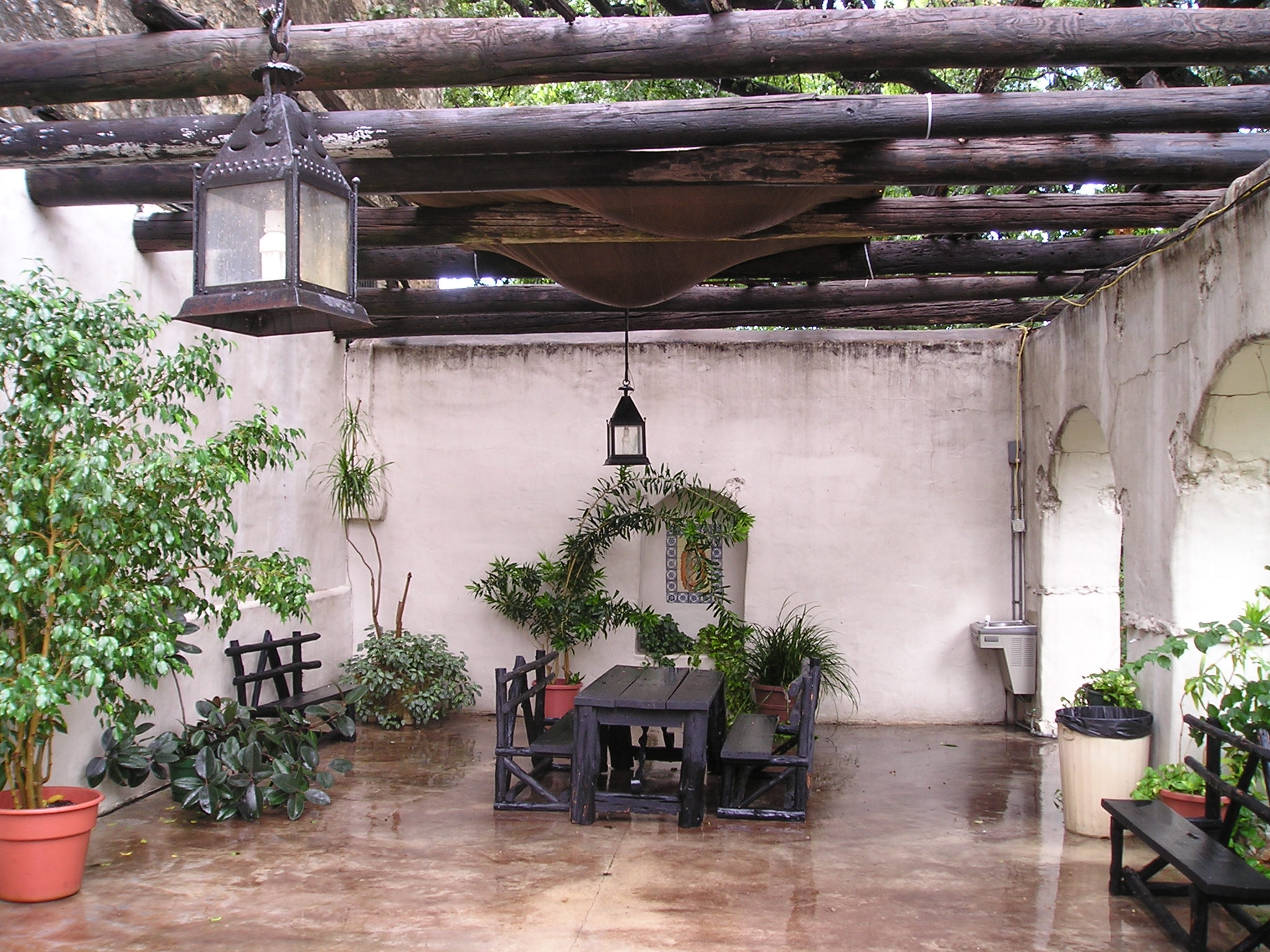
Spanish settlement in Texas began with a ring of missions north of the Rio Grande, but the surviving fabric is concentrated along a fifteen-mile reach of the San Antonio River, where five missions were founded between 1718 and 1731 and built up through the rest of the eighteenth century. The Mission San Antonio de Valero — re-named the Alamo when its convento was used as a barracks in the 1800s — was begun in 1718, moved to its present site in 1724, and reconstructed in adobe and limestone block over the following decades. The Spanish Governor’s Palace on the Plaza de Armas, completed about 1749, is the surviving civic example of the same building campaign: a long single-storey adobe-and-limestone house arranged around an interior patio, with the heavy-walled rooms and the carved cedar lintels typical of the Spanish presidio idiom.
These San Antonio missions are not pure adobe in the New Mexican sense. The local builders worked in a mixed masonry — limestone block for the load-bearing walls, adobe brick for the interior partitions and the upper-storey infill, and lime stucco over both — and the surviving buildings combine the two materials in proportions that vary by mission. The Alamo’s convento and church, the Spanish Governor’s Palace, and the chain of mission churches at Concepción, San José, San Juan Capistrano, and Espada belong together as the eastern end of the Spanish Colonial earthen tradition.
The El Paso district — 1681 to 1850
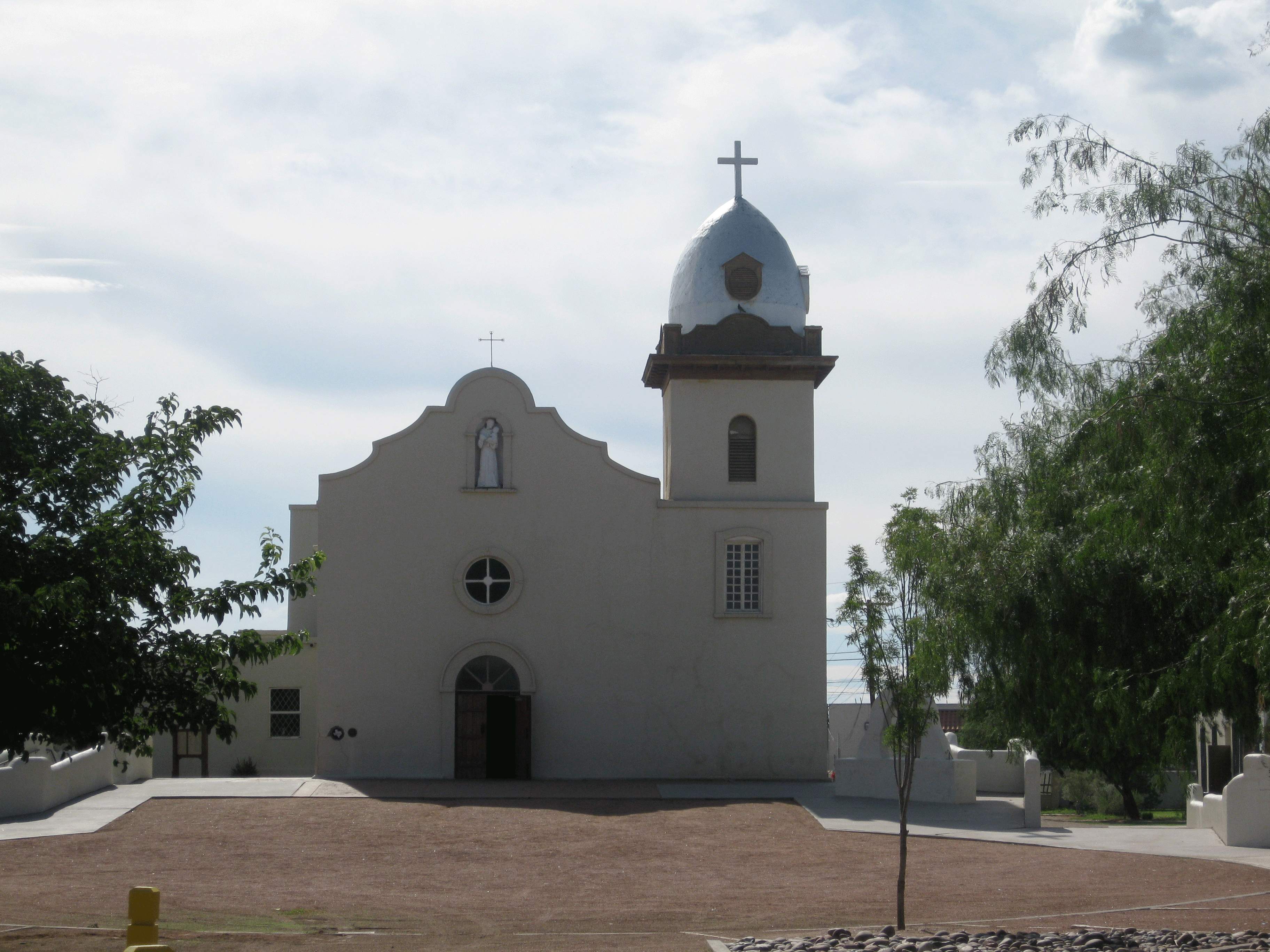
Far west Texas was settled earlier than the San Antonio missions — Ysleta del Sur Pueblo was founded in 1681 by Tigua refugees from the Pueblo Revolt — and is closer in building practice to New Mexico than to the central Texas Hill Country. The Ysleta Mission, rebuilt several times after floods on the Rio Grande, carries the New Mexican adobe vocabulary east into Texas: thick coursed walls, a flat roof carried on vigas, a small belfry above the entrance. The adjacent Socorro Mission, founded the same year, is the same idiom. These are the only documented adobes in the catalog that genuinely belong to the New Mexican Spanish Colonial tradition rather than to the San Antonio mixed-masonry school.
The Trans-Pecos and the Red River — nineteenth century
A small number of nineteenth-century adobes survive in the far west and along the Red River frontier. Doan’s Adobe House at Odell, on the old Western Cattle Trail just south of the Red, is a working frontier example of the form: a low single-room adobe house built about 1881 by a trader to the cattle drives, plastered in lime and roofed with milled lumber. Other examples in El Paso, Marfa, and Presidio survive in private hands and are catalogued where their records permit.
The American period and the decline of adobe — 1845 to present
The Republic of Texas joined the United States in 1845, and the building economy that followed — driven by the cotton ports of the Gulf, the cattle trail south, and the railroad lines into the Hill Country — moved decisively away from adobe. By the late nineteenth century adobe was used in working ranch buildings, small chapels, and along the Mexican-border line, but rarely in town centres. The Mission Revival of the early twentieth century touched San Antonio and Austin, but its surviving residential examples are largely stucco-and-frame and fall outside the scope of this catalog.
What follows is the documented core of the Texas adobe record — the San Antonio Spanish Colonial buildings, the El Paso district missions on the Rio Grande, and the small western adobes that anchor the eastern edge of the American adobe country.
Adobes to see in Texas
A short list — ordered roughly by date — drawn from the catalog for first-time visitors. Each entry links to its documented page in the Atlas.
Scroll · drag to explore
Style distribution across Texas
Counts are drawn from the documented record of 4 catalogued entries. Where a building moves between periods, the catalog assigns the style of original construction.
- Spanish Colonial 1598 – 18213
75% - Vernacular Adobe 1750 – 19501
25%
Cities and villages in Texas
3 settlements hold catalogued entries.
All Texas entries, by city
Every catalogued property in the state, grouped by city in rough order of catalog depth. Tap a card to open the documented entry.