History
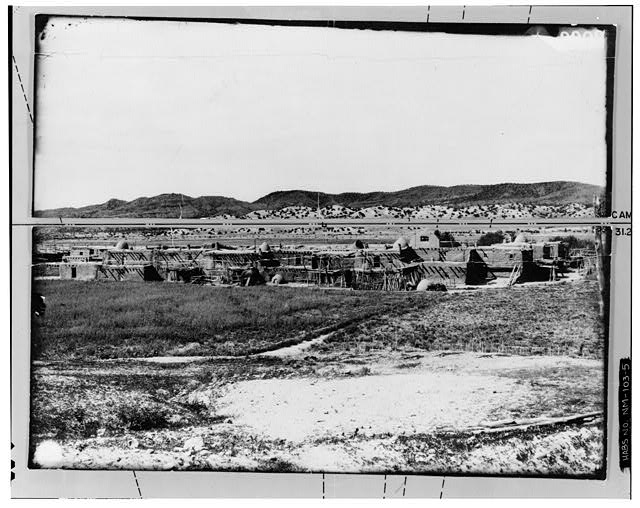
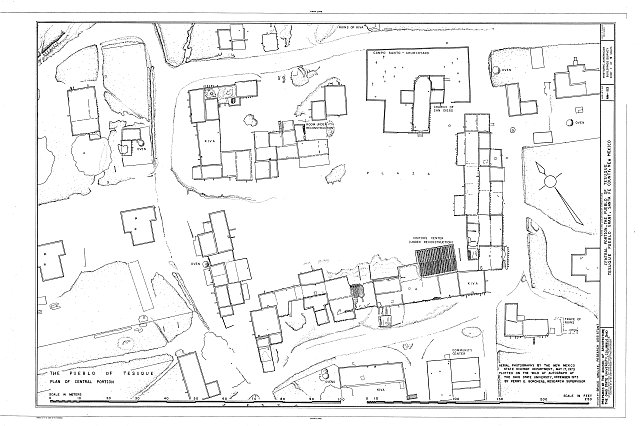
The Pueblo of Tesuque sits in a sheltered valley north of Santa Fe and has been continuously inhabited by Tewa-speaking Puebloan people for centuries before Spanish contact. The historic central portion of the village is organized around a plaza, with adobe house blocks of one and two stories forming the perimeter in the long-established Tewa pattern. Archaeological evidence ties the present settlement to a sequence of ancestral villages along the Tesuque Creek drainage.
The architecture at Tesuque belongs to the vernacular adobe tradition of the upper Rio Grande. Walls are built of coursed adobe or rubble stone set in mud mortar and finished with successive coats of mud plaster, periodically renewed by household labor. Roofs are flat, carried on vigas of pine overlaid with latillas, brush, and packed earth, and drained by canales that project from the parapets. Interior rooms are joined in long contiguous blocks, with rooftops historically used as work surfaces and access routes between dwellings.
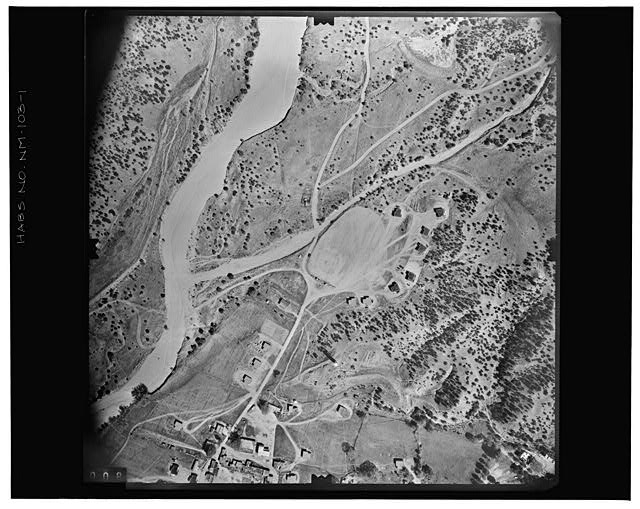
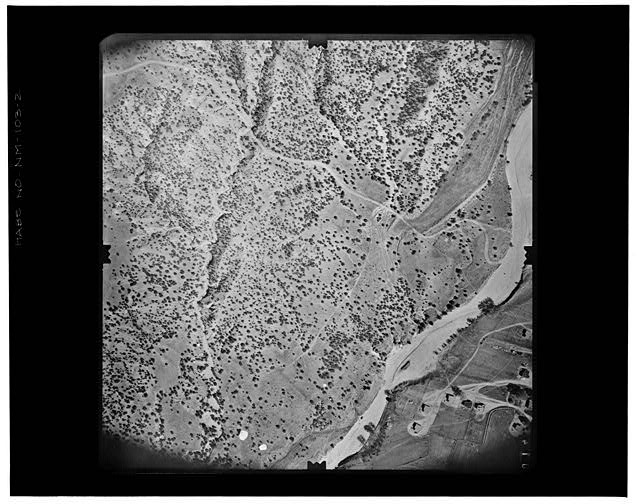
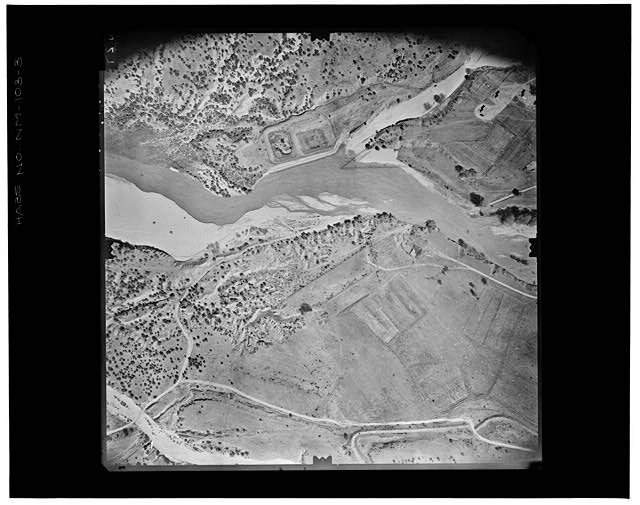
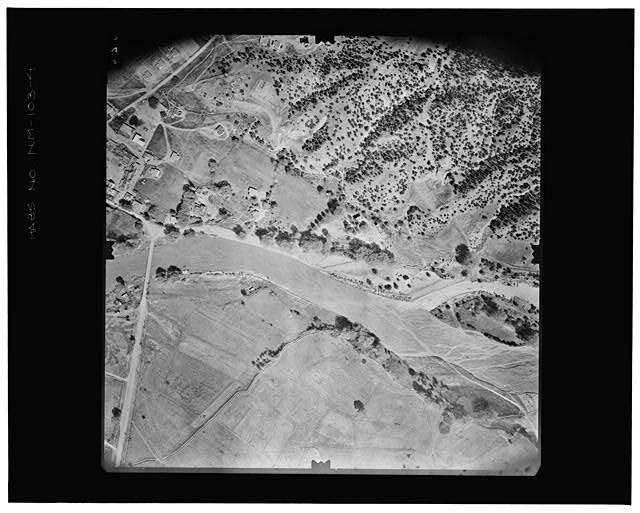
Tesuque played a central role in the Pueblo Revolt of 1680, when runners from the village carried the knotted cords that synchronized the uprising across the northern pueblos. After reconquest the community reestablished itself around its plaza and mission church and maintained its Tewa language, ceremonial calendar, and tribal government through the Spanish, Mexican, and American territorial periods. The Historic American Buildings Survey documented the central portion of the pueblo in the twentieth century, producing measured drawings and photographs of the historic house blocks.
The pueblo remains a sovereign Tewa community governed by its traditional council and an elected tribal government. The central village is private and access is restricted to ceremonial occasions and pueblo-controlled visitation; the tribe operates business enterprises along nearby highways. Within New Mexico's adobe tradition the Pueblo of Tesuque is a compact, intact northern Tewa village whose plaza-centered house blocks preserve the building form that defined the upper Rio Grande pueblos at the moment of first European contact.
Common questions
What is Pueblo of Tesuque?
Pueblo of Tesuque is a historic Native American pueblo located in the Tesuque River vicinity of Santa Fe County, New Mexico. It is documented in the Historic American Buildings Survey collection at the Library of Congress, with photographs and measured drawings of its central portion.
When was Pueblo of Tesuque built?
The exact founding date of Pueblo of Tesuque is not specified in this entry's records. HABS documentation, including photogrammetric plates from 1973, captures the central portion of the historic community.
Where is Pueblo of Tesuque located?
Pueblo of Tesuque is located in the Tesuque River vicinity, in Tesuque, Santa Fe County, New Mexico. The site sits north of the city of Santa Fe.
Can you visit Pueblo of Tesuque?
Pueblo of Tesuque is an inhabited tribal community recorded with a private-residence status flag in this entry. Public visitation, when offered, is managed by the Tesuque tribal authorities; visitors should consult those authorities directly for current access policies.
Why is Pueblo of Tesuque historically significant?
Pueblo of Tesuque is significant as a long-established pueblo community near Santa Fe. Its central portion is documented by the Historic American Buildings Survey through photogrammetric plates, plans, and elevation drawings preserved in the Library of Congress HABS collection.