History
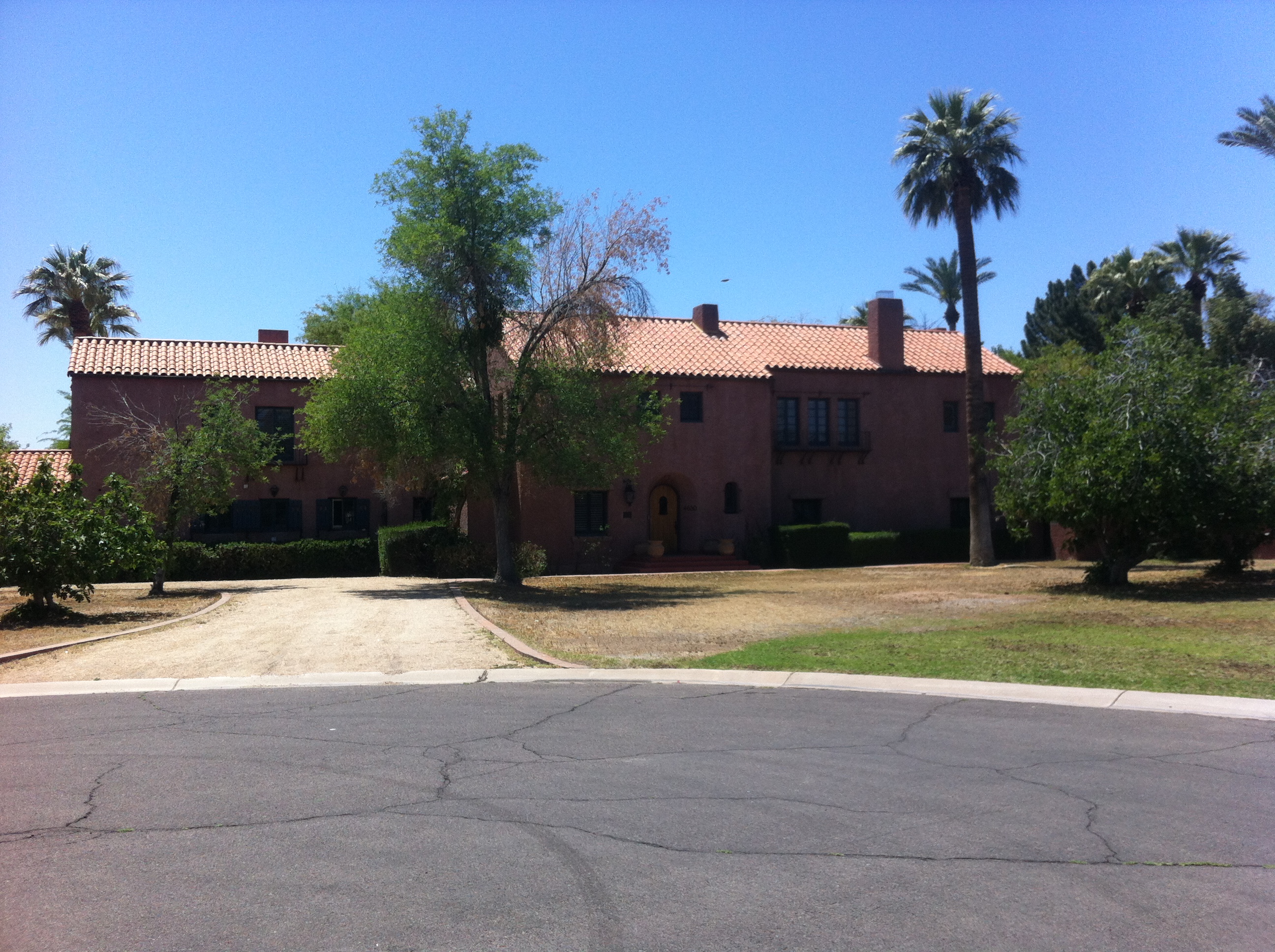
The Rancho Joaquina House stands in Phoenix, Maricopa County, Arizona, in one of the early-twentieth-century residential districts that grew out from the original townsite as the Salt River Valley's agricultural and water-supply infrastructure matured. The principal house was completed in 1924, in the period in which Spanish Colonial Revival was establishing itself as the favored residential idiom for substantial Phoenix houses on landscaped grounds, alongside the more austere Pueblo Revival being applied to the city's institutional buildings.
Construction is stuccoed masonry executed in the Spanish Colonial Revival vocabulary: low principal volumes finished in cream-toned stucco, terra-cotta tile roofs over the main blocks, arched and arcaded openings on the principal facades, decorative wrought-iron grilles at selected windows, and the careful, asymmetrical massing characteristic of the better residential work of the period. The plan groups living and dining rooms around a central entry hall with subordinate service wings, and outdoor terraces and patios extend the interior into the surrounding landscaped grounds in the manner of the California and Sonoran precedent the style invoked.
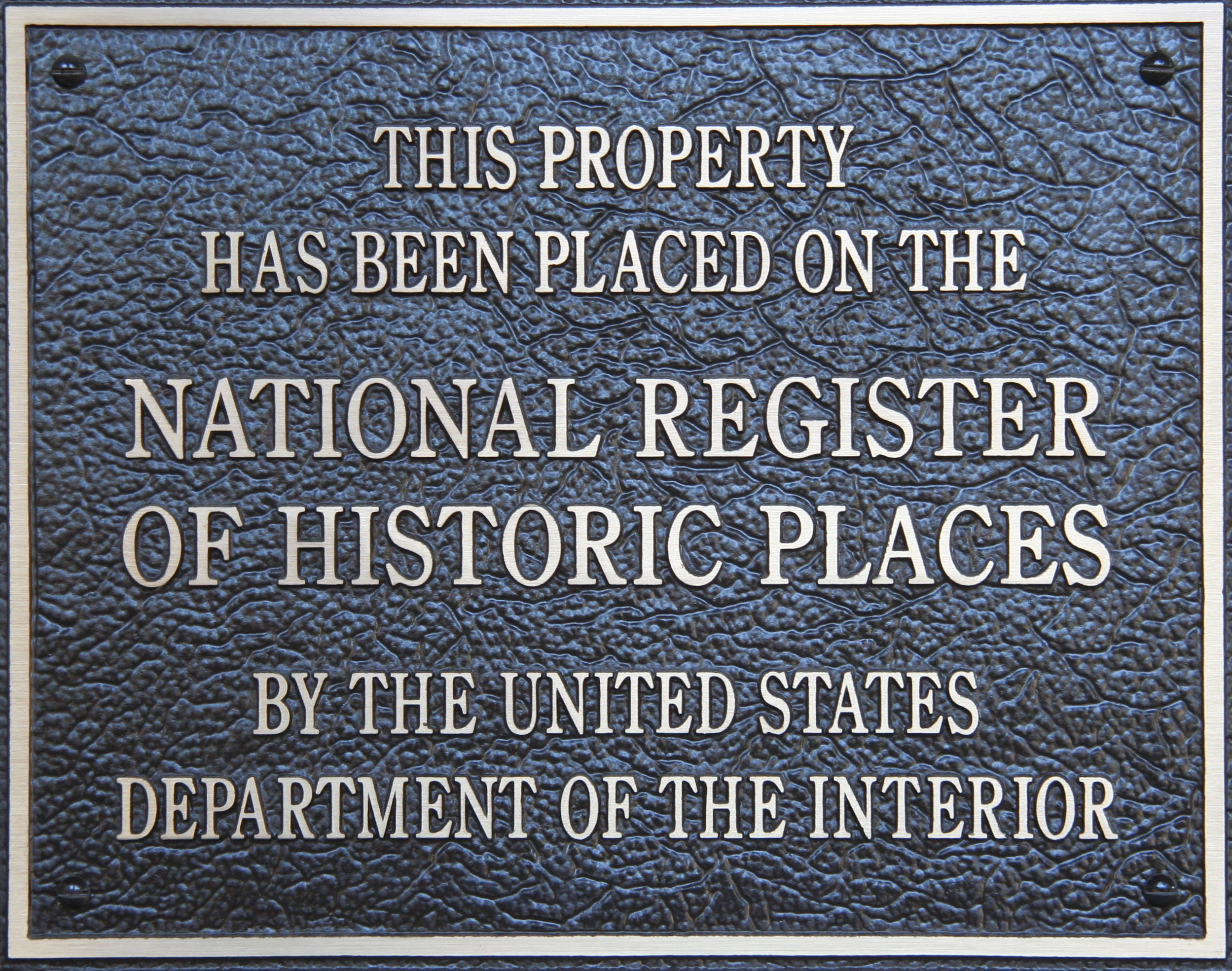
The property was listed on the National Register of Historic Places in 1984 under reference number 84000786 in recognition of its architectural significance to the early-twentieth-century residential development of Phoenix. The Rancho Joaquina name is preserved in the registry record and reflects the broader cultural framing of the period, in which Anglo-built Spanish Colonial Revival houses were given Hispanic-evocative names as part of the regional self-presentation of the architecture.
The house remains a private residence and is not open to the public. Within Arizona's adobe and Hispanic-derived architectural tradition the Rancho Joaquina House is significant as a representative high-end Spanish Colonial Revival residence of the early Phoenix period — a stuccoed masonry house that drew the older Sonoran and Californian vocabulary into the emerging architectural identity of the central Arizona metropolis.
Common questions
What is Rancho Joaquina House?
Rancho Joaquina House, also known as the J.E. Thompson House, is a Mission Revival and Spanish Colonial Revival mansion in the Arcadia neighborhood of Phoenix, Arizona. It is recognized as the earliest adobe revival property in the Phoenix area and is listed on both the National Register of Historic Places and the historic register for the City of Phoenix.
When was Rancho Joaquina House built?
Rancho Joaquina House was built in 1924-1925 by the Phoenix architectural firm Fitzhugh & Byron for J.E. Thompson, who was at one time a Republican candidate for the United States Senate from Arizona.
Where is Rancho Joaquina House located?
Rancho Joaquina House is located at 4630 E. Cheery Lynn Road in the Arcadia neighborhood of Phoenix, Arizona. The estate today is surrounded by the El Coronado Estates community.
Is Rancho Joaquina House open to the public?
No, Rancho Joaquina House is a private residence and is not open for tours. The property was renovated in 1970 and briefly served as a designer show house before returning to private use.
What architectural style is Rancho Joaquina House?
Rancho Joaquina House is a Mission Revival and Spanish Colonial Revival mansion designed by the Phoenix firm Fitzhugh & Byron. It is identified as the earliest adobe revival property built in the Phoenix area.
Why is Rancho Joaquina House historically significant?
Rancho Joaquina House is listed on the National Register of Historic Places under reference 84000786 and on the City of Phoenix historic register. It was the home of J.E. Thompson, brother of mining magnate William Boyce Thompson, and served as a filming location for the 1950s television show 26 Men.