
History
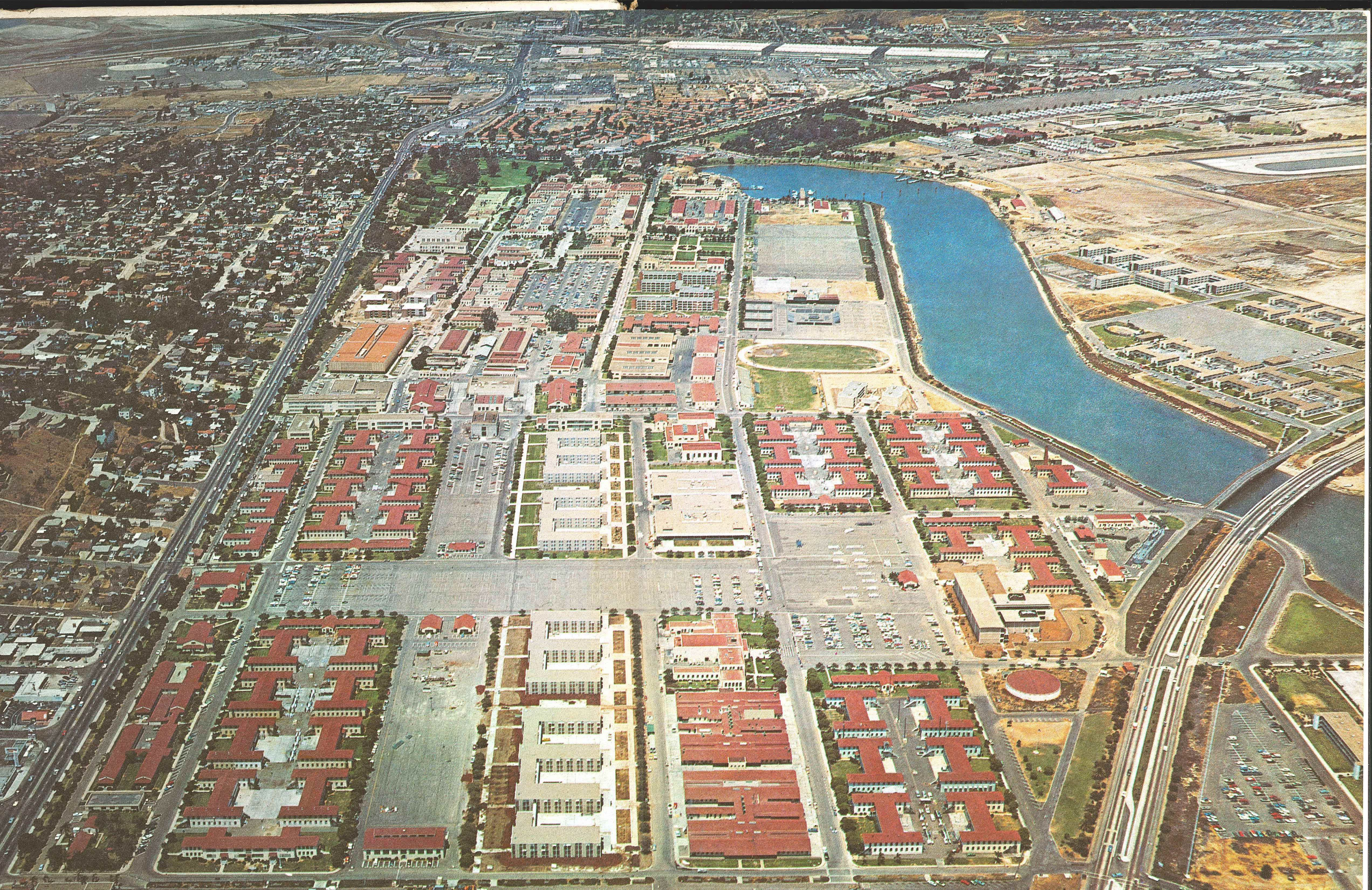
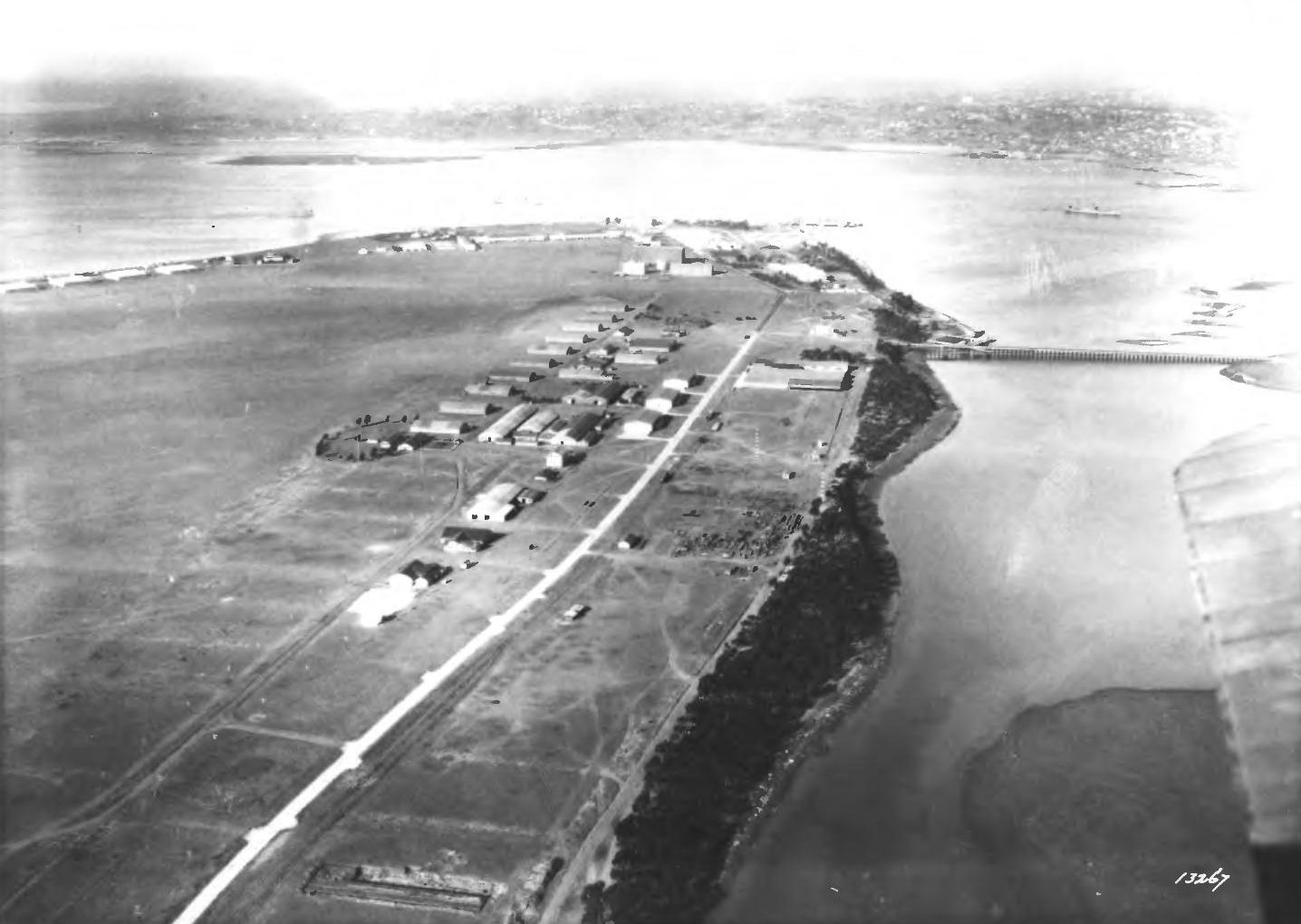
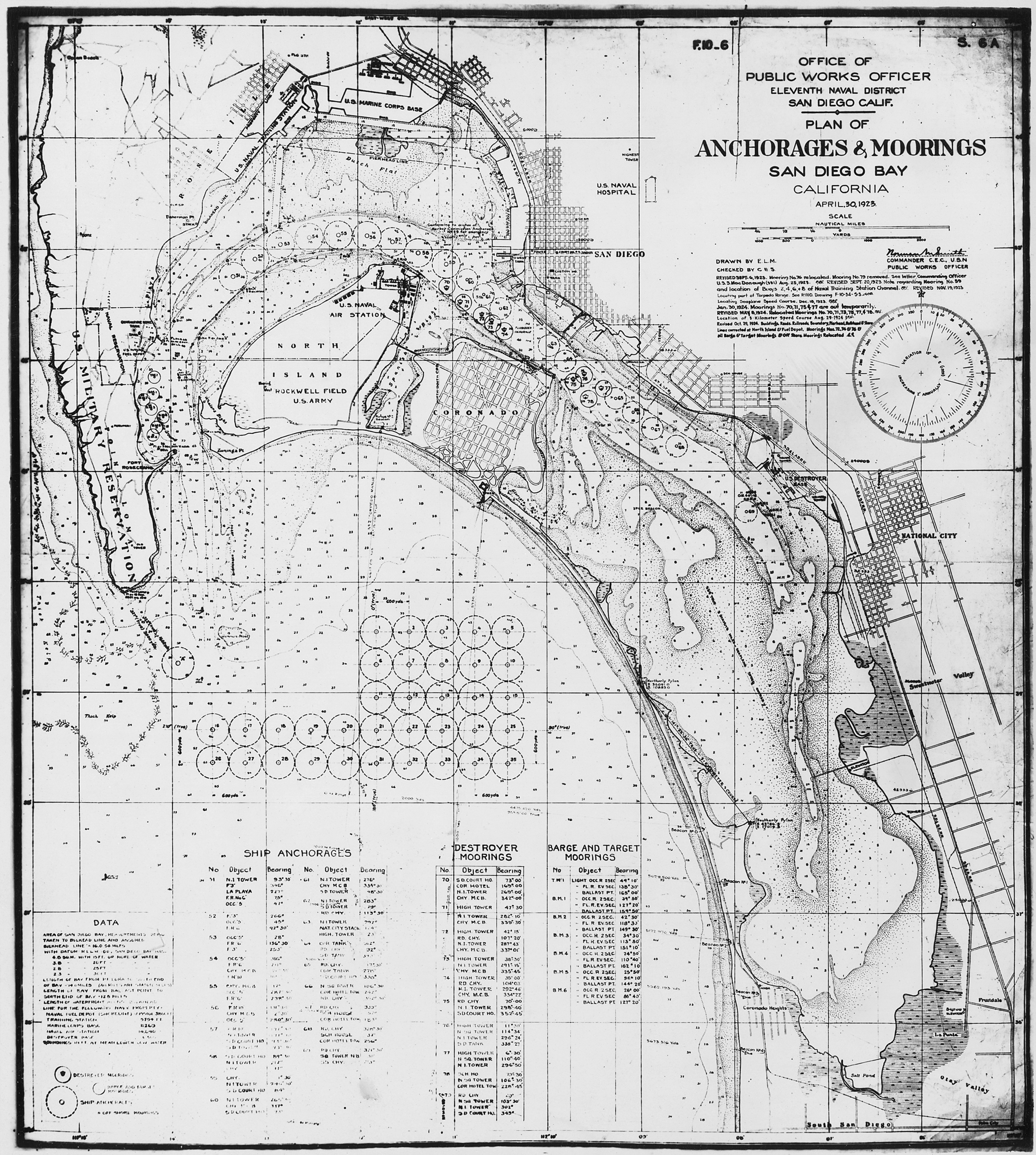
Rockwell Field occupied the northern portion of North Island in San Diego Bay and served as one of the earliest military aviation installations on the Pacific Coast. Established by the United States Army in 1917 and named for Second Lieutenant Lewis C. Rockwell, an early Army aviator killed in a 1912 crash, the field developed alongside the adjacent naval air station and played a significant role in the formative decades of American military aviation.
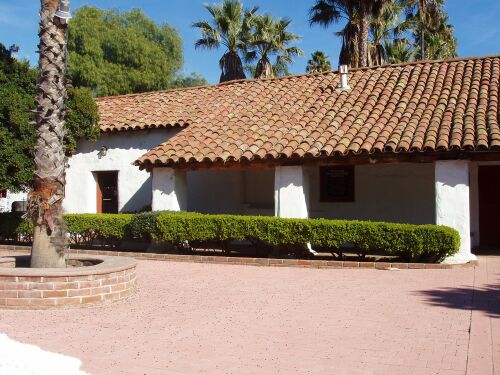
The principal early-twentieth-century buildings at Rockwell Field were constructed in the Spanish-colonial revival idiom then dominant in southern California civic and military architecture. Walls were typically of stuccoed hollow-tile or concrete construction rather than true adobe, but were detailed with low-pitched red clay tile roofs, arcaded loggias, and plain plastered facades intended to evoke the regional missions and presidios. The administrative buildings, officers' quarters, and operations facilities were organized around courtyards in keeping with this idiom, and many of the early hangars and support structures shared the same architectural vocabulary.
The field was the site of significant aviation milestones. An early in-flight refueling test occurred in skies over the installation in the 1920s, and the field served as the departure point for important early long-distance flights across the Pacific. During the interwar period Rockwell Field housed pursuit, bomber, and observation units of the Army Air Corps, before the installation was consolidated with the adjacent Naval Air Station North Island and eventually absorbed into Navy control.
The grounds remain in federal government use as part of Naval Air Station North Island. Several of the original Spanish-colonial revival administrative and quarters buildings survive within the active base.
Within California's adobe and revival traditions, Rockwell Field illustrates the adaptation of the regional mission idiom to military and institutional architecture in the early twentieth century, extending the visual heritage of Spanish California into the federal building campaigns of the interwar period.
Common questions
What is Rockwell Field?
Rockwell Field is a former United States Army Air Corps military airfield located on the northern part of the Coronado Peninsula in San Diego County, California, about 1.1 miles northwest of Coronado across the bay from San Diego. It played a fundamental role in the development of United States military aviation before and during World War I.
When was Rockwell Field established?
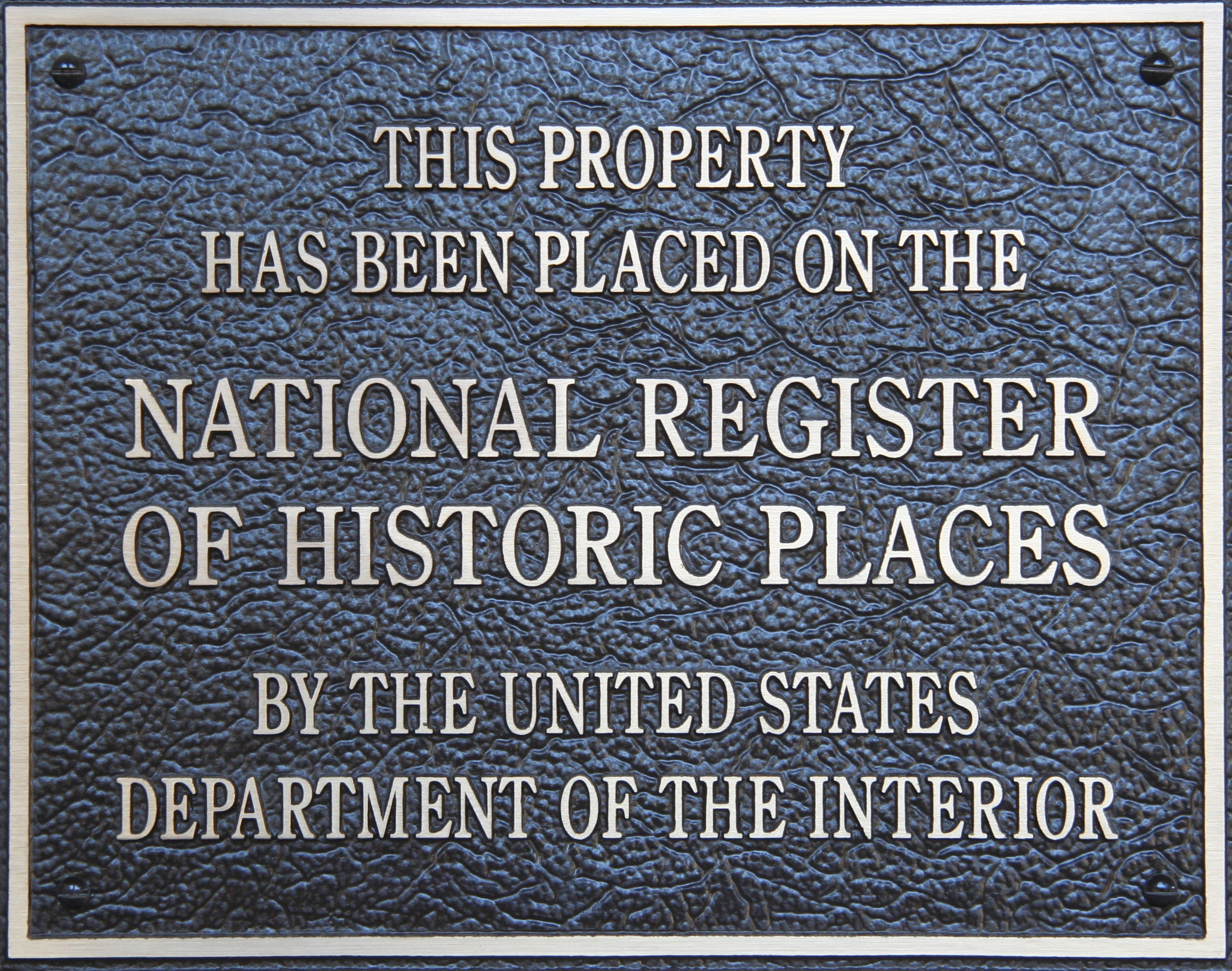
The Army established a permanent flying school at the site in November 1912. The field had originally operated as the Curtiss School of Aviation, founded by Glenn Curtiss, and it was added to the National Register of Historic Places in 1991.
Where is Rockwell Field located?
Rockwell Field is located on the northern part of the Coronado Peninsula in San Diego County, California, approximately 1.1 miles northwest of the city of Coronado. Today it forms the southeastern quadrant of Naval Air Station, North Island (NAS North Island).
Can you visit Rockwell Field?
Rockwell Field today forms part of Naval Air Station, North Island, an active United States Navy installation. As such, the site functions as a restricted military facility and is not open for general public tours.
Why is Rockwell Field historically significant?
Rockwell Field was added to the National Register of Historic Places in 1991 in recognition of its fundamental role in the early development of United States military aviation. It originated as the Curtiss School of Aviation, became a major Army flying school during World War I, and was transferred to the United States Navy on January 31, 1939.