
History
St. Thomas Aquinas Chapel at 130 West Ojai Avenue stands at the heart of the village of Ojai, a community comprehensively rebuilt in the Spanish-colonial revival idiom in the late 1910s under the patronage of Edward Drummond Libbey. The chapel was constructed in this period as part of Libbey's broader campaign to transform the existing town of Nordhoff into a unified Spanish-colonial revival civic ensemble that came to be renamed Ojai.
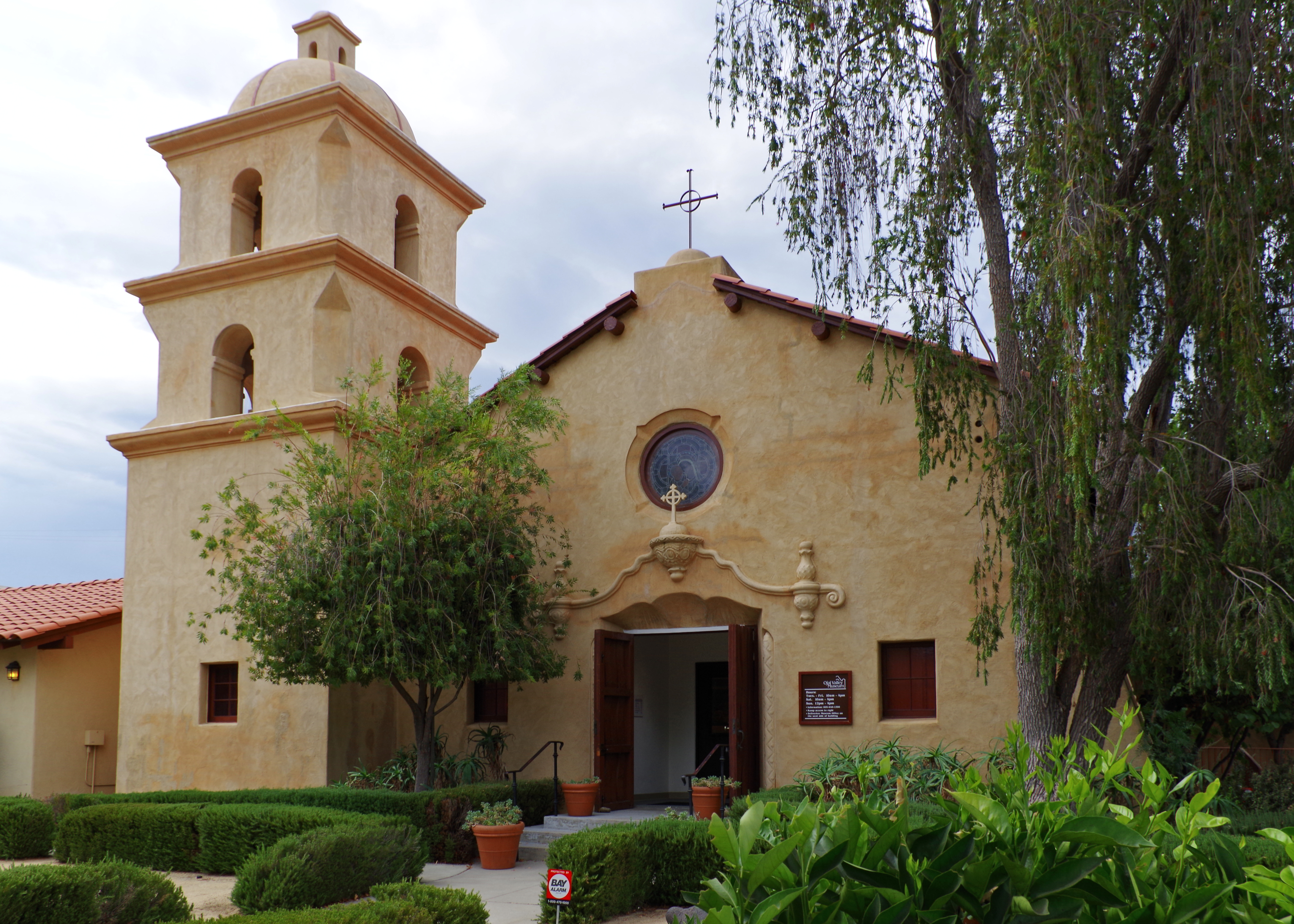
The building was designed in the Mediterranean and Spanish-colonial revival manner that dominated southern California civic architecture in the early twentieth century. Constructed of stuccoed masonry rather than true adobe, the chapel presents the characteristic vocabulary of the idiom: thick plastered walls, a low-pitched red clay tile roof, an arcaded entry portico, a simple bell tower, and deeply recessed window openings. The interior was finished with painted ceiling beams, plain plastered walls, and modest stained-glass openings appropriate to a small parish church.
The chapel served as a Roman Catholic parish church for the growing community of Ojai through the twentieth century, anchoring one end of the civic plaza that Libbey had laid out as the new town center. It complemented Libbey's tower-and-arcade post office building across the plaza, together forming one of the more coherent surviving Spanish-colonial revival civic compositions in southern California.
The building was listed on the National Register of Historic Places in 1995 under reference number 95000785. It is now interpreted as a historic site and museum element of the Ojai civic center, with continuing community use for cultural and religious events.
Within California's adobe and revival traditions, St. Thomas Aquinas Chapel exemplifies the early-twentieth-century application of the Spanish-colonial revival to small-town civic architecture, translating the older mission and rancho vocabulary into a unified planned village.
Common questions
What is St. Thomas Aquinas Chapel?
St. Thomas Aquinas Chapel is a former Catholic chapel located in Ojai, in Ventura County of southern California. It now houses the Ojai Valley Museum, including the city's research library and historical society, in a Spanish Colonial-style building.
How old is St. Thomas Aquinas Chapel?
St. Thomas Aquinas Chapel's exact date of construction is unknown from the available registry information. Its 1995 listing on the National Register of Historic Places under reference number 95000785 reflects its standing as a recognized historic chapel in the Ojai Valley.
Where is St. Thomas Aquinas Chapel located?
St. Thomas Aquinas Chapel is located at 130 West Ojai Avenue in Ojai, California, in Ventura County in southern California.
Can you visit St. Thomas Aquinas Chapel?
Yes. The former St. Thomas Aquinas Chapel now houses the Ojai Valley Museum, along with the city's research library and historical society, making the building accessible to the public as a heritage and cultural site.
Why is St. Thomas Aquinas Chapel historically significant?
St. Thomas Aquinas Chapel is listed on the National Register of Historic Places under reference number 95000785. It is significant both as a former Catholic chapel and as the current home of the Ojai Valley Museum, research library, and historical society.
What architectural style is St. Thomas Aquinas Chapel?
St. Thomas Aquinas Chapel is built in the Spanish Colonial style, an architectural tradition common to early 20th-century Southern California religious and civic buildings that draws on the adobe forms of California's mission heritage.