History
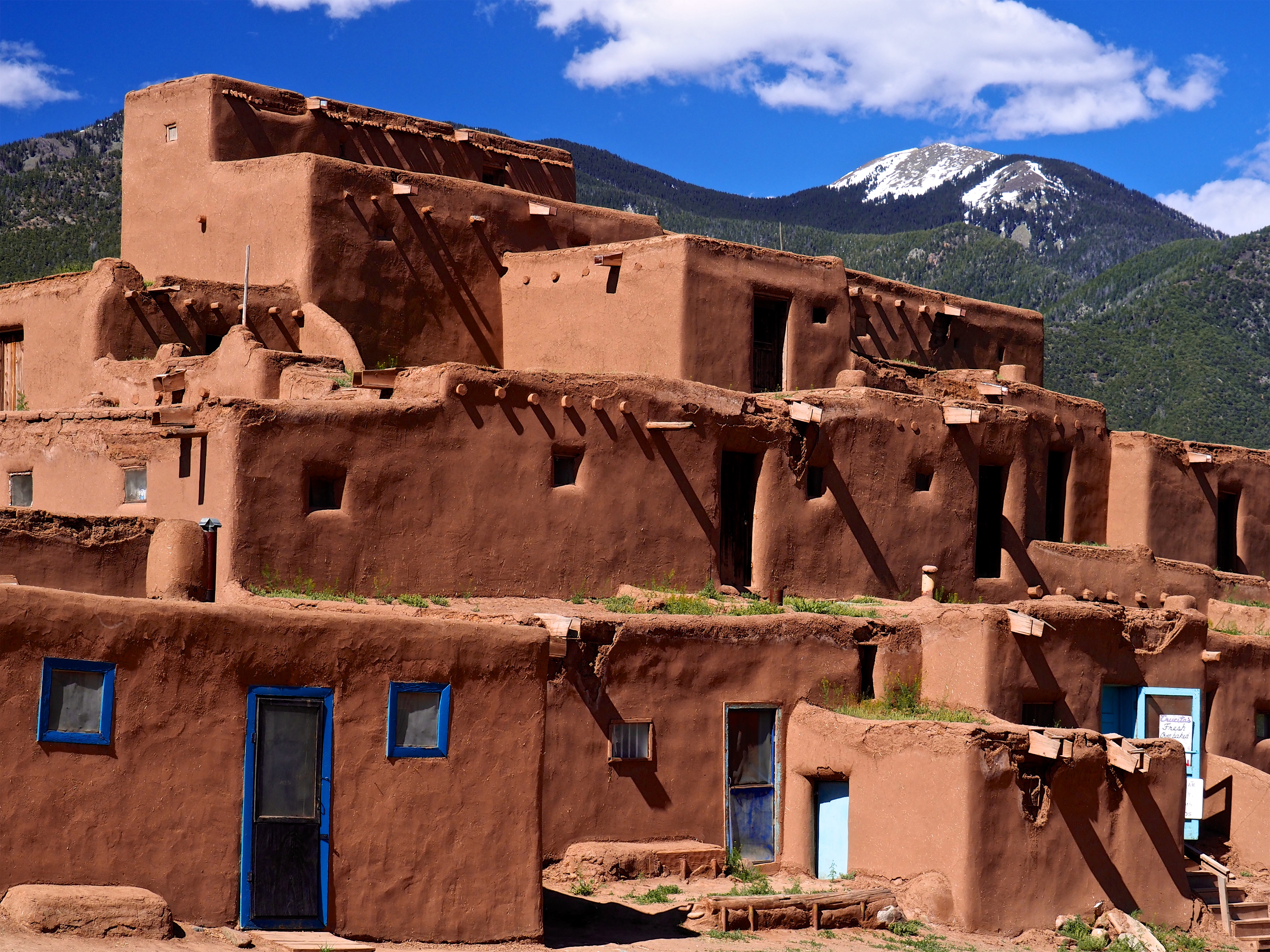
Taos Pueblo lies in the broad valley north of the modern town of Taos, at the foot of the Sangre de Cristo Mountains and along the Rio Pueblo de Taos. It has been continuously inhabited by Tiwa-speaking Puebloan people for approximately a thousand years, making it among the oldest continuously occupied settlements in North America. The historic core comprises the two great multi-story house blocks, Hlauuma and Hlaukwima, that rise to four and five stories on opposite banks of the river around the central plaza.
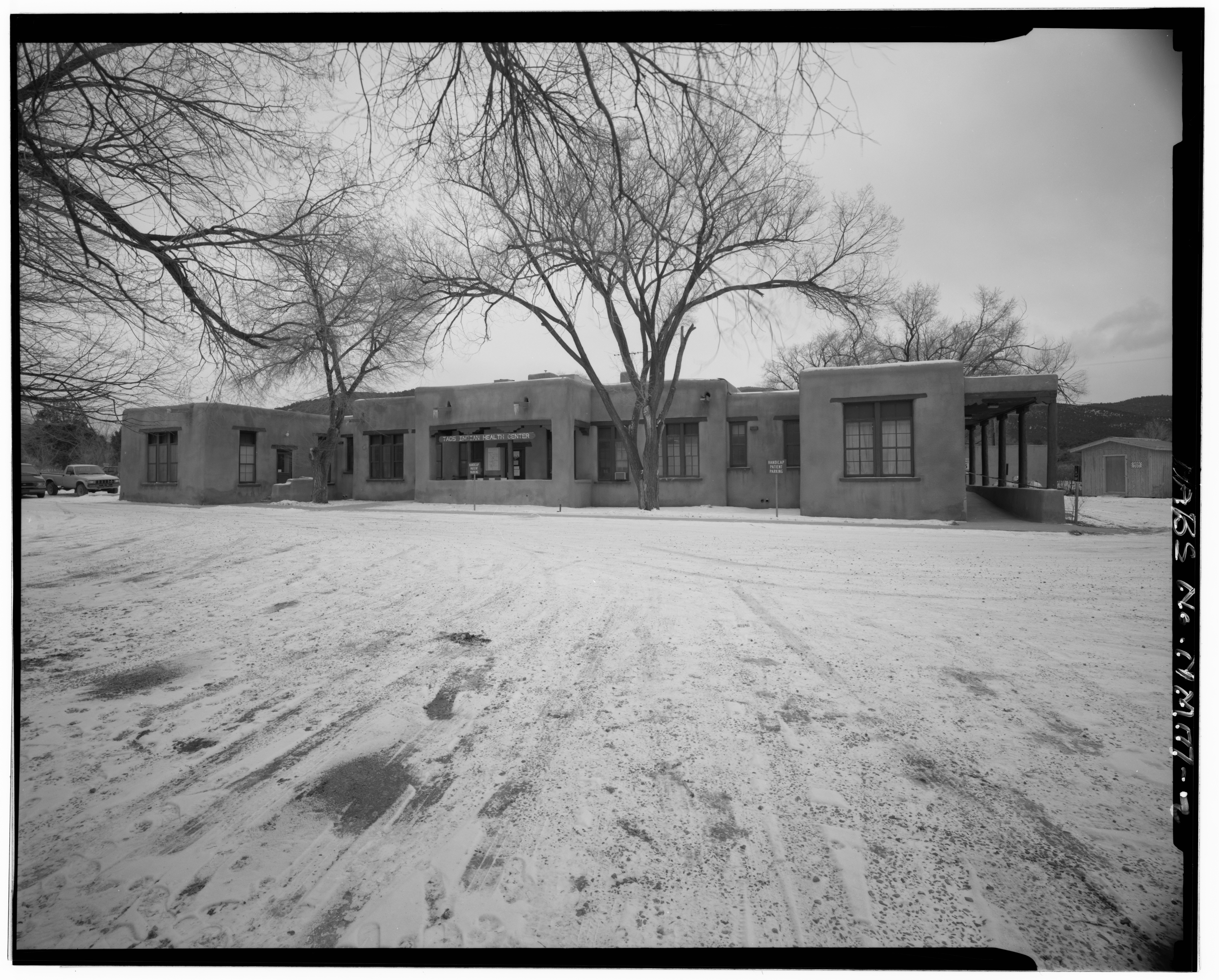
The architecture is a vernacular adobe tradition of hand-laid coursed earthen masonry. Walls are built of adobe without forms, in some places more than three feet thick at the base, and finished with mud plaster that is renewed by household labor on a recurring cycle. Roofs are flat, carried on vigas of pine and aspen overlaid with latillas, brush, and packed earth. The terraced massing follows the slope of the ground and produces the stepped silhouette documented in the earliest Spanish accounts. Ground-floor doorways are a later adaptation; original upper-level access was by removable ladders to roof openings, a defensive arrangement maintained well into the historical period.
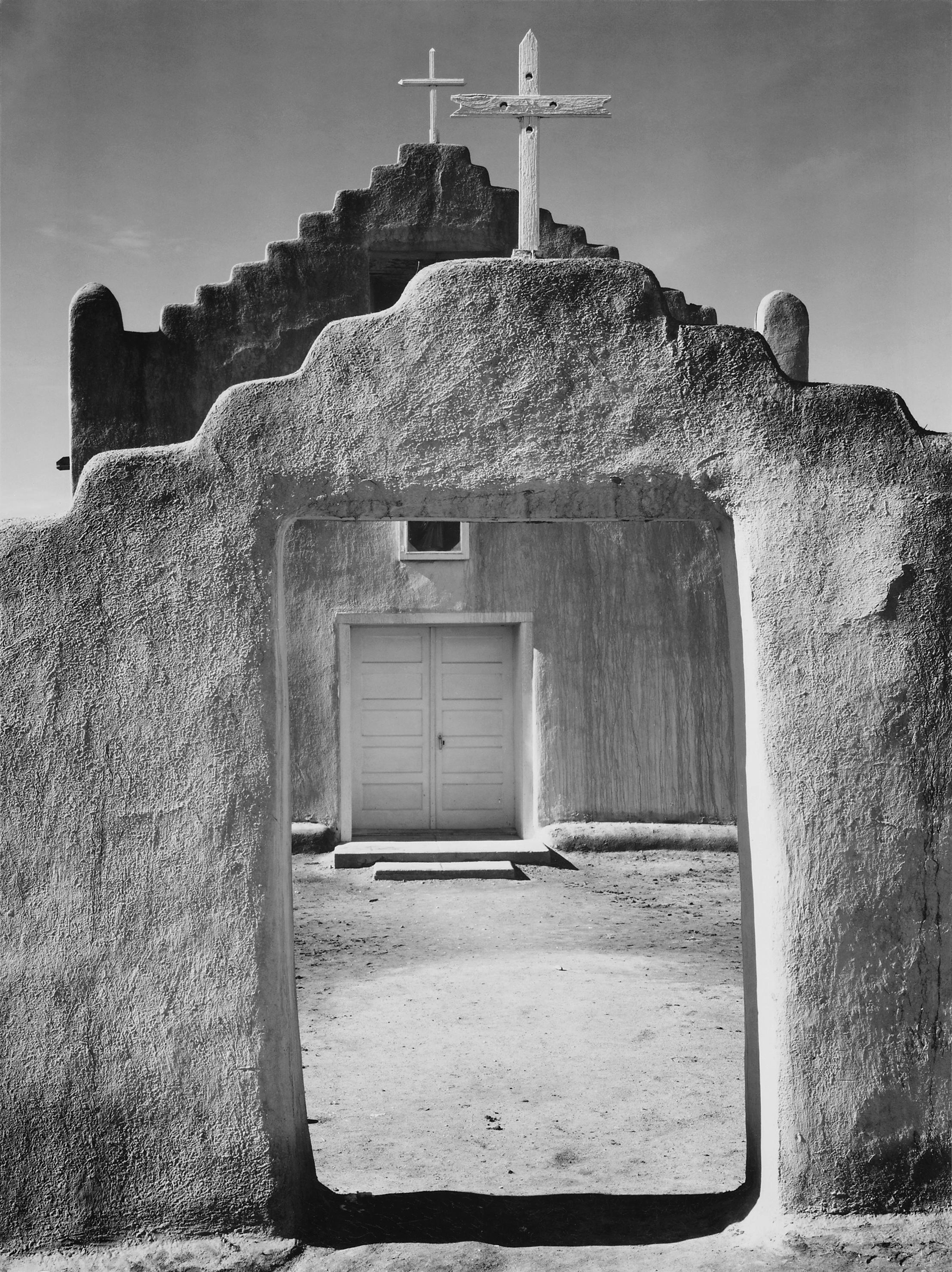
The community joined the Pueblo Revolt of 1680 and survived the colonial era with its language, ceremonial calendar, and traditional governance intact. The mission church of San Geronimo on the pueblo grounds has been built, destroyed, and rebuilt across the centuries, and the ruins of the seventeenth-century church stand as a site of community memory.
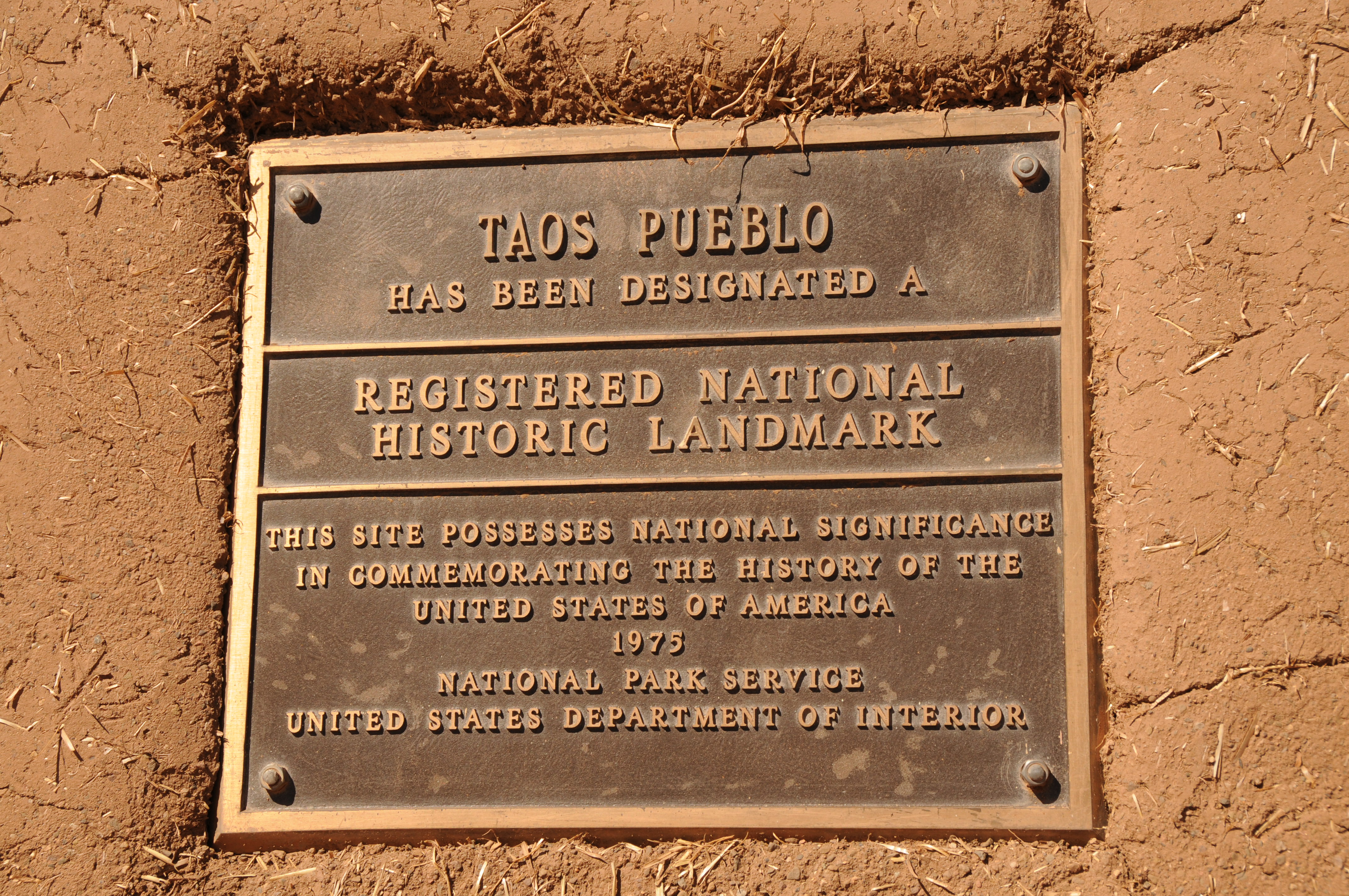
Taos Pueblo is a sovereign Native community governed by its traditional council. It is a National Historic Landmark and a UNESCO World Heritage Site. The central village is accessible to visitors as part of a managed tour program operated by the pueblo, with restrictions on photography and on entry to ceremonial areas. Within New Mexico's adobe tradition, Taos Pueblo is the canonical multi-story, multi-generational earthen village and the visual reference against which later Pueblo Revival architecture was deliberately measured.
Common questions
What is Taos Pueblo?
Taos Pueblo (or Pueblo de Taos) is an ancient Native American pueblo belonging to a Taos-speaking (Tiwa) Puebloan tribe, located in Taos County, New Mexico. It is a UNESCO World Heritage Site and a member of the Eight Northern Pueblos.
How old is Taos Pueblo?
Taos Pueblo is one of several Puebloan settlements established in the late 13th and early 14th centuries, making the community roughly 700 years old, though no precise founding year survives in available records.
Where is Taos Pueblo located?
Taos Pueblo lies about 1 mile (1.6 km) north of the modern city of Taos, in Taos County, New Mexico. The tribal land attached to the pueblo covers 95,000 acres (38,000 hectares).
Is Taos Pueblo open to the public?
Taos Pueblo is a sovereign Native American community where, as of 2012, approximately 4,500 people live. As an inhabited tribal village it is private, though it has historically opened to visitors under guidelines set by the Pueblo.
Why is Taos Pueblo historically significant?
Taos Pueblo is designated a UNESCO World Heritage Site, recognizing its status as one of the oldest continuously inhabited communities in North America. It is a member of the Eight Northern Pueblos and remains the home of a Tiwa-speaking Puebloan people.