History
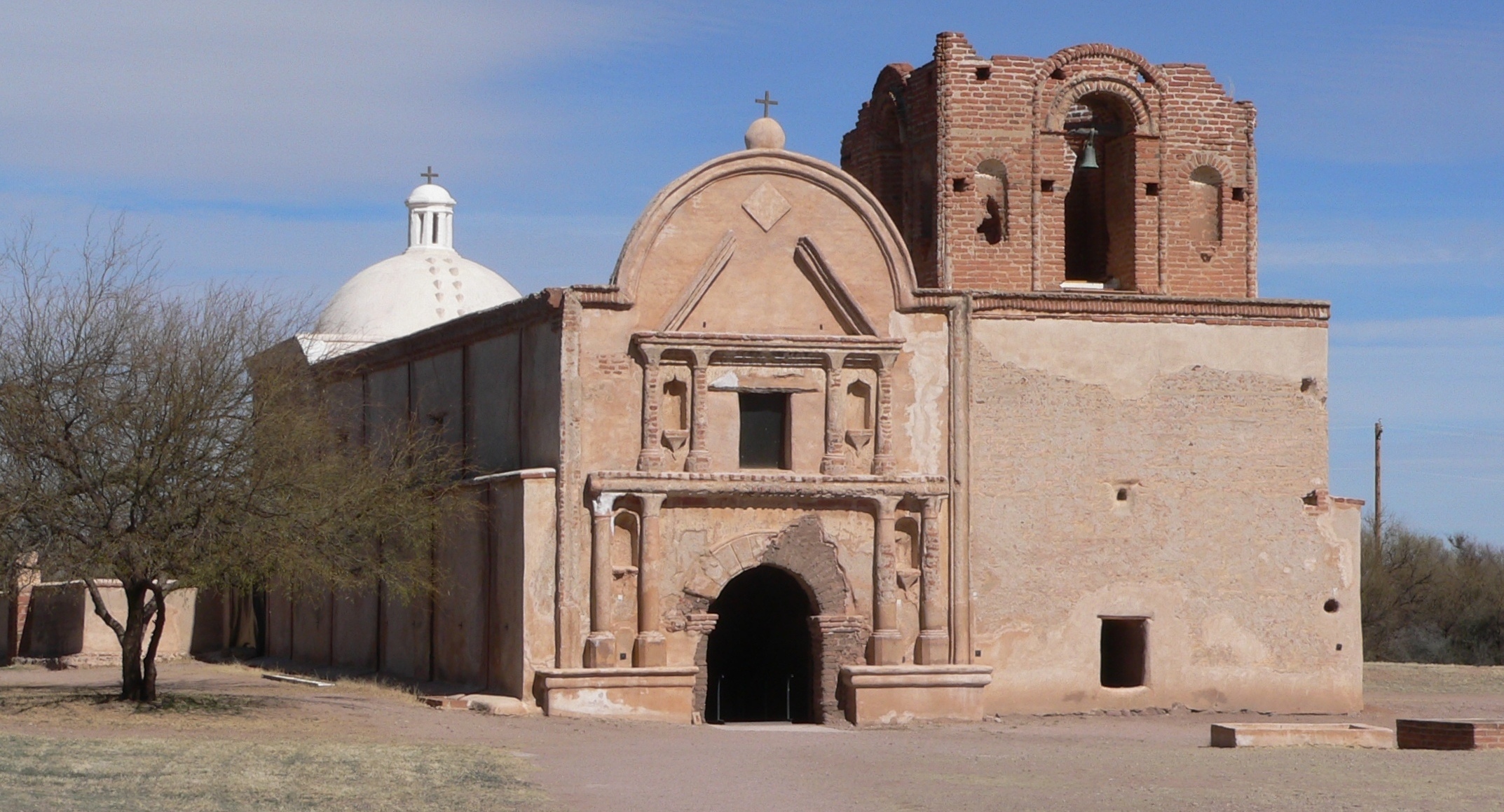
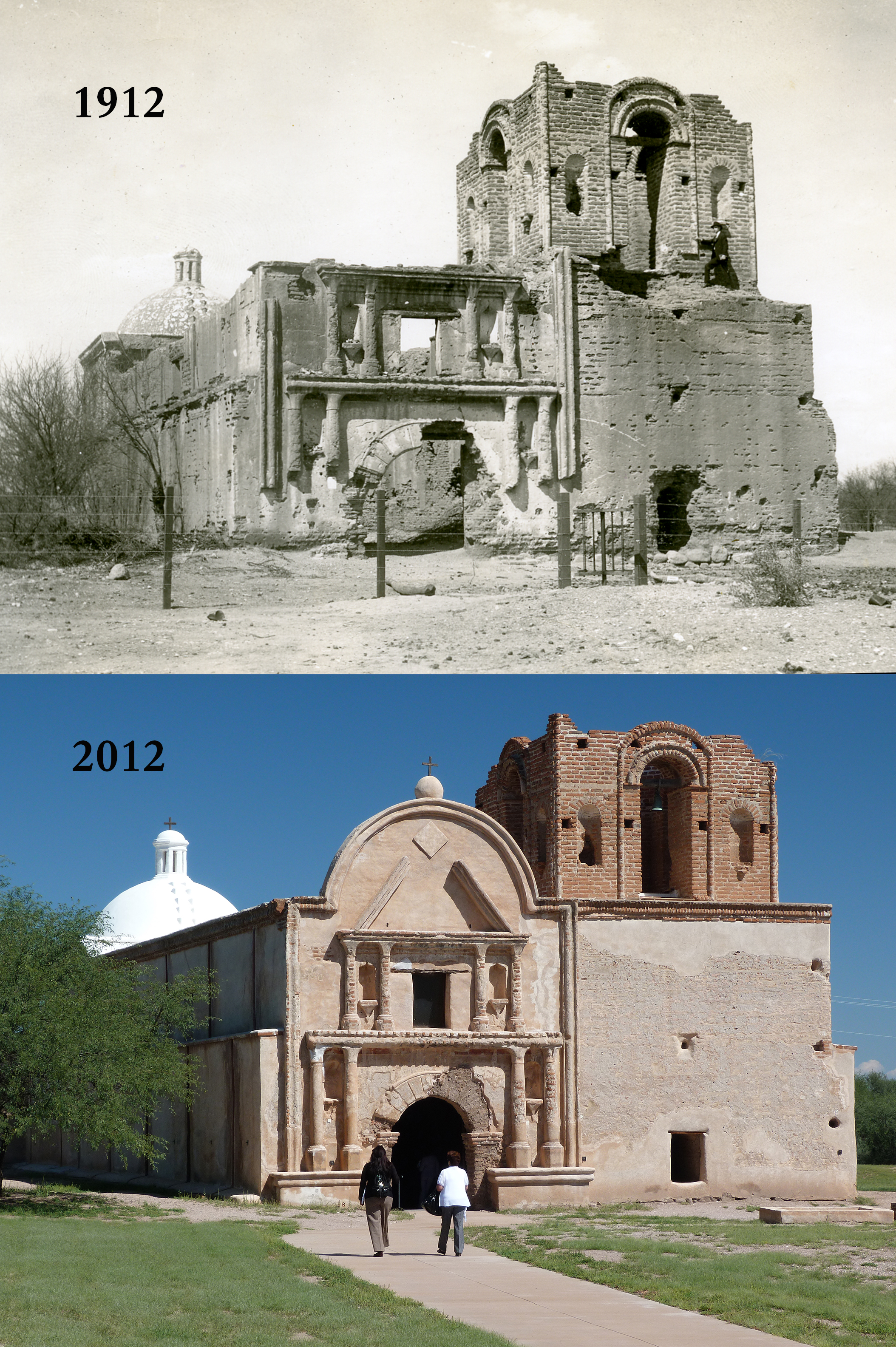
Tumacácori National Historical Park preserves the ruins of three Spanish colonial mission communities in the upper Santa Cruz River valley of Santa Cruz County, southern Arizona, north of the international line with Sonora. The principal unit is the mission of San José de Tumacácori, whose surviving church was begun by Franciscan missionaries in the late eighteenth century and substantially built through the first decades of the nineteenth. The mission's founding as a Jesuit visita reaches back to 1691, when Eusebio Francisco Kino first visited the O'odham settlement at the site, and the long arc of mission activity at Tumacácori extends across the entire Spanish and early Mexican period of the Pimería Alta.
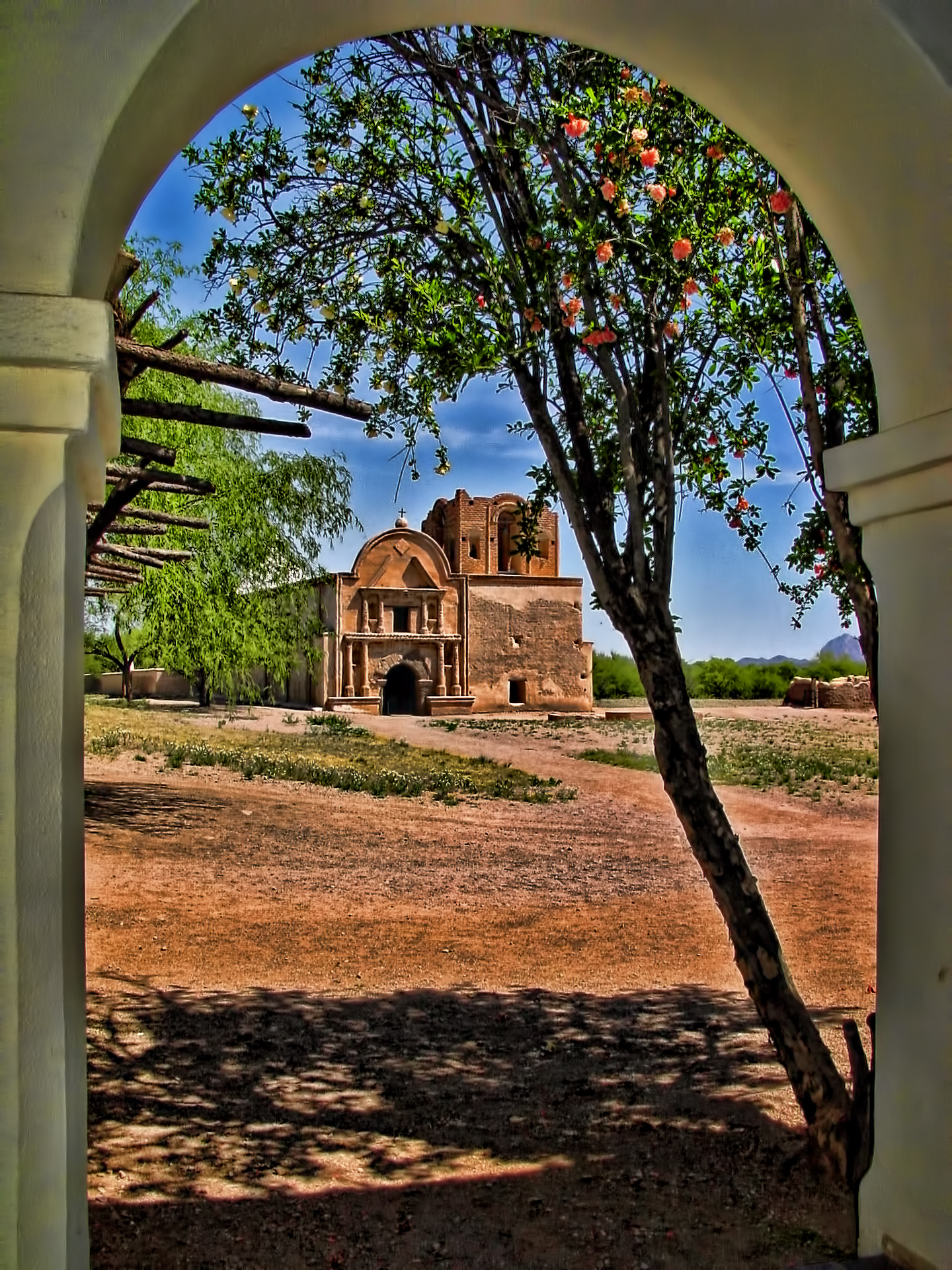
Construction at the surviving church is fired brick, stuccoed adobe, and rubble masonry combined in the manner characteristic of late Spanish Colonial work in the northern frontier provinces: a single-aisle nave with sanctuary and apse, an attached convento and walled cemetery, and the unfinished bell tower whose stepped silhouette anchors the surviving image of the site. The companion mission ruins of Guevavi and Calabazas, also within the park, survive principally as adobe wall stubs and foundation lines, the typical surface condition of abandoned northern Sonoran adobe construction exposed to a century and more of weathering.
The Tumacácori mission was abandoned in the mid-nineteenth century after Apache pressure and political reorganization following Mexican independence and the Gadsden Purchase. The site was set aside as Tumacácori National Monument in 1908 and redesignated Tumacácori National Historical Park in 1990 when the Guevavi and Calabazas units were added.
The park today operates as a National Park Service museum and interpretive unit, open to the public on a regular schedule. Within Arizona's adobe tradition Tumacácori is among the most significant surviving witnesses to the Spanish Colonial mission architecture from which the Sonoran adobe inheritance of southern Arizona descends.
Common questions
What is Tumacácori National Historical Park?
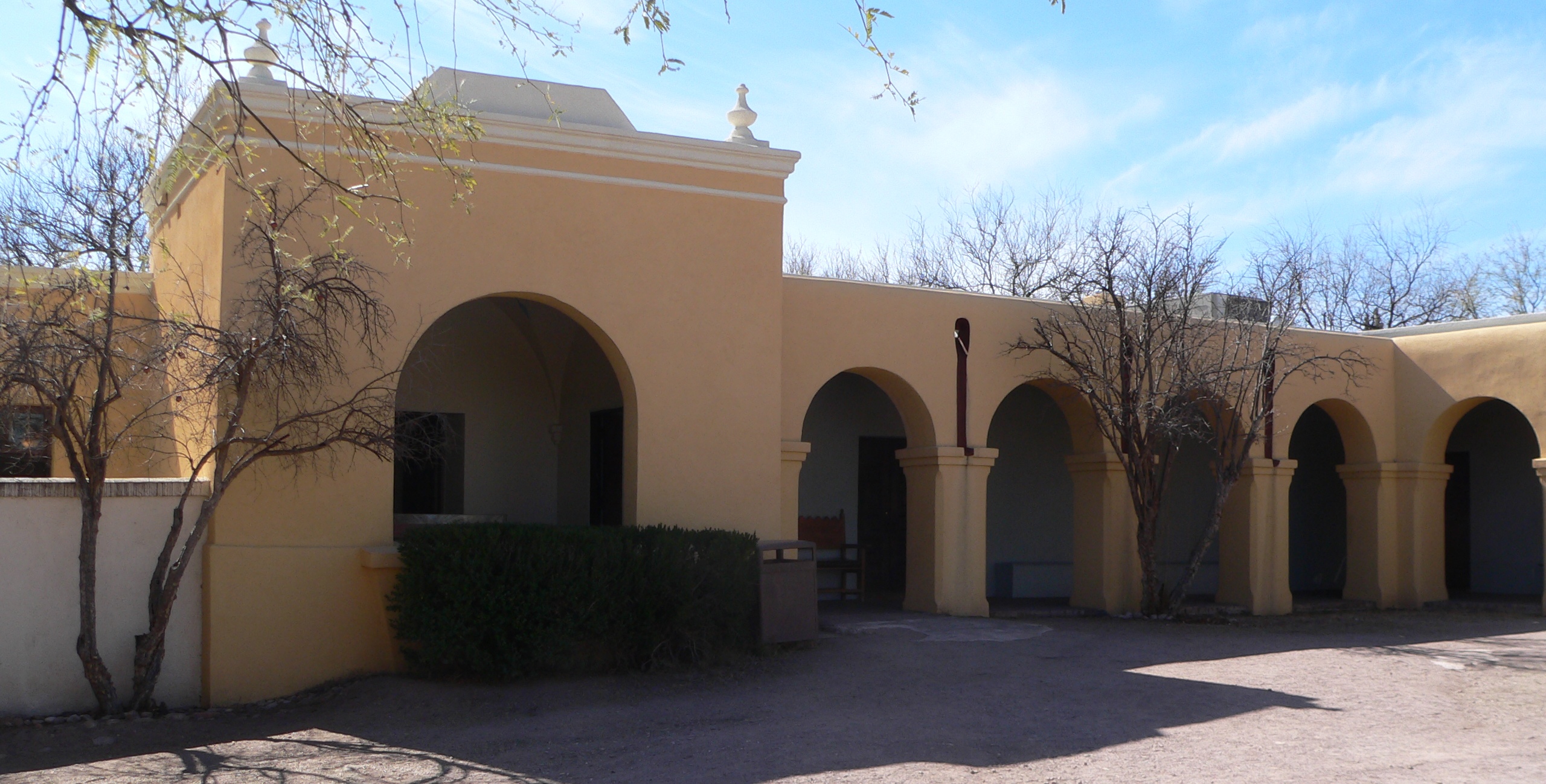
Tumacácori National Historical Park is a 360-acre national park in southern Arizona that protects the ruins of three Spanish mission communities along with the landmark 1937 Tumacácori Museum building. Two of the mission sites are designated National Historic Landmarks, as is the museum building itself.
When was Tumacácori National Historical Park established?
The Tumacácori Museum building within the park dates to 1937 and is itself a National Historic Landmark. The Spanish mission ruins it protects date to the much earlier Spanish colonial period in the Pimería Alta.
Where is Tumacácori National Historical Park located?
Tumacácori National Historical Park is located in the upper Santa Cruz River Valley in Santa Cruz County, southern Arizona. The park consists of 360 acres (1.5 km²) divided into three separate units.
Can you visit Tumacácori National Historical Park?
Yes. Tumacácori is a unit of the National Park System, administered as a national historical park, with publicly accessible mission ruins and the 1937 Tumacácori Museum interpretive building.
What architectural style is Tumacácori National Historical Park?
The mission ruins at Tumacácori represent Spanish Colonial architecture, the church-and-convento tradition built by Franciscan and Jesuit missions in the Pimería Alta. The 1937 Tumacácori Museum continues this idiom as a Pueblo- and Mission-inspired interpretive building.
Why is Tumacácori National Historical Park historically significant?
Tumacácori protects the ruins of three Spanish mission communities, two of which are National Historic Landmark sites. The 1937 Tumacácori Museum is also a separately designated National Historic Landmark, giving the park multiple layers of nationally recognized significance.