History
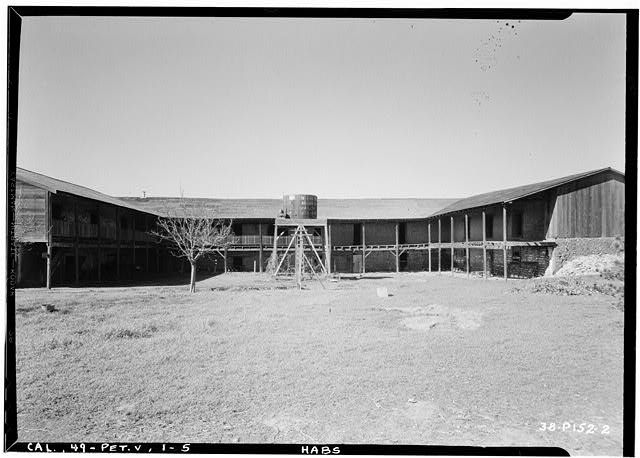
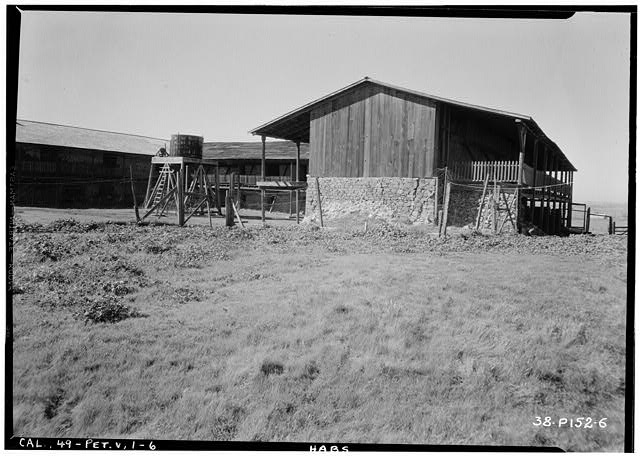
The Vallejo Adobe near Petaluma is associated with Rancho Petaluma, the vast Mexican-era land grant developed by General Mariano Guadalupe Vallejo as the agricultural and commercial seat of his holdings in the northern California frontier. Construction of the main Petaluma adobe began in 1836 and continued in stages through the 1840s, producing one of the largest privately owned adobe structures ever built in Alta California.
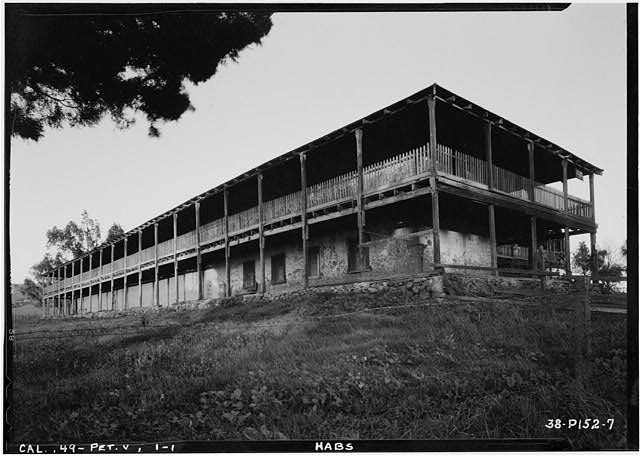
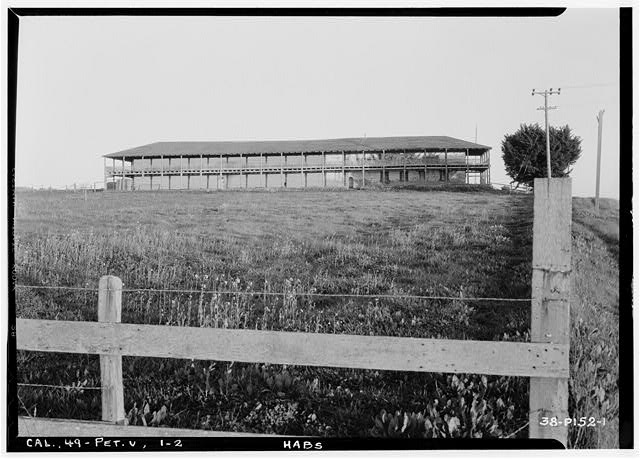
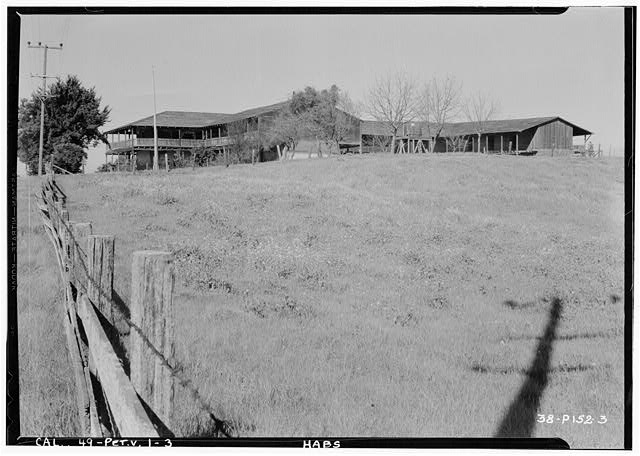
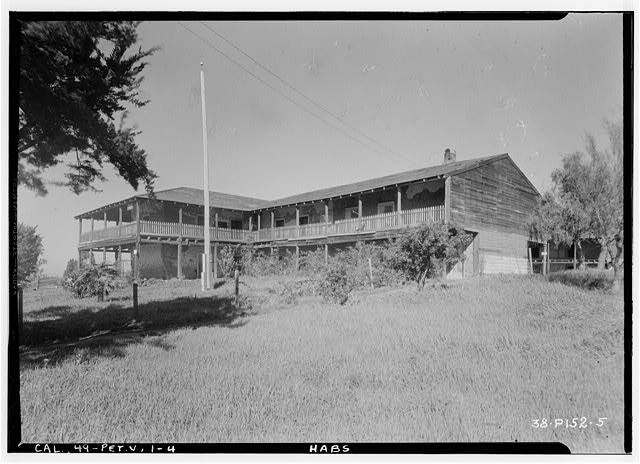
The principal Vallejo adobe is a two-story building of monumental scale, organized as a long rectangular block with a continuous cantilevered second-story balcony along its principal facades. Walls were laid up in sun-dried adobe brick on stone footings, with thicknesses approaching three feet at the base, and roofs were framed in pine timbers and originally covered with fired clay tile. The plan organized residential quarters, offices, storerooms, granaries, weaving rooms, and workshops around the perimeter of a working courtyard. Indigenous laborers drawn from the surrounding Pomo, Miwok, and Patwin communities supplied the workforce that built and operated the rancho.
The Petaluma adobe complex served as the headquarters of a cattle, hide, tallow, and grain enterprise that ranked among the largest in northern California, supplying the Russian colony at Fort Ross and the Pacific maritime trade. After the Bear Flag Revolt of 1846 and the American annexation that followed, the rancho's operations declined, and Vallejo's holdings were progressively subdivided under American land-claim processes.
The adobe survived in private hands through the late nineteenth and early twentieth centuries. The main rancho headquarters is now operated as Petaluma Adobe State Historic Park, while related Vallejo Adobe properties in the surrounding district remain under private stewardship and were documented by the Historic American Buildings Survey under HABS CAL,49-PET.V,1-.
Within California's adobe tradition, the Vallejo Adobe at Petaluma is the largest and most ambitious surviving Mexican-period adobe enterprise in the state, documenting the scale and economic reach of the northern California ranchos at the height of the Mexican period.
Common questions
What is the Vallejo Adobe?
The Vallejo Adobe is a historic adobe building in Petaluma, California, documented by the Historic American Buildings Survey (HABS) and held in the collection of the Library of Congress. It is a vernacular adobe structure associated with the Vallejo family in Sonoma County.
When was the Vallejo Adobe built?
The Vallejo Adobe was already standing as a documented historic structure when the Historic American Buildings Survey recorded it in February 1934, with photographer Roger Sturtevant capturing its elevations and details, though no precise construction year survives in available records.
Where is the Vallejo Adobe located?
The Vallejo Adobe is located at Adobe Road at Casa Grande in Petaluma, Sonoma County, California.
Is the Vallejo Adobe open to the public?
No, the Vallejo Adobe is a private residence and is not open for tours. Visitors should respect the privacy of the occupants and view the property only from public roads.