History
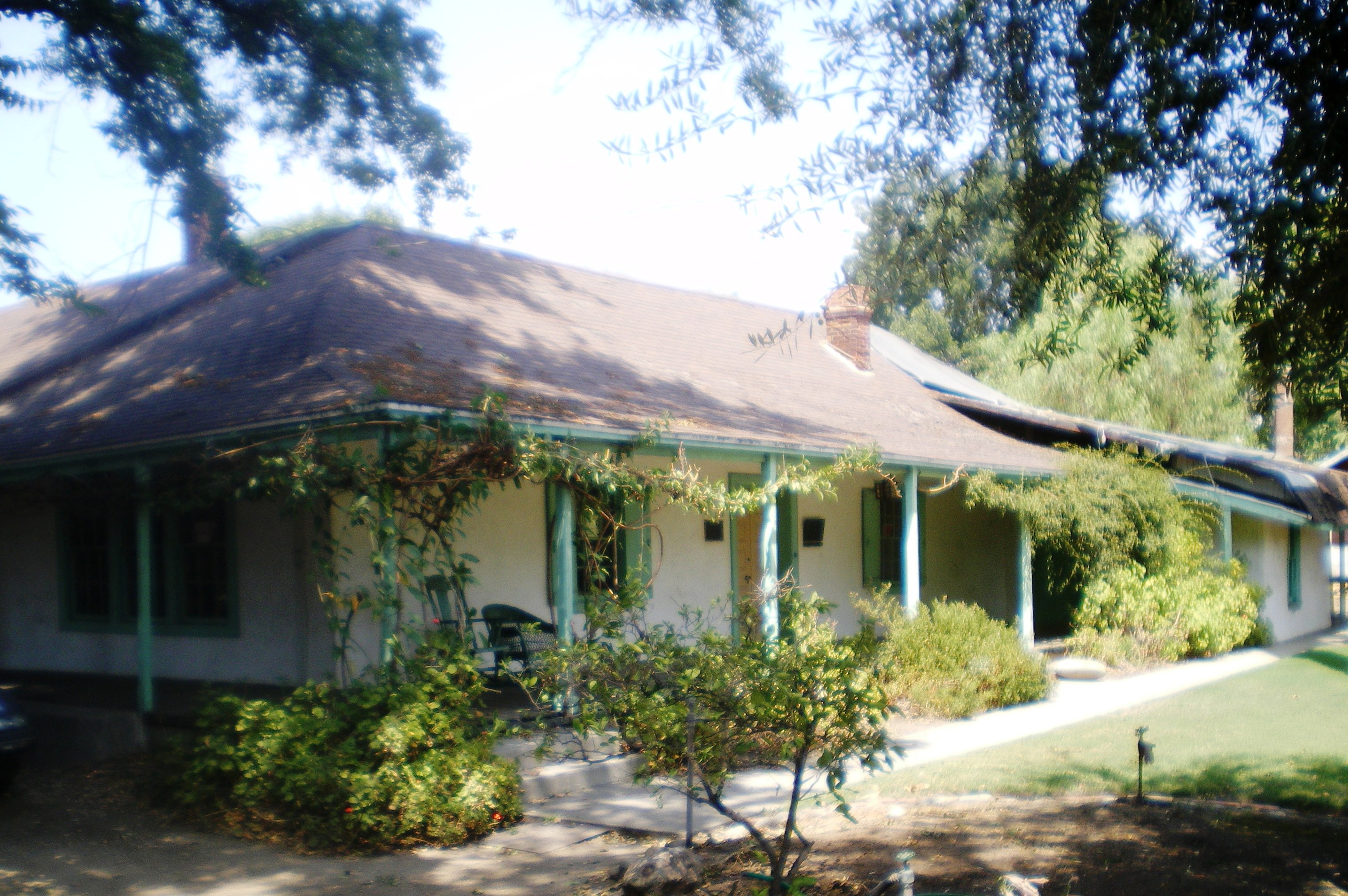
The Ygnacio Palomares Adobe in Pomona, completed around 1850, was built by Don Ygnacio Palomares as the principal residence of his portion of Rancho San Jose, a substantial Mexican land grant covering much of the present-day Pomona Valley. The grant had been issued in 1837 to Palomares jointly with Ricardo Vejar and Luis Arenas, and the adobe became the family seat for one of the leading rancho dynasties of the inland Los Angeles basin.
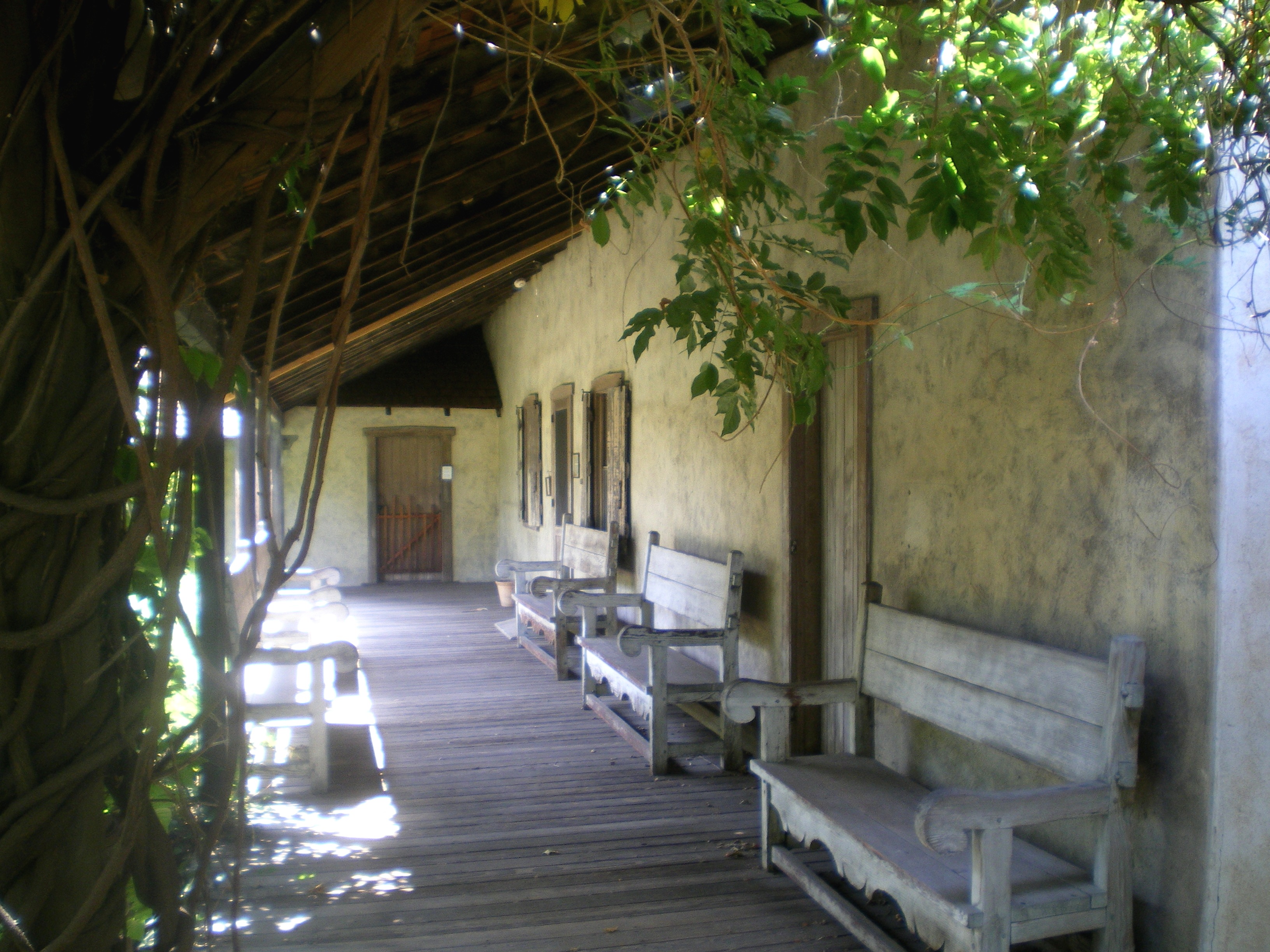
The building is a long single-story adobe constructed in the vernacular tradition of the late Mexican and early American periods. Walls were laid up in sun-dried adobe brick on stone footings, with timber roof framing originally covered in fired clay tile, and a wide covered corridor along the principal facade sheltering the row of openings. The plan organized residential, service, and storage functions in a linear arrangement, with interior finishes of whitewashed lime plaster and exposed timber ceiling beams. Indigenous Tongva laborers, working alongside Mexican craftsmen, supplied much of the construction work.
The Palomares family operated a substantial cattle and grain operation across the rancho lands through the 1850s and 1860s, but the catastrophic drought of the early 1860s ended the southern California cattle economy and forced the progressive subdivision of the rancho holdings. The adobe passed through successive owners as the surrounding lands were converted to citrus and eventually to suburban development through the late nineteenth and twentieth centuries.
The building was acquired and restored in the mid-twentieth century and now operates as a museum administered by the Historical Society of Pomona Valley, with interpretive exhibits documenting the Palomares family, the rancho economy, and the broader history of the Pomona Valley.
Within California's adobe tradition, the Ygnacio Palomares Adobe is a well-preserved example of the inland rancho residences of the late Mexican and early American periods, documenting the cattle ranching economy that defined the Pomona Valley before the citrus and residential transformations that followed.
Common questions
What is the Ygnacio Palomares Adobe?
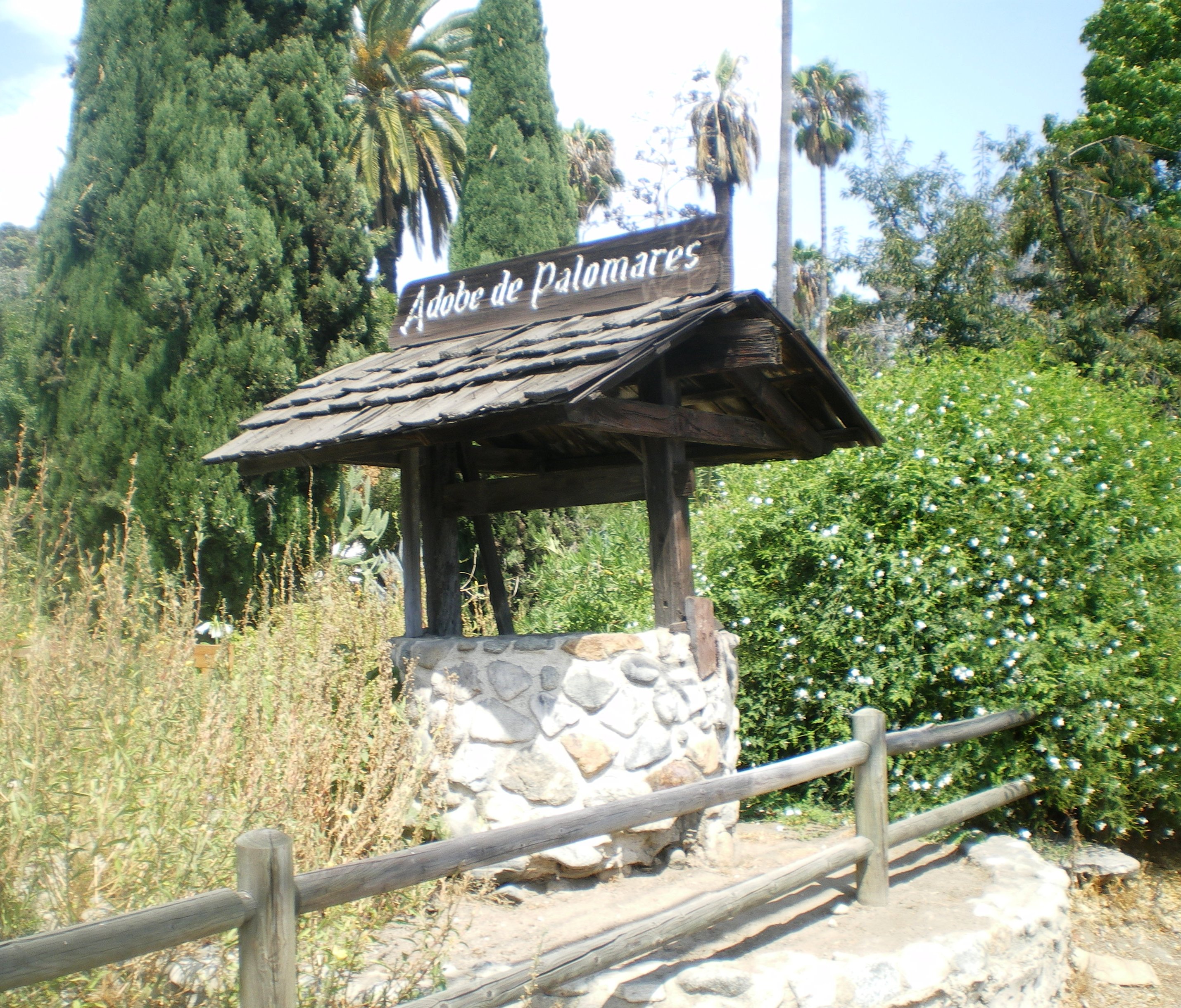
The Ygnacio Palomares Adobe, also known as Adobe de Palomares, is a one-story adobe brick structure in Pomona, California, built between 1850 and 1855 as a residence for Don Ygnacio Palomares. Since 1940, it has been operated as a museum on life in the Spanish and Mexican ranchos.
When was the Ygnacio Palomares Adobe built?
The Ygnacio Palomares Adobe was built between 1850 and 1855 as a residence for Don Ygnacio Palomares. It was abandoned in the 1880s and left to the elements until the City of Pomona acquired it in the 1930s and restored it in 1939.
Where is the Ygnacio Palomares Adobe located?
The Ygnacio Palomares Adobe is located in Pomona, California, in the eastern San Gabriel Valley of Los Angeles County.
Can you visit the Ygnacio Palomares Adobe?
Yes. The Ygnacio Palomares Adobe operates as a historic house museum run by the Historical Society of Pomona Valley, presenting exhibits on life in the Spanish and Mexican ranchos. It has been open to the public since 1940. Visitors should confirm current hours and admission with the society before planning a visit.
Why is the Ygnacio Palomares Adobe historically significant?
The Ygnacio Palomares Adobe was listed on the National Register of Historic Places in 1971. Of the more than 400 sites in Los Angeles County listed on the National Register, fewer than ten received the distinction prior to the Ygnacio Palomares Adobe, making it one of the earliest such designations in the county.
Who restored the Ygnacio Palomares Adobe?
In 1939, the Ygnacio Palomares Adobe was restored in a joint project of the City of Pomona, the Historical Society of Pomona Valley, and the Works Project Administration. The adobe had been abandoned in the 1880s before this restoration effort began.