Where the city's adobe stands
Three houses to start with
If you read only three entries before walking Acoma Pueblo, read these — the highest-tier landmarks in the catalog and the foundation for everything else.
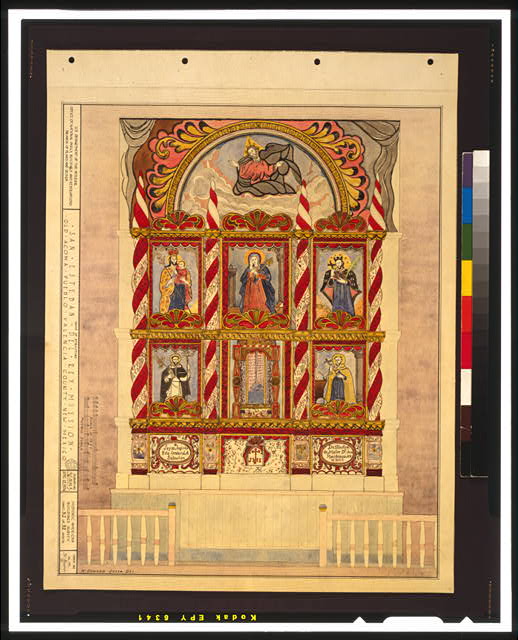 NM-AP-002 · NHL
 The Mission of San Esteban del Rey occupies the southern edge of the Acoma mesa, a sandstone summit rising more than three hundred feet above the surrounding plain. Construction was undertaken by Acoma laborers under…
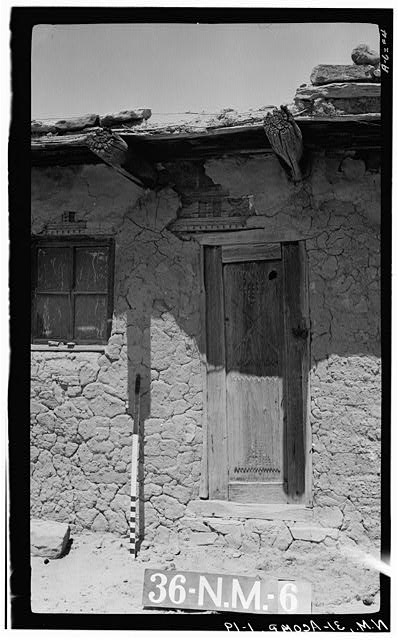 NM-AP-001 · Catalog
 The Pueblo of Acoma, known to its people as Haak'u, occupies a sandstone mesa rising more than three hundred feet above the surrounding plain west of the Rio Grande valley. Continuously inhabited for roughly a thousand…
Acoma Pueblo's adobe character
Acoma Pueblo — Haak’u, “the place that always was” — sits atop a 367-foot sandstone mesa fifty miles west of Albuquerque. The Acoma people have lived continuously on the mesa since at least the twelfth century, making it one of the two or three oldest continuously inhabited communities in North America. The pueblo’s three rows of multistory adobe houses face south across the mesa-top, their flat roofs gathering water in the small aljibes — cisterns — cut into the stone below.
The defining building of the pueblo is the San Esteban del Rey Mission, begun in 1629 under the Franciscan friar Juan Ramírez and completed in 1641. To raise its earthen walls — sixty feet tall and ten feet thick at the base — every adobe brick, every ceiling beam, and every gallon of water had to be carried up the mesa on the backs of the Acoma people themselves; the vigas that span the nave were carried twenty miles from Mount Taylor. The church was burned in the 1680 Pueblo Revolt, rebuilt within a decade, and has been replastered by hand every summer since. It is a National Historic Landmark and, along with Taos Pueblo, one of the two Pueblo missions on the UNESCO World Heritage tentative list.
The pueblo itself remains an active community: families maintain houses on the mesa-top that have been continuously occupied for thirty generations, and the tribe controls every visitor’s access to the village. Photography of the mission interior is prohibited; photography of the village requires a tribal permit. The mesa, the mission, and the pueblo form a single architectural and cultural complex without equal in North America.
Suggested walking tour
A route through the documented adobe of Acoma Pueblo — 2 stops, measured at a researcher's unhurried pace.
From the mission to the mesa edge
Stops chosen from the catalog and ordered to make a coherent walk. Each stop links to the full catalog entry — addresses, dates, and photographs.
-
San Esteban del Rey Mission
On NM 23The Mission of San Esteban del Rey occupies the southern edge of the Acoma mesa, a sandstone summit rising more than three hundred feet above the surrounding plain. Construction was undertaken by Acoma laborers under the direction of Franciscan friars in the…
-
Pueblo of Acoma
Casa Blanca vicinityThe Pueblo of Acoma, known to its people as Haak'u, occupies a sandstone mesa rising more than three hundred feet above the surrounding plain west of the Rio Grande valley. Continuously inhabited for roughly a thousand years, it is among the oldest…
All 2 entries in Acoma Pueblo
Documented properties in Acoma Pueblo, listed alphabetically. Each plate carries the entry's reference number, registry status, address, and date of construction.
NM-AP-001 Catalog NM-AP-002 NHL Nearby cities
Other adobe centers within reach of Acoma Pueblo. Each links to its own chapter of the Atlas.