Where the city's adobe stands
Three houses to start with
If you read only three entries before walking Ranchos de Taos, read these — the highest-tier landmarks in the catalog and the foundation for everything else.
Ranchos de Taos's adobe character
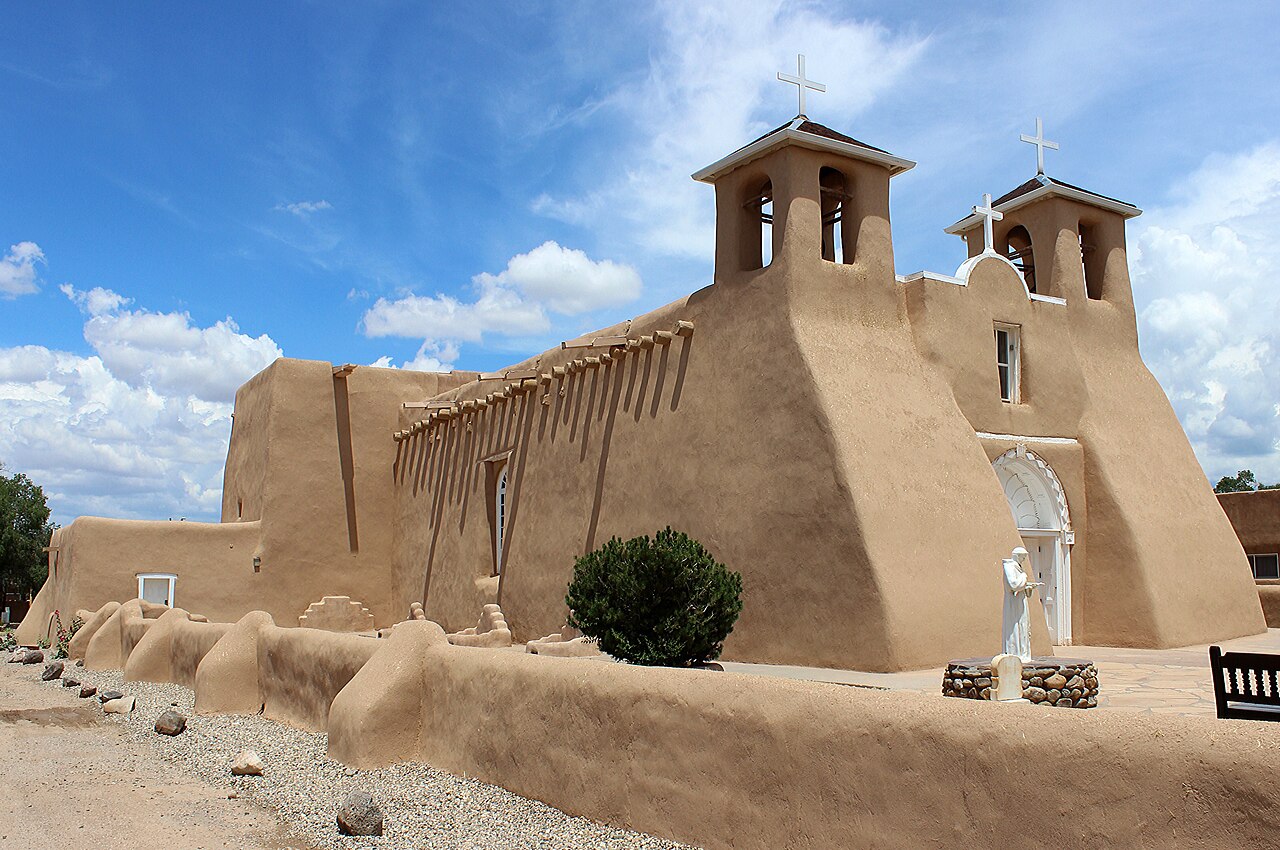
Ranchos de Taos is the small Spanish Colonial village four miles south of Taos that grew up around the mission of San Francisco de Asís — the church whose four enormous adobe buttresses, replastered by the parishioners every spring, became the most photographed and painted adobe building in North America. Ansel Adams, Georgia O’Keeffe, Paul Strand, and Eliot Porter all photographed the buttressed apse here within a single decade between 1929 and 1939, and the building has been the subject of more dissertations than any other single piece of earthen architecture in the country.
The mission was begun in 1772 and completed in 1816 by the Franciscan Fathers and the citizens of the plaza vieja of Ranchos, who quarried the clay from the field behind it and shaped the adobe bricks in the village. The walls are six feet thick at the base and step inward as they rise, in the manner of the Pueblo buildings to the north. Each spring the parishioners gather to enjarrar — to re-mud — the exterior with a fresh coat of earthen plaster, a maintenance ritual that has continued unbroken since the 1820s and that more than any single conservation policy has kept the building alive.
The surrounding plaza preserves a small group of late-colonial adobe houses around the church, including the rectory and several private residences that face the plaza vieja. The village itself remains a working agricultural community, with the acequia madre still running through the fields east of the mission.
All 1 entries in Ranchos de Taos
Documented properties in Ranchos de Taos, listed alphabetically. Each plate carries the entry's reference number, registry status, address, and date of construction.
Nearby cities
Other adobe centers within reach of Ranchos de Taos. Each links to its own chapter of the Atlas.