History
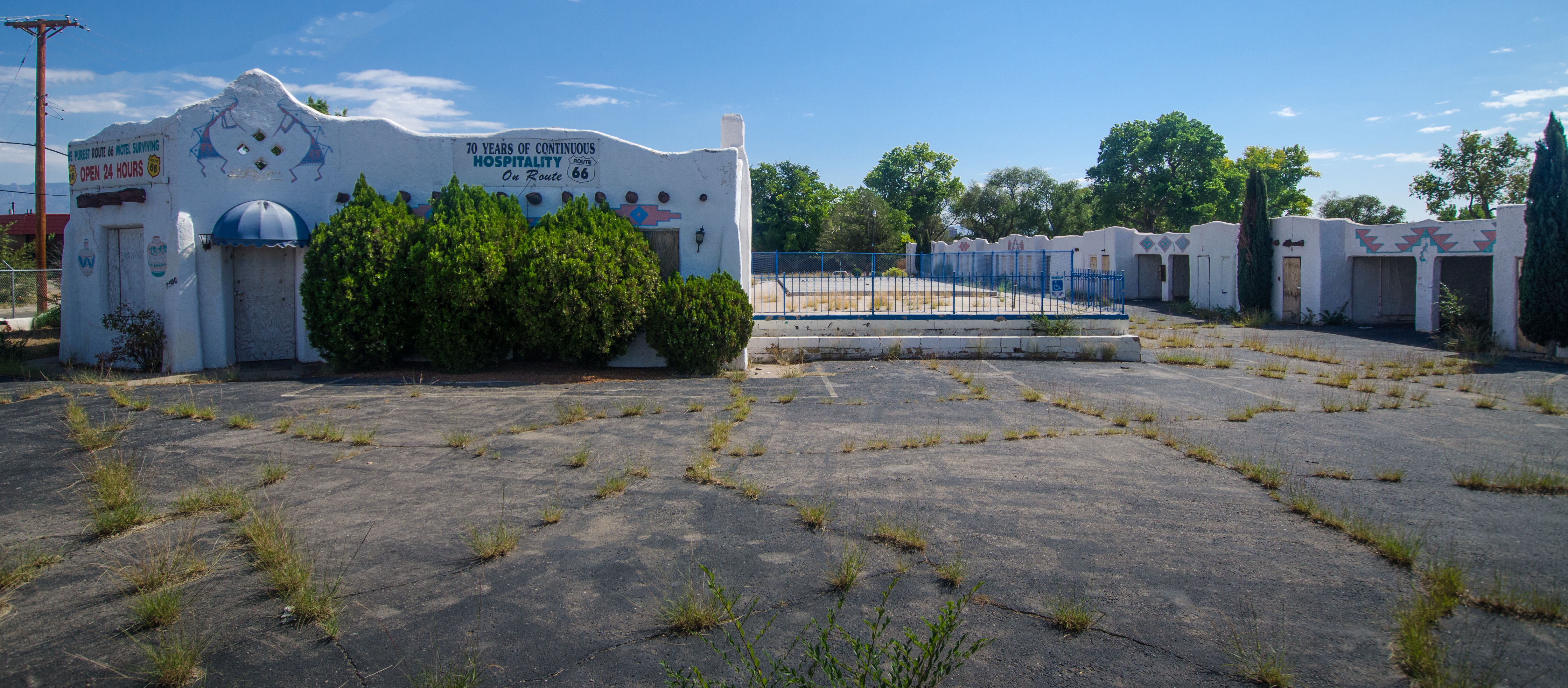
El Vado Auto Court stands at 2500 Central Avenue SW in Albuquerque, on the south side of the original alignment of U.S. Route 66 west of the Rio Grande crossing. The motel was constructed in 1937 by Daniel Murphy and was conceived from the outset as a Route 66 tourist court, the new motor-age accommodation type that combined small free-standing or semi-attached cabins with on-site parking immediately outside each door.
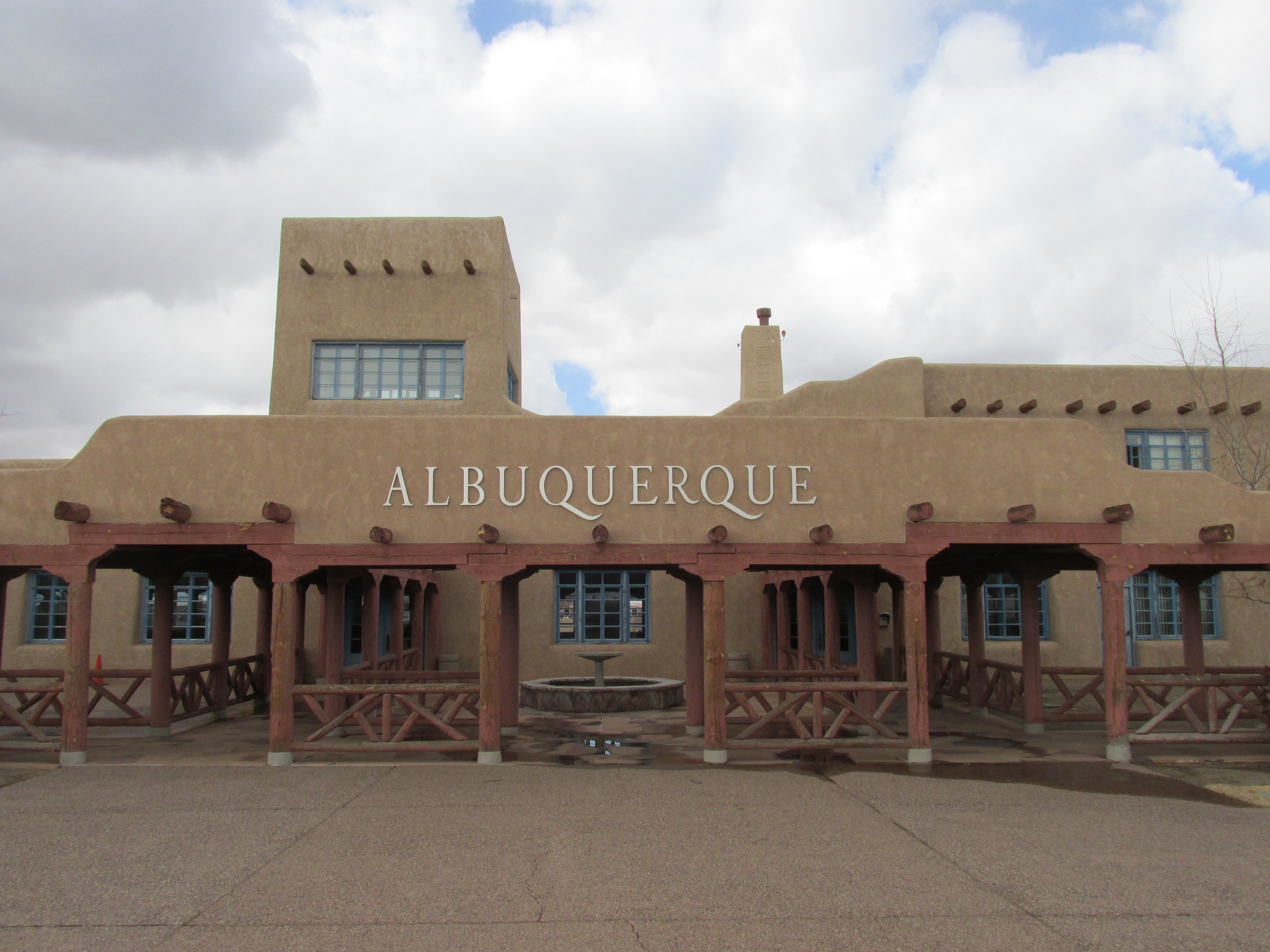
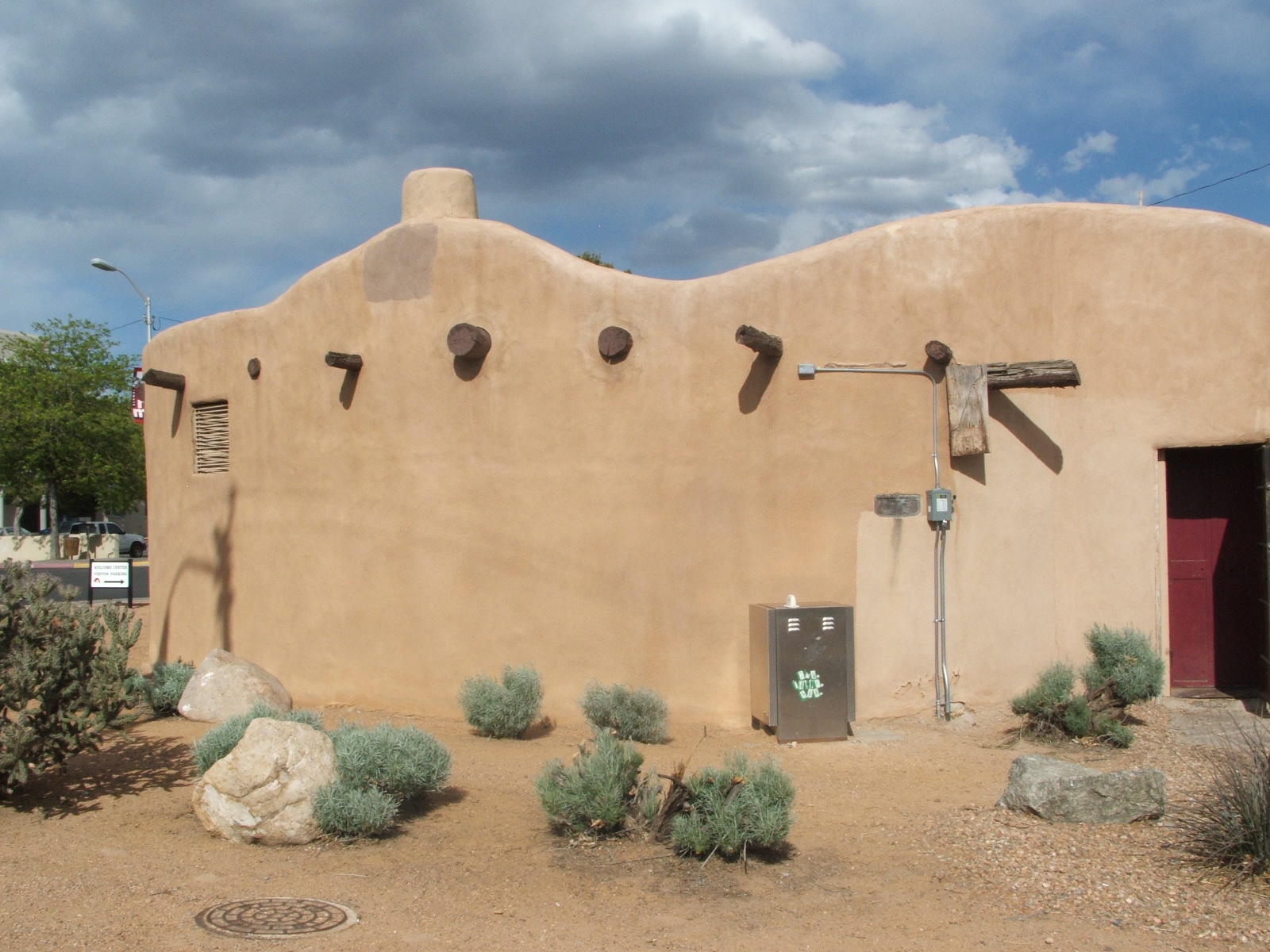
The complex is one of the canonical examples of Pueblo Revival commercial architecture along the highway. The cabins, office, and connected rooms are built of conventional frame and masonry construction finished in earth-toned stucco, with stepped parapets, projecting vigas, hand-painted wooden signs, and a central neon roadside pylon that survives in restored form. The form vocabulary borrowed directly from the older adobe villages along the Rio Grande and was deployed up and down Central Avenue as part of the broader effort to give Albuquerque a regional identity legible to passing tourists.
El Vado operated continuously as a motel for more than seven decades, sheltering generations of cross-country travelers during the heyday of the highway and the difficult years after the construction of Interstate 40 pulled traffic off Central Avenue. The court was threatened with demolition in the early 2000s but was acquired by the City of Albuquerque, restored, and reopened in 2018 as a mixed-use property combining boutique lodging, food vendors, and event space.
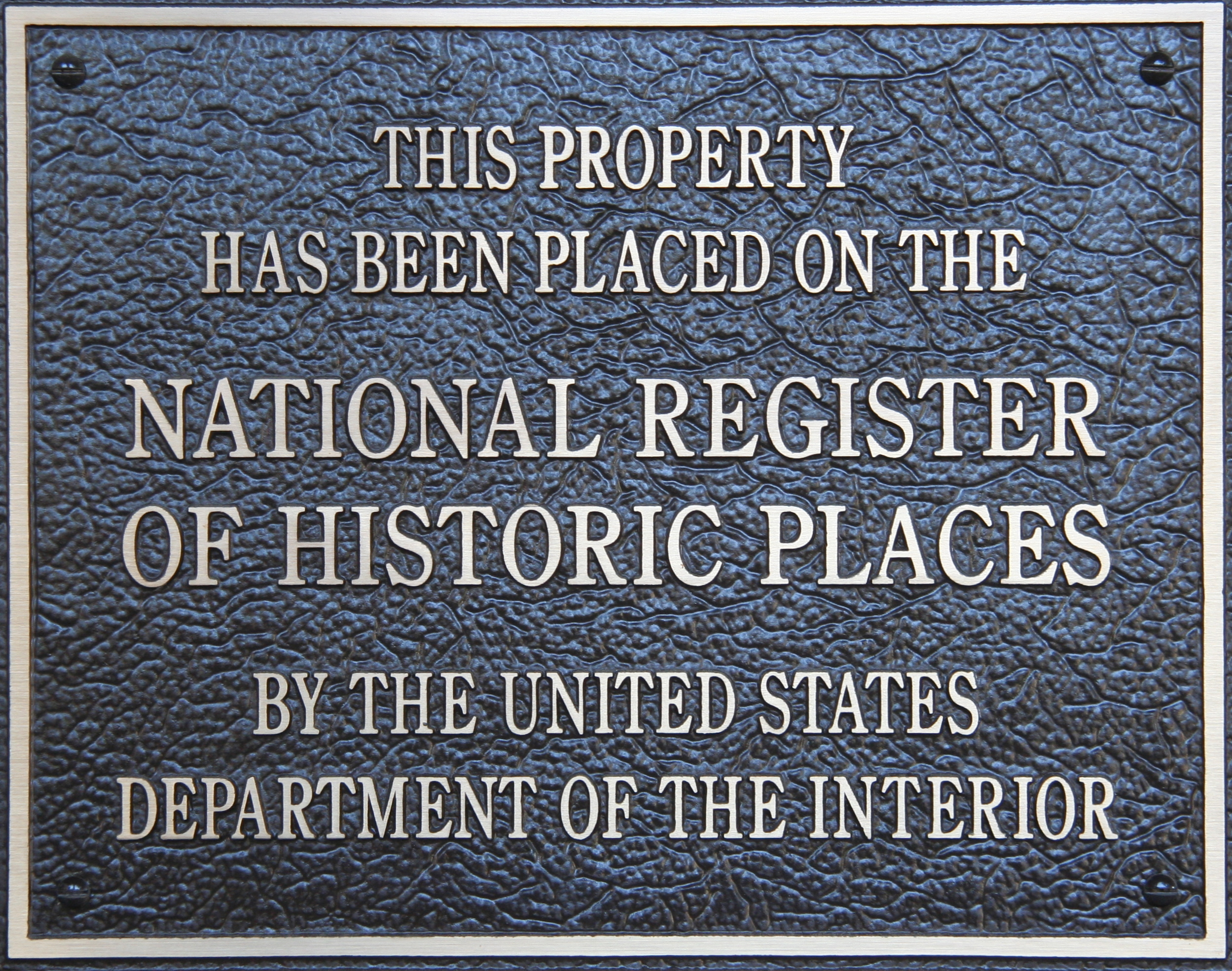
El Vado was listed on the National Register of Historic Places in 1993 under reference 93001214. The site is open to the public and remains in active commercial use. It is the best-preserved Pueblo Revival auto court on the New Mexico stretch of Route 66 and anchors the western edge of the central Albuquerque adobe revival commercial corridor that runs from Nob Hill west across the river.
Common questions
What is El Vado Auto Court?
El Vado Auto Court is a historic Pueblo Revival motor court in Albuquerque, New Mexico, listed on the National Register of Historic Places under reference number 93001214. It is a notable surviving example of mid-twentieth-century Route 66 roadside hospitality architecture.
When was El Vado Auto Court built?
El Vado Auto Court exact date of construction is unknown from the available records. The property was added to the National Register of Historic Places in 1993.
Where is El Vado Auto Court located?
El Vado Auto Court is located at 2500 Central Avenue SW in Albuquerque, New Mexico, along the historic Route 66 corridor through the city.
Is El Vado Auto Court open to the public?
The property is listed as a private residence in available records. As a Route 66 landmark, the site has had ongoing redevelopment activity, and visitors interested in current operations should confirm access directly.
What architectural style is El Vado Auto Court?
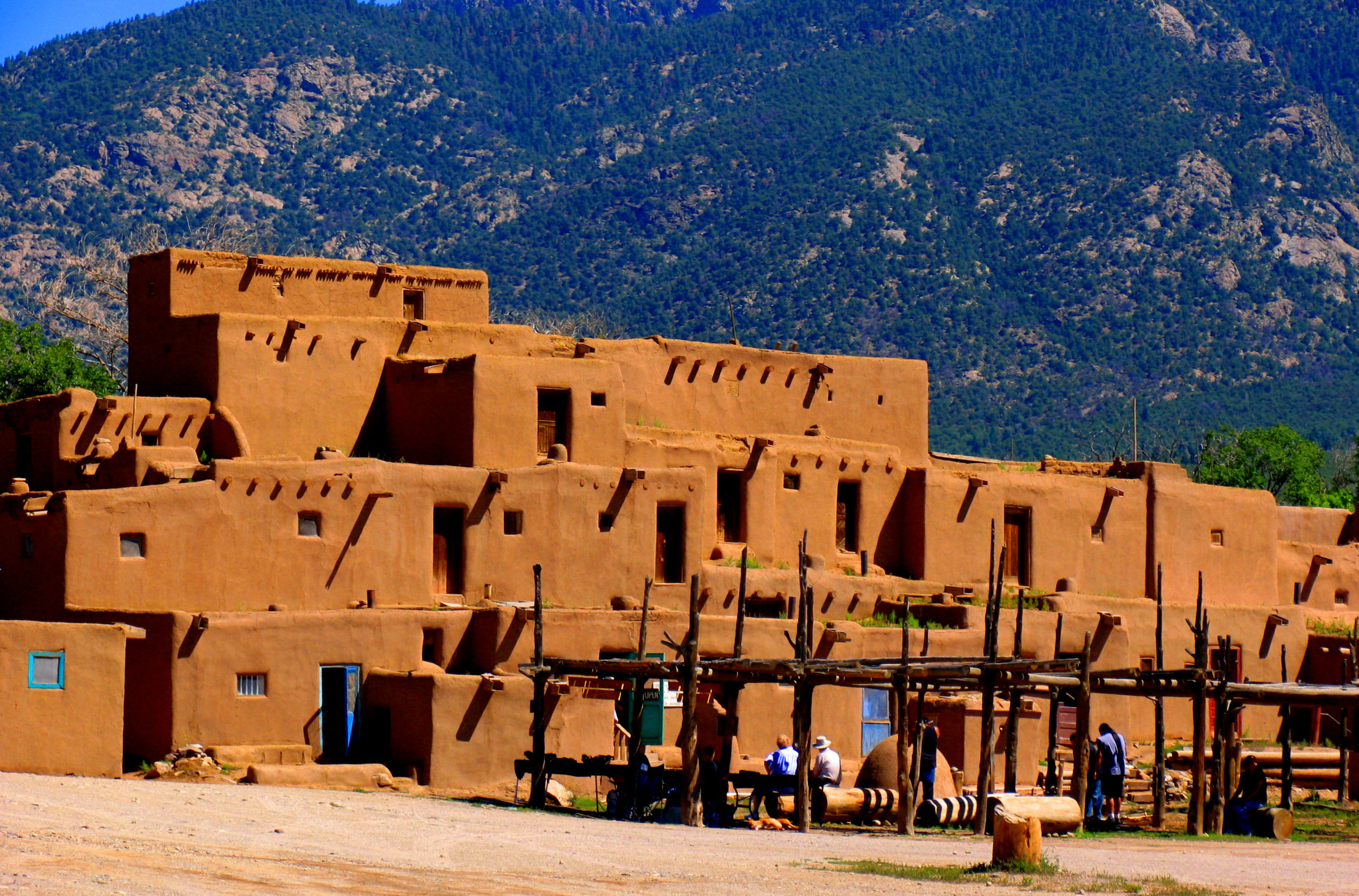
El Vado Auto Court is built in the Pueblo Revival style, a regional architectural tradition that adapts the forms of Native American pueblos and Spanish Colonial adobe construction to twentieth-century commercial buildings, including motor courts serving Route 66 travelers.
Why is El Vado Auto Court historically significant?
El Vado Auto Court is recognized on the National Register of Historic Places under reference number 93001214. As a Pueblo Revival motor court on Central Avenue in Albuquerque, it documents the mid-twentieth-century roadside hospitality landscape associated with U.S. Route 66.