Atlas region II
The record at a glance
This chapter documents 5 catalogued adobe properties across 4 Nevada settlements. The summary at right breaks the catalog down by architectural style, current status, and recorded date range.
Mining-era adobe row houses on the silver-rush slope and a small Pueblo Revival vernacular along the Virgin River valley.
Where the entries are
A short history of adobe in Nevada
Nevada’s adobe record is thin but coherent — a small body of mining-camp houses on the central plateau and a thinner ribbon of revival civic architecture in the southern desert. Earthen building never became the regional vernacular here, but where it did appear it was used pragmatically, by working people, in places where timber and fired brick were both expensive to land.
The Tonopah row houses — c.1900s
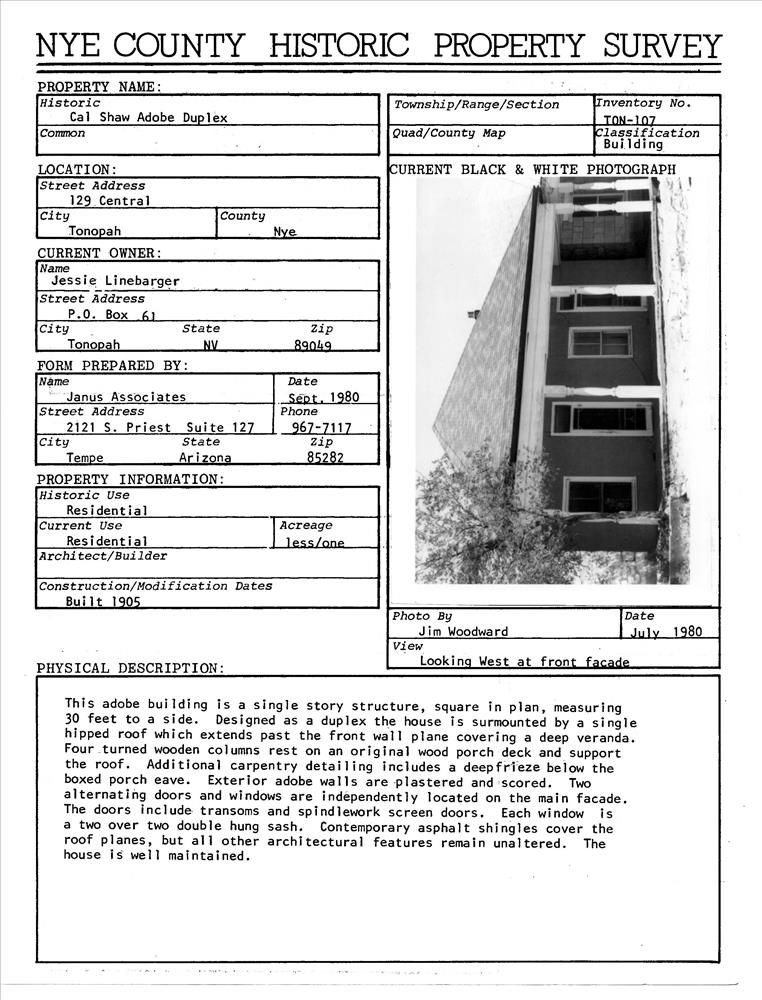
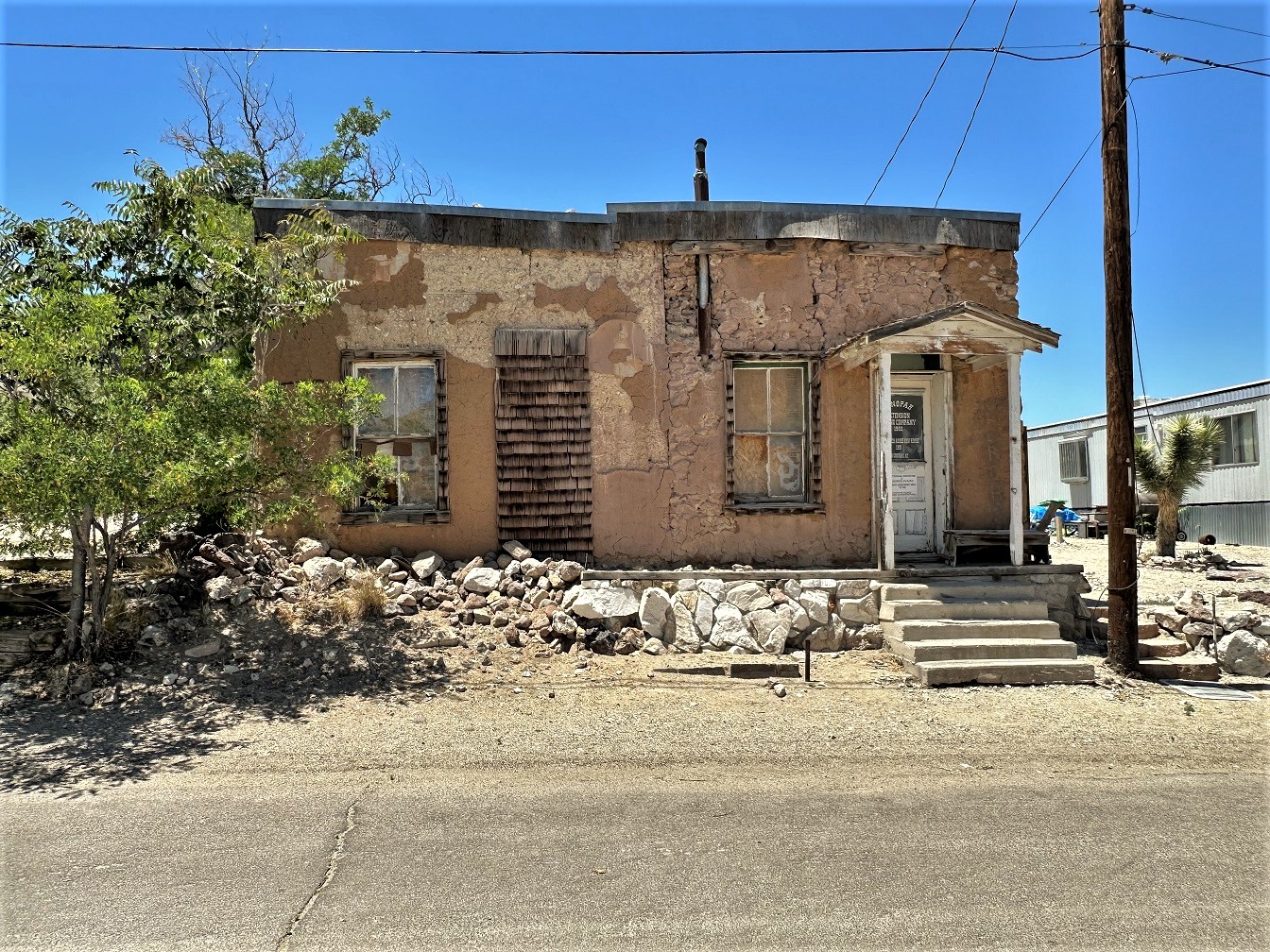
When silver was struck on the Mount Oddie outcrop in 1900, the town of Tonopah grew up around the strike in a single decade. The early structures were tents, then frame, then — for those who meant to stay — adobe. The Combellack Adobe Row House and the Shaw Adobe Duplex, both on the National Register, are the surviving examples. They are modest single-storey buildings of coursed earth, plastered and white-washed, with milled-lumber porch posts and pedimented window trim that places them firmly in the Territorial-vernacular hybrid pattern still being built in New Mexico and Arizona at the same date. The catalog also retains a second Combellack record at the Nye County level — the same house, listed twice in the federal database under different administrative jurisdictions.
The choice of adobe in Tonopah was practical. The Sierra had been logged out within a day’s wagon ride; brick had to come by rail from Reno or San Francisco; the alkaline clay of the Big Smoky Valley made serviceable adobe with a few weeks of weathering. By 1925 the easier silver had been worked out and the town shrank by half. The adobe houses, requiring nothing but seasonal re-plastering, survived where the frame buildings did not.
The Virgin River vernacular
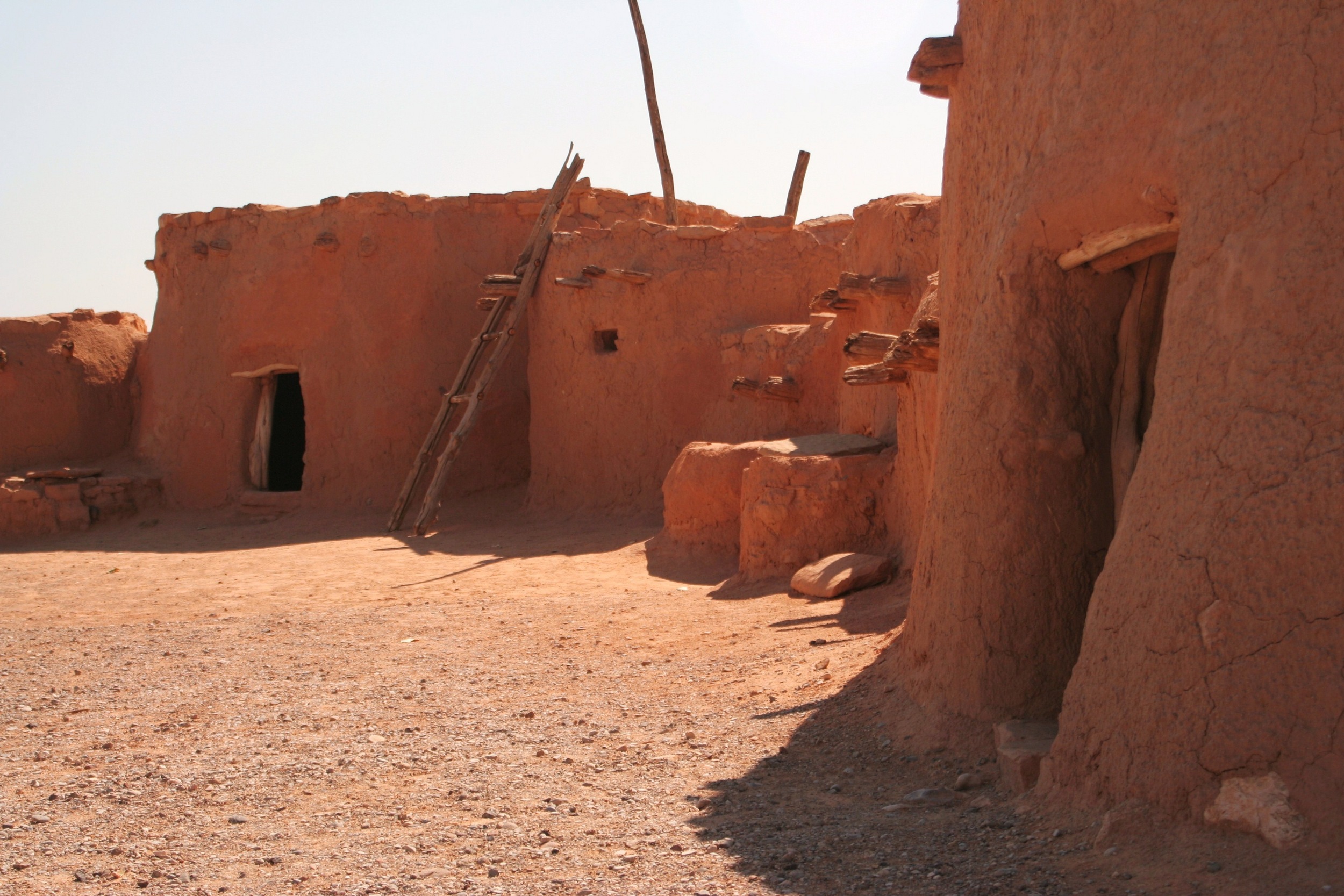
In the far south, near the Arizona line, two small Pueblo Revival civic buildings record a different impulse. The Lost City Museum in Overton (built by the Civilian Conservation Corps to display artifacts from the inundated Ancestral Puebloan Village of Pueblo Grande de Nevada) and the Virgin Valley Heritage Museum in Mesquite (a New Deal-era schoolhouse that became a museum after the school closed) both adopt the soft, battered-wall, viga-ended Pueblo Revival idiom that John Gaw Meem had codified in Santa Fe a generation earlier. Neither is an original Pueblo or colonial structure; both quote the form to tell a story about the region’s earlier inhabitants.
Why the catalog is small
Nevada’s geography made adobe an exception, not a tradition. The state’s mining settlements were ephemeral by design, the railroad arrived early enough to flood the territory with eastern materials, and the population centres (Reno, Carson City, Las Vegas) were laid out in Anglo-American street grids using frame and brick from the beginning. The five entries below cover the documented surviving adobe record. Treat them as exceptions in a state whose architectural story belongs more to the headframe, the false-front, and the post-war stucco bungalow.
Adobes to see in Nevada
A short list — ordered roughly by date — drawn from the catalog for first-time visitors. Each entry links to its documented page in the Atlas.
Scroll · drag to explore
Style distribution across Nevada
Counts are drawn from the documented record of 5 catalogued entries. Where a building moves between periods, the catalog assigns the style of original construction.
- Vernacular Adobe 1750 – 19503
60% - Pueblo Revival c.1900 – present2
40%
Cities and villages in Nevada
4 settlements hold catalogued entries.
All Nevada entries, by city
Every catalogued property in the state, grouped by city in rough order of catalog depth. Tap a card to open the documented entry.