Where the city's adobe stands
Three houses to start with
If you read only three entries before walking Chimayó, read these — the highest-tier landmarks in the catalog and the foundation for everything else.
Chimayó's adobe character
Chimayó lies in the small valley of the Santa Cruz River, twenty-eight miles north of Santa Fe on the High Road to Taos. Spanish settlers reached the valley in 1696, just after the reconquest, and built their plaza fortificada — the small fortified plaza with houses arranged around a central court — at what is now the village of Plaza del Cerro. The plaza is one of the few surviving complete examples of this colonial plan in the American Southwest.
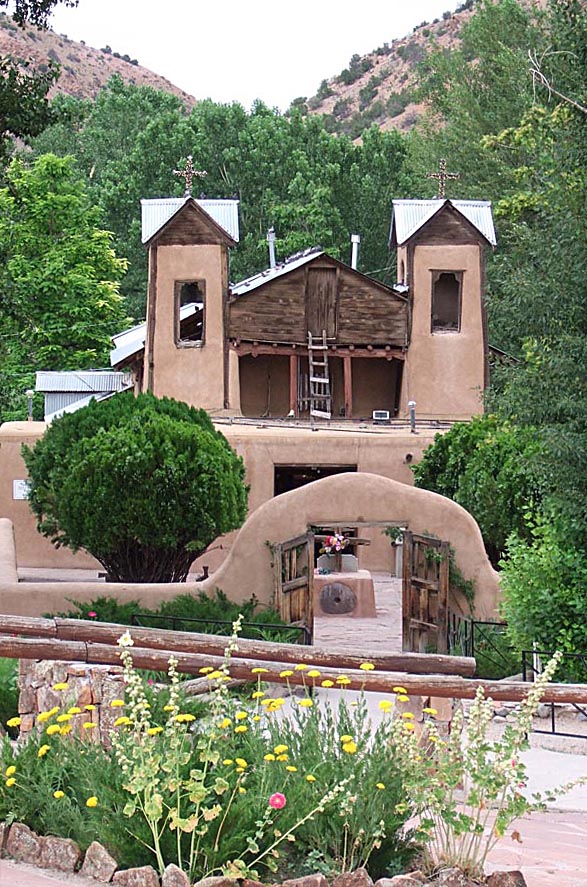
The village is best known for El Santuario de Chimayó, the small adobe pilgrimage church built between 1813 and 1816 by Don Bernardo Abeyta on the site where, according to tradition, a wooden crucifix was discovered glowing in the earth. The church is famous for the posito — the small pit of earth in a side chapel, said to have healing properties — and draws nearly 300,000 visitors a year. The walls are of laid adobe, the roof carried on hand-hewn vigas, and the reredos inside are among the finest surviving examples of New Mexican religious folk art.
Chimayó is also the historic center of the Río Grande weaving tradition. The Ortega and Trujillo families have been weaving wool blankets, rugs, and colchas in their adobe houses here since the late eighteenth century, using techniques carried up the Camino Real from Mexico. Many of those workshops remain in operation in the same adobe buildings their founders built.
All 1 entries in Chimayó
Documented properties in Chimayó, listed alphabetically. Each plate carries the entry's reference number, registry status, address, and date of construction.
Nearby cities
Other adobe centers within reach of Chimayó. Each links to its own chapter of the Atlas.