History
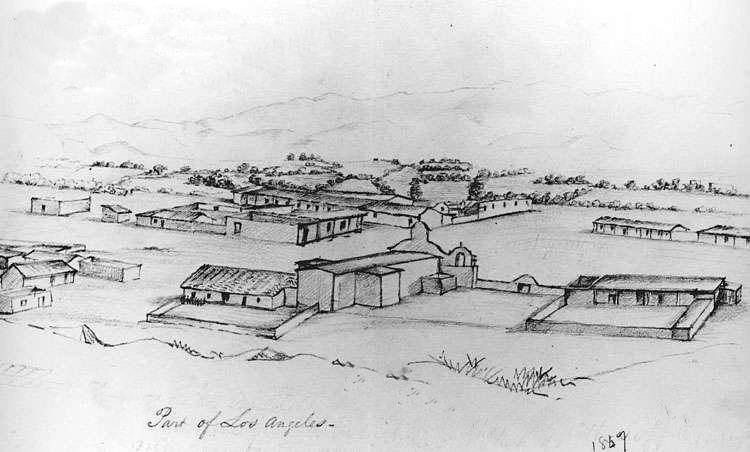
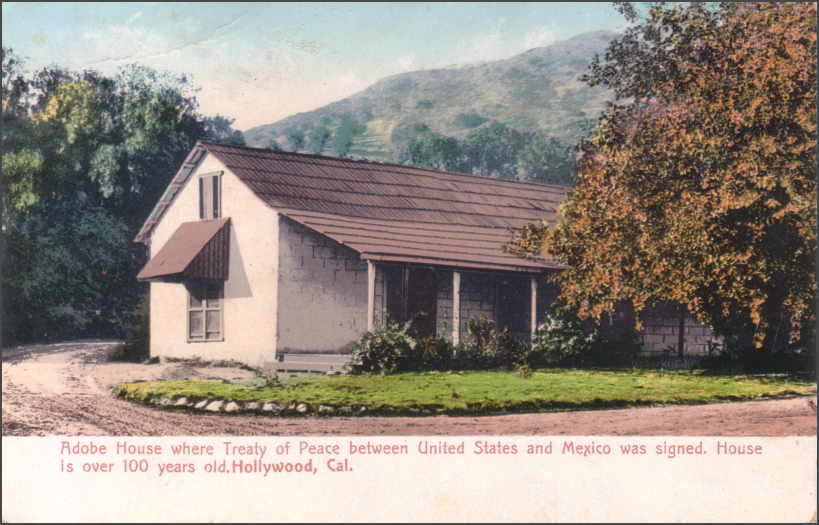
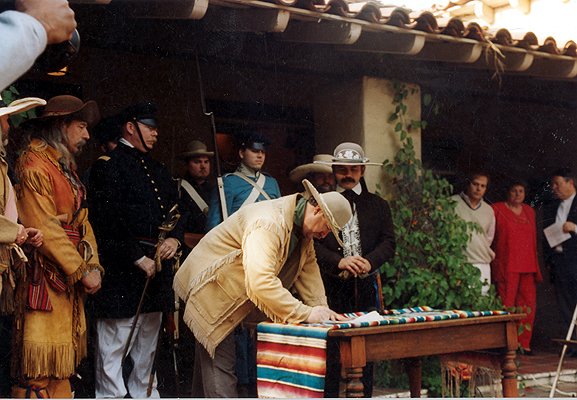
The Campo de Cahuenga stands at 3919 Lankershim Boulevard in the southeastern San Fernando Valley, at a site associated with the signing of the Treaty of Cahuenga on January 13, 1847. The treaty, negotiated between Lieutenant Colonel John C. Fremont and General Andres Pico, effectively ended armed resistance in California during the Mexican-American War. The original adobe building on the site, an unpretentious rancho-period house belonging to the Feliz family, served as the meeting place for the negotiations. That structure was lost during the late 19th century.
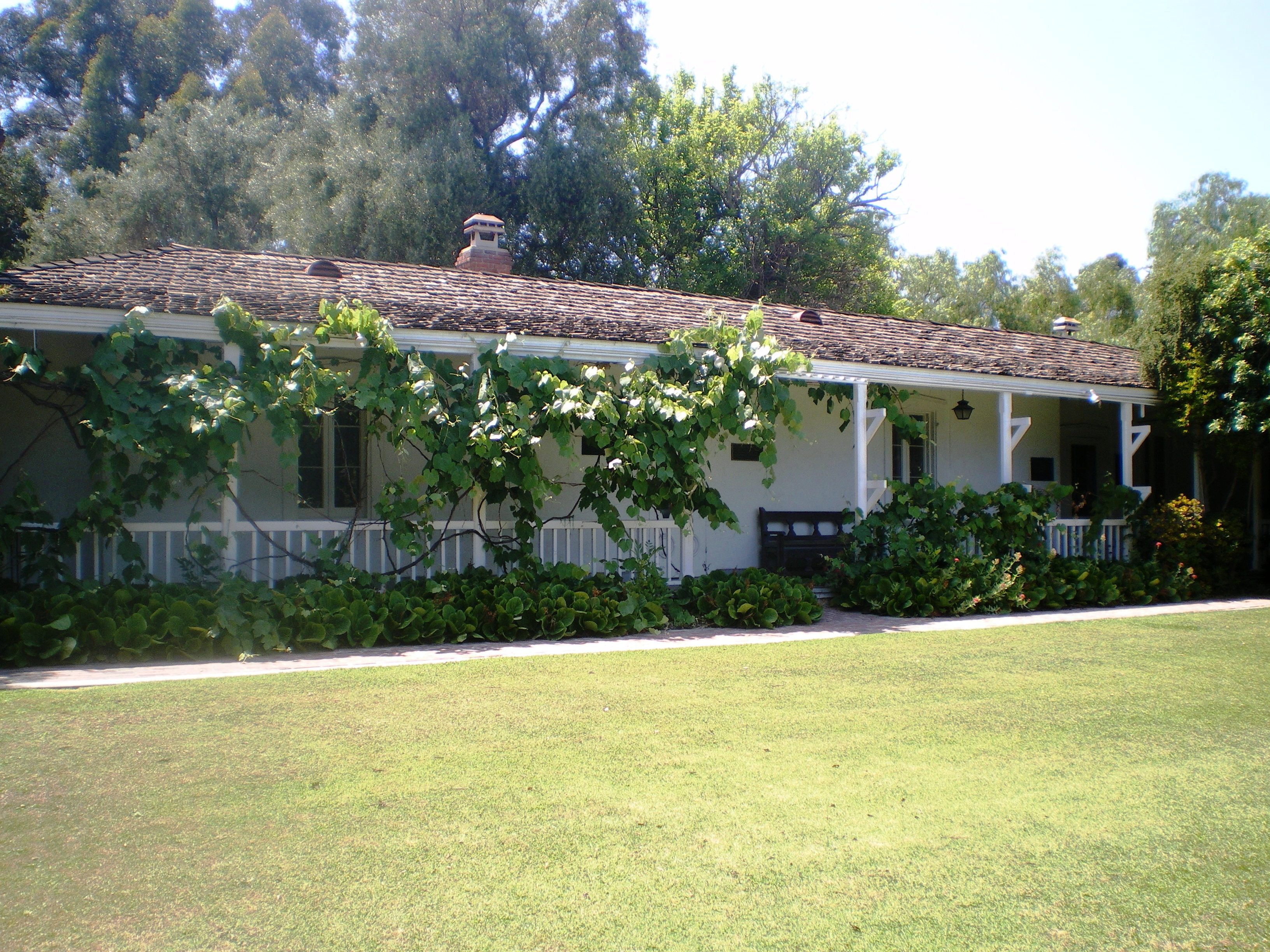
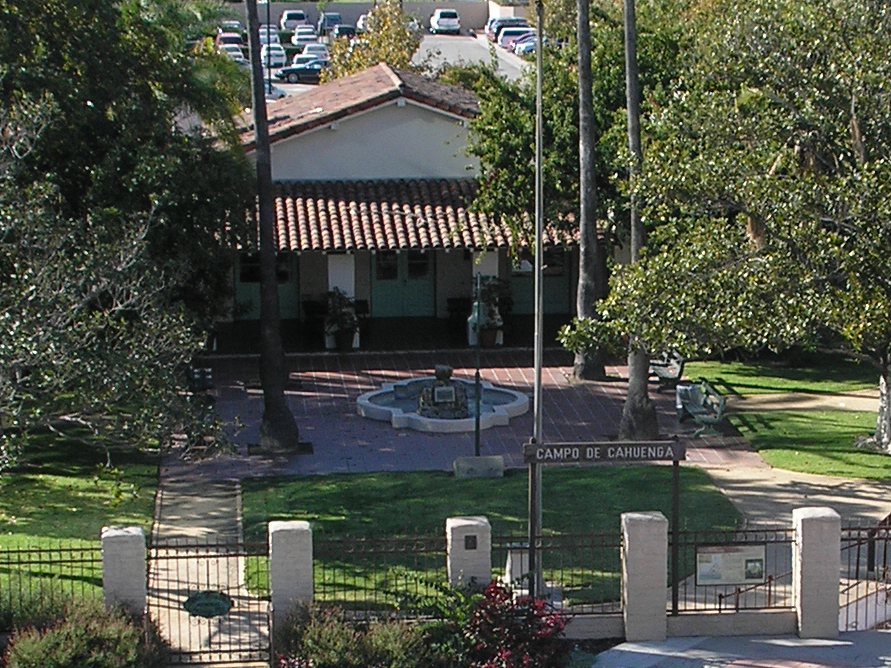
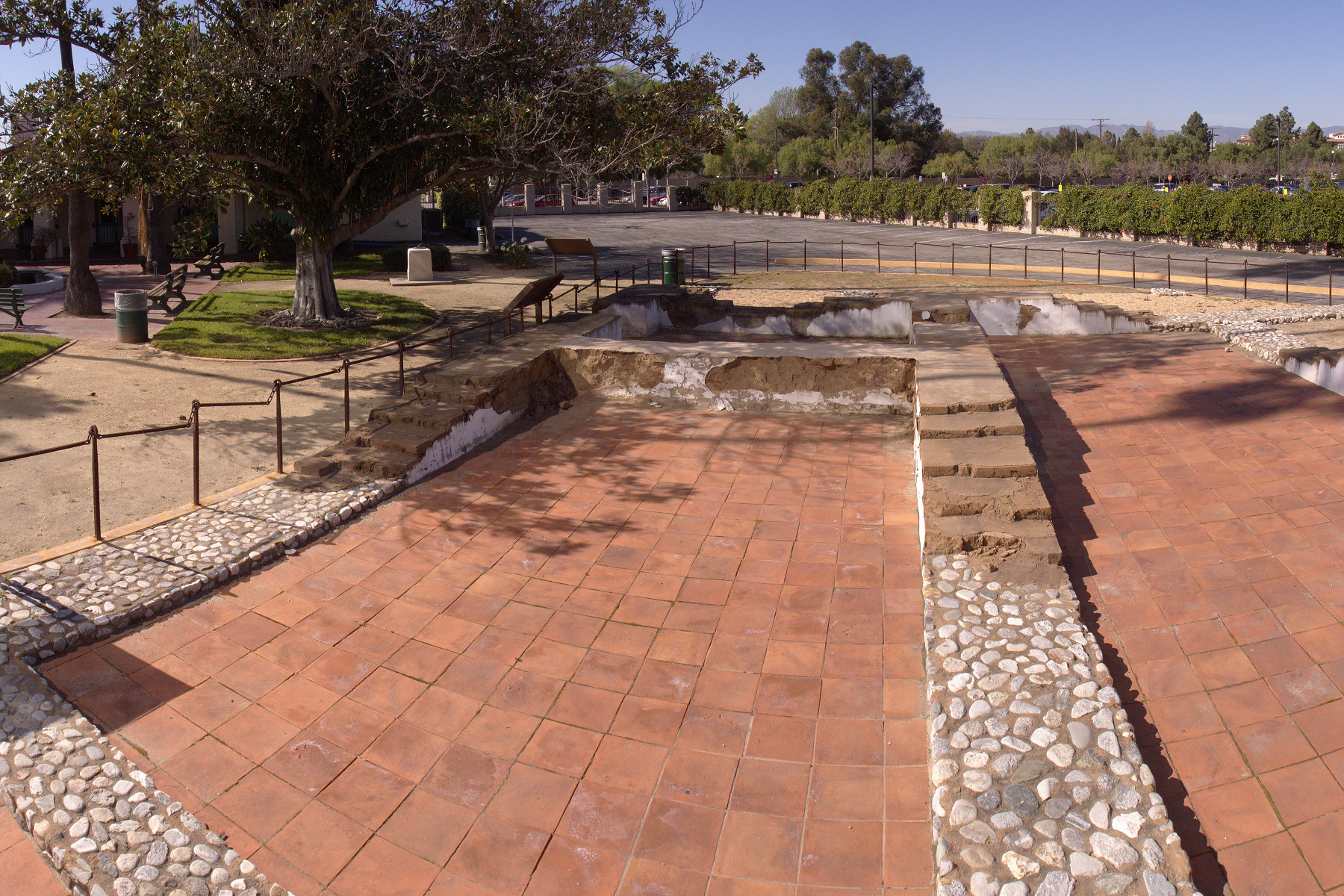
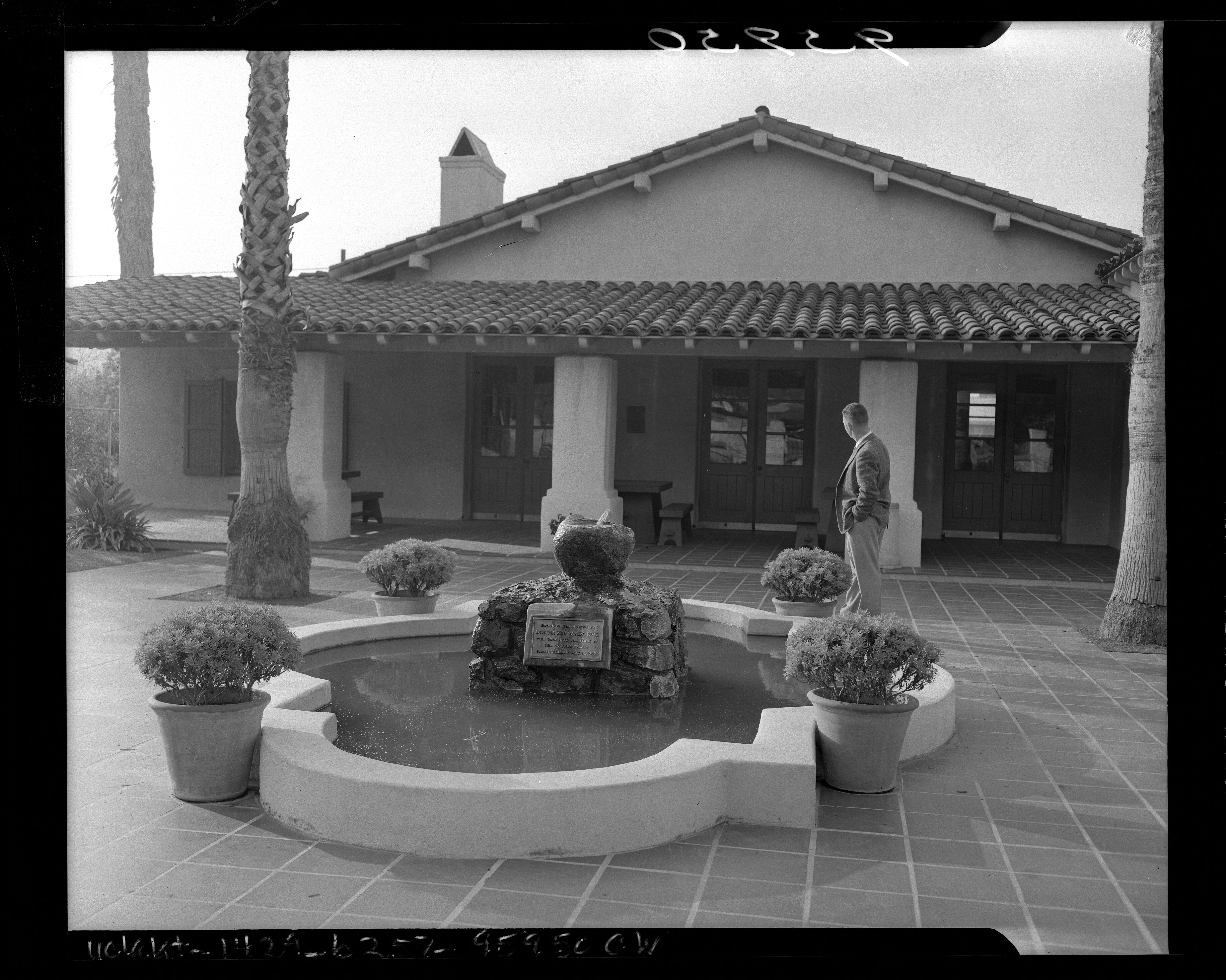
The present building is a 20th-century reconstruction completed in 1950, intended to interpret the location and the events of January 1847. It is a single-story building rendered in the Spanish Colonial Revival idiom that the City of Los Angeles favored for historic markers in the mid-20th century, with stucco walls, exposed wood ceilings, a low-pitched tiled roof, and an arcaded loggia. Subsequent archaeological investigation on the site uncovered foundations interpreted as remnants of the historic adobe, and outdoor markers now trace the recovered footprint adjacent to the reconstructed building.
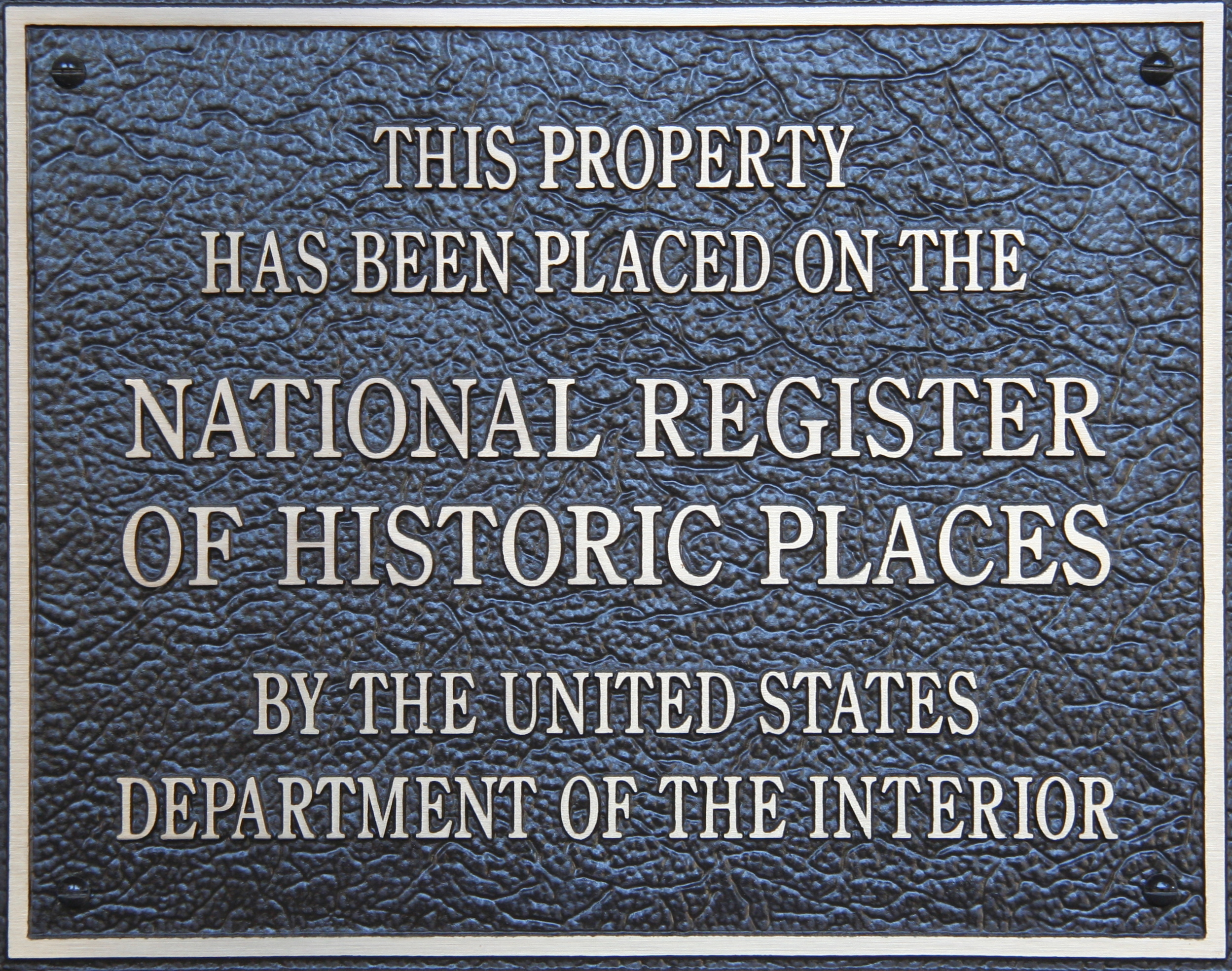
The Campo de Cahuenga site was listed on the National Register of Historic Places in 1972 under reference 72001602 in recognition of its association with the closing of the Mexican-American War in California. The City of Los Angeles, with the volunteer Campo de Cahuenga Historical Memorial Association, operates the site as a small interpretive museum open on a limited schedule.
Within California's broader adobe tradition, the Campo de Cahuenga functions less as a building than as an interpreted historical landscape, representing the rural rancho houses of the late Mexican period through reconstruction and archaeological evidence. It marks the political moment at which Mexican California gave way to the American era, and it preserves that moment within the urbanized San Fernando Valley.
Common questions
What is Campo de Cahuenga?
Campo de Cahuenga is a historic Spanish Colonial-style site in Los Angeles, California, listed on the National Register of Historic Places under reference number 72001602. The site preserves the location associated with the original adobe building remembered through reconstruction and a memorial complex.
How old is Campo de Cahuenga?
Construction records for the original adobe at Campo de Cahuenga are incomplete. The site was added to the National Register of Historic Places in 1972, recognizing its historic significance.
Where is Campo de Cahuenga located?
Campo de Cahuenga is located at 3919 Lankershim Boulevard in Los Angeles, California, in the San Fernando Valley area opposite Universal Studios.
Is Campo de Cahuenga open to the public?
The current entry classifies Campo de Cahuenga as a private residence, so it is not open for general tours. Visitors are advised to confirm public access details directly before planning a visit, as the site includes a memorial courtyard and reconstruction.
What architectural style is Campo de Cahuenga?
Campo de Cahuenga is documented as a Spanish Colonial-style site, reflecting the adobe building traditions brought to Alta California by Spanish settlers and later carried into the Mexican era.
Why is Campo de Cahuenga historically significant?
Campo de Cahuenga is significant as an NRHP-listed historic site in Los Angeles, recognized under reference number 72001602. The original adobe foundation has been preserved at the site, which is commemorated with a memorial courtyard and fountain.